John Steinbeck
John Steinbeck grew up in the Salinas Valley of California, a place of lettuce fields, cattle ranches, and migrant labor that became the setting of much of his work. He drifted in and out of Stanford without a degree, worked on ranches and in a sugar beet factory, and spent the late 1920s writing books that did not sell. Tortilla Flat, a comic novel about drifters in Monterey published in 1935, was his first success.
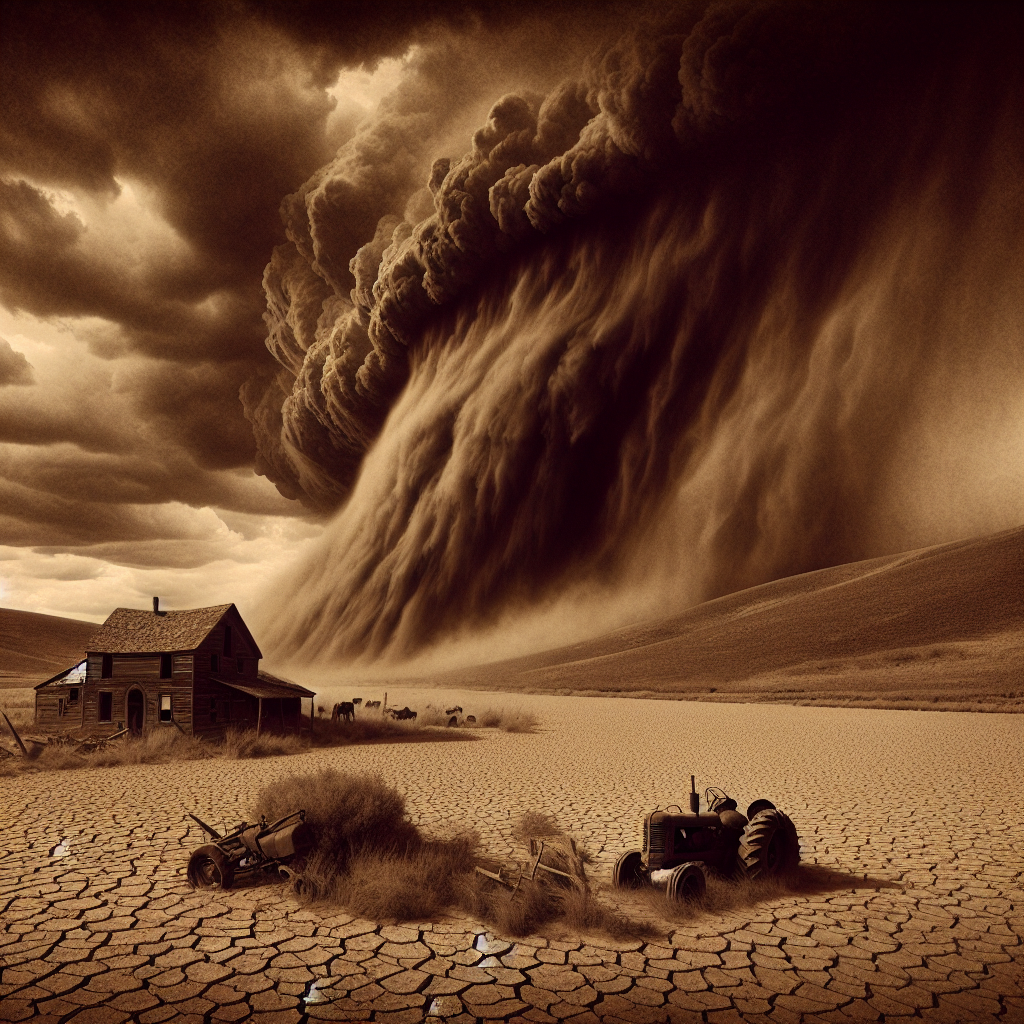
He turned next to the labor wars in the California fields. In Dubious Battle, about a strike by fruit pickers, and Of Mice and Men, the 1937 novella about two itinerant ranch hands named George and Lennie, established his reputation. In 1936 a San Francisco newspaper sent him to report on the camps of migrants who had fled the Dust Bowl, and what he saw in the squatters' ditches and federal camps became his masterpiece.
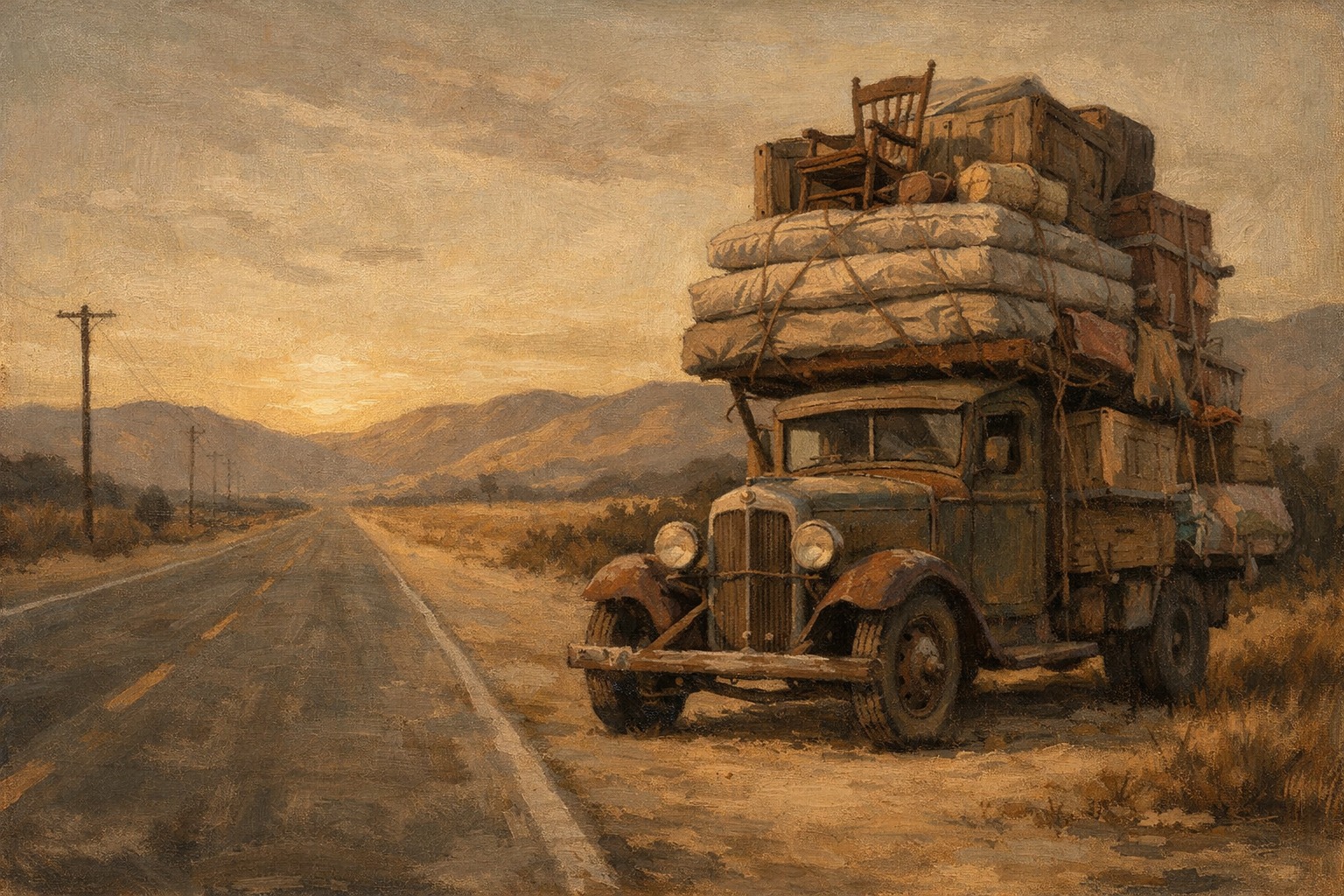
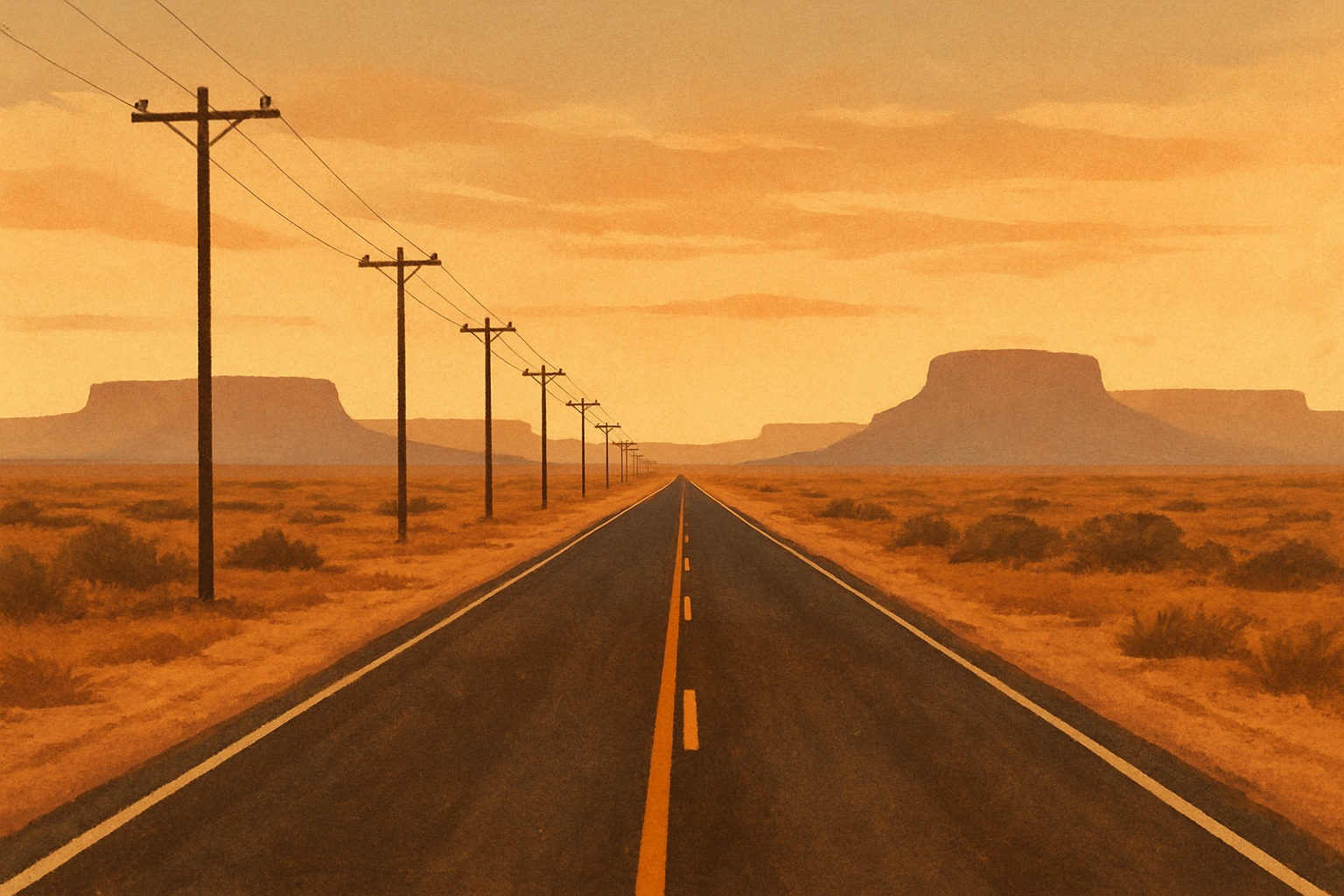
The Grapes of Wrath, published in 1939, follows the Joad family from their foreclosed Oklahoma farm down Route 66 to California, where they find not work but starvation wages, vigilantes, and contempt for Okies. It was the best-selling book of the year and won the Pulitzer Prize. Growers' associations denounced it as communist propaganda, and it was banned and publicly burned in parts of California, including Kern County, where much of it was set. The film version came out the next year.
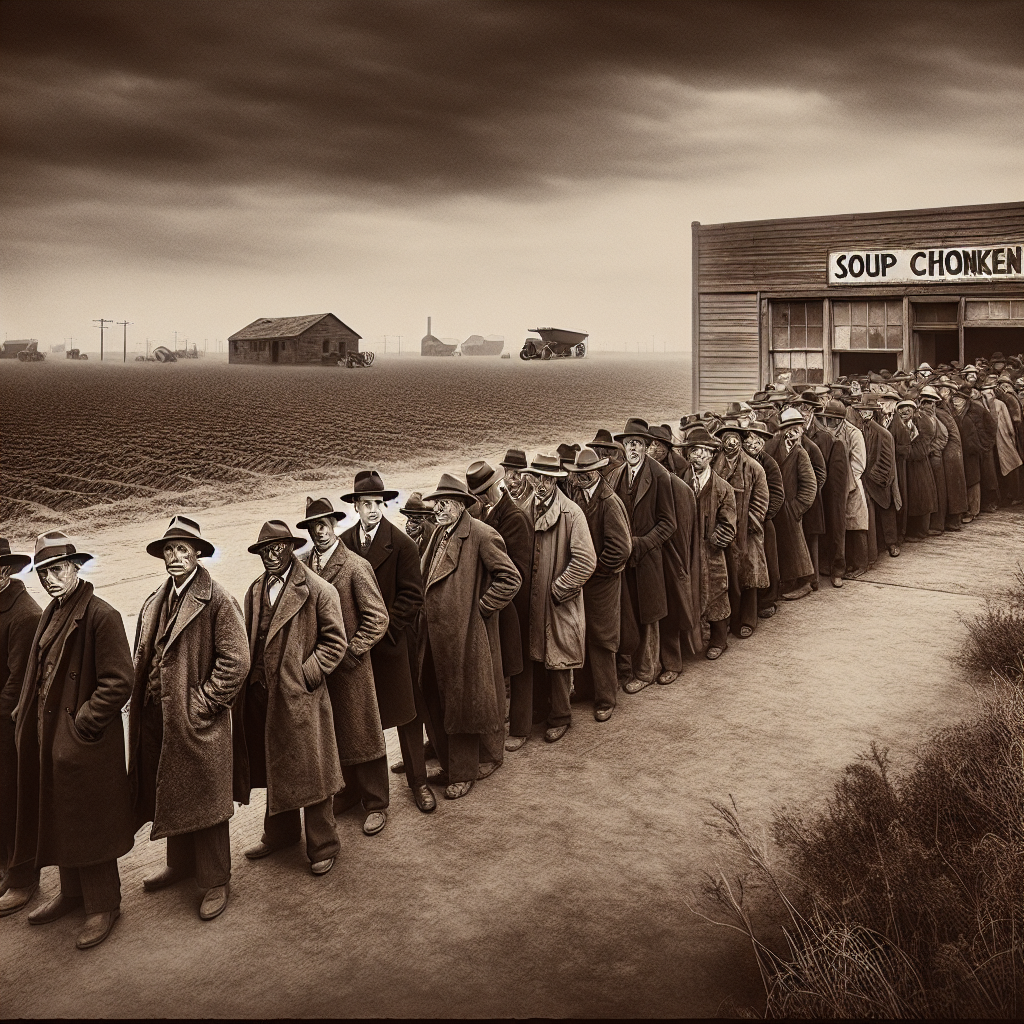
Steinbeck reported from the Second World War, wrote East of Eden, a retelling of the Cain and Abel story in the Salinas Valley, and toured the country with his poodle for Travels with Charley. He received the Nobel Prize in Literature in 1962, a choice some critics said came too late, after his best work. He died in New York in 1968. The Grapes of Wrath shaped how Americans remember the Depression as surely as any photograph.
| Born | Salinas, California, 1902 |
| Breakthrough | Tortilla Flat, 1935 |
| Masterpiece | The Grapes of Wrath, 1939, Pulitzer Prize 1940 |
| Also | Of Mice and Men (1937) and East of Eden (1952) |
| Nobel Prize | Literature, 1962 |
| Controversy | Grapes of Wrath banned and burned in parts of California |
| Date | 1902–1968 |
| Location | Salinas, California |