Time Magazine
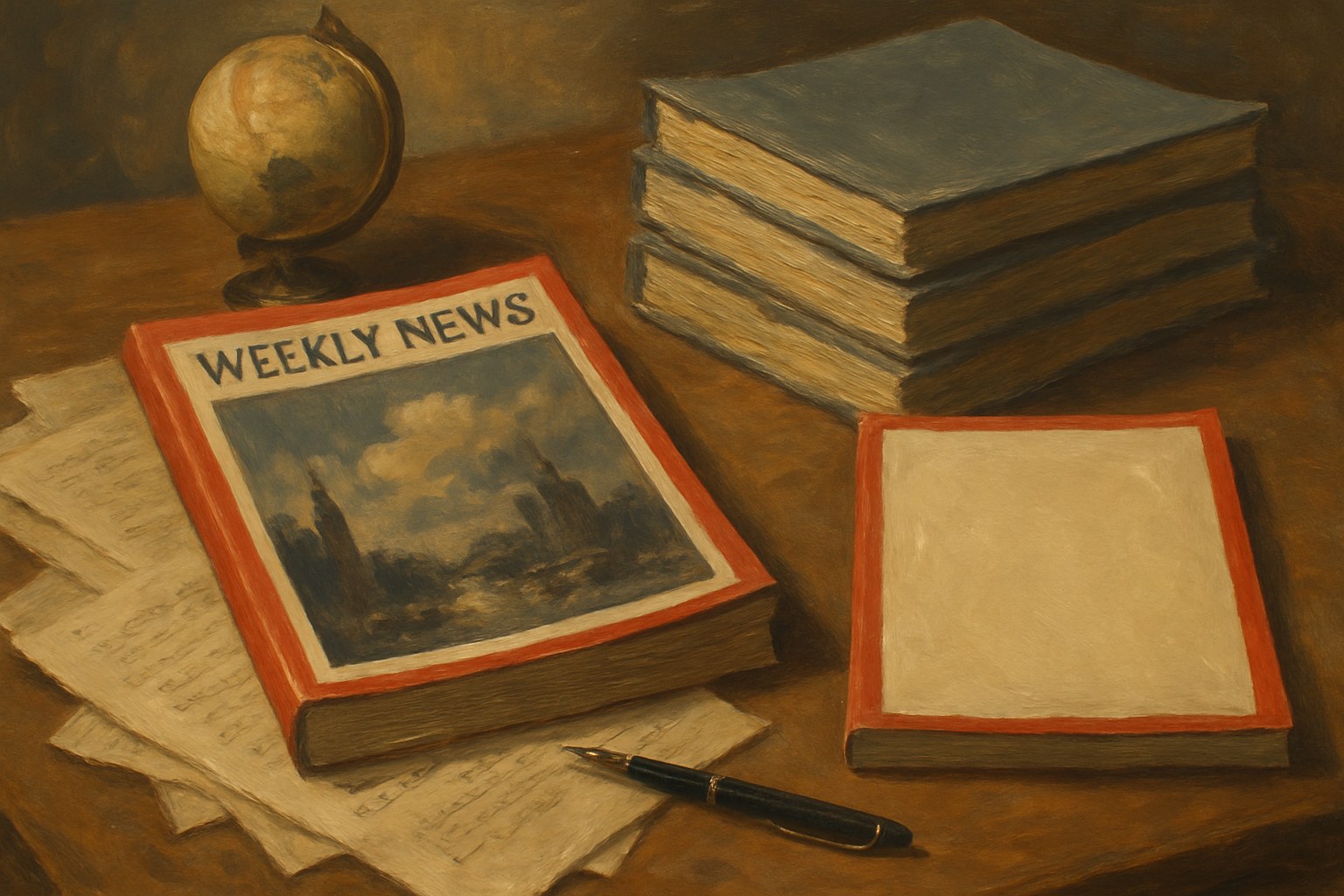
Two Yale classmates in their twenties, Briton Hadden and Henry R. Luce, decided in 1922 that the American reader was drowning. Newspapers printed everything and organized nothing, and a busy person had no way to find out what the week had meant. Their answer, first issued on March 3, 1923, was a thin weekly that read the papers so its subscribers did not have to, sorting the world into fixed departments — National Affairs, Foreign News, Business, Religion, Books — and finishing the whole thing in under an hour of reading.
The execution was as distinctive as the idea. Hadden invented the compressed, inverted, adjective-heavy prose that became known as Timestyle, and the magazine wrote with an attitude it made no apology for, treating news as narrative with characters rather than as a record of proceedings. Hadden died in 1929 at thirty-one, and Luce took sole control of a formula that spawned imitators — Newsweek in 1933, U.S. News soon after — and a publishing company that added Fortune in 1930 and Life in 1936.
From 1927 Time named a Man of the Year, later Person of the Year, for whoever had most shaped the preceding twelve months for better or worse. The editors insisted it was a judgment of influence rather than an honor, a distinction that did not prevent recurring outrage, and the selections of Adolf Hitler in 1938 and Joseph Stalin in 1939 and 1942 remain the standing evidence for the editors' case. The red-bordered cover became one of the most recognizable objects in American print.
Luce also gave the mid-century its slogan. In a February 1941 essay in Life, written while the country was still formally neutral, he argued that the United States should abandon isolation and accept leadership of the world, and called the coming age the American Century. The phrase outlived the argument and became shorthand — sometimes admiring, sometimes bitter — for the era of American dominance that followed. Time's own dominance faded with the weekly magazine business, but the newsmagazine it invented shaped how Americans consumed a week of news for three generations.


| First issue | March 3, 1923 |
| Founders | Briton Hadden and Henry R. Luce |
| Innovation | The weekly newsmagazine and Timestyle prose |
| Man of the Year | Begun 1927, later Person of the Year |
| Sister titles | Fortune (1930), Life (1936) |
| Phrase coined | The American Century, Luce, February 1941 |
| Date | Founded 1923 |
| Location | New York City |