The Ford Motor Company
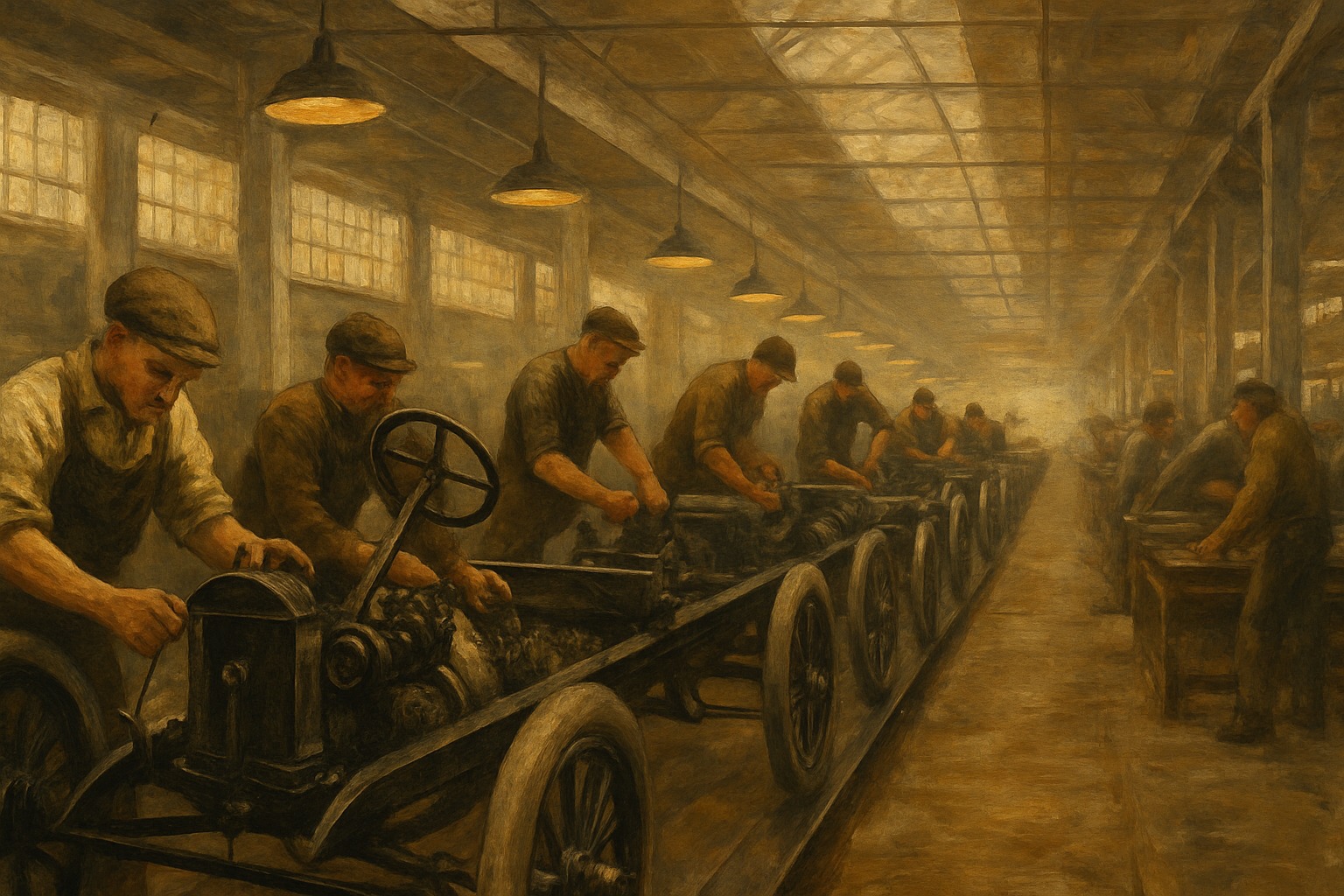
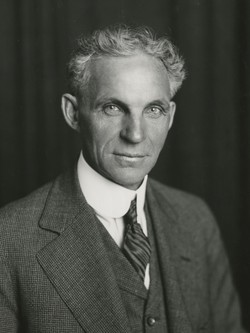
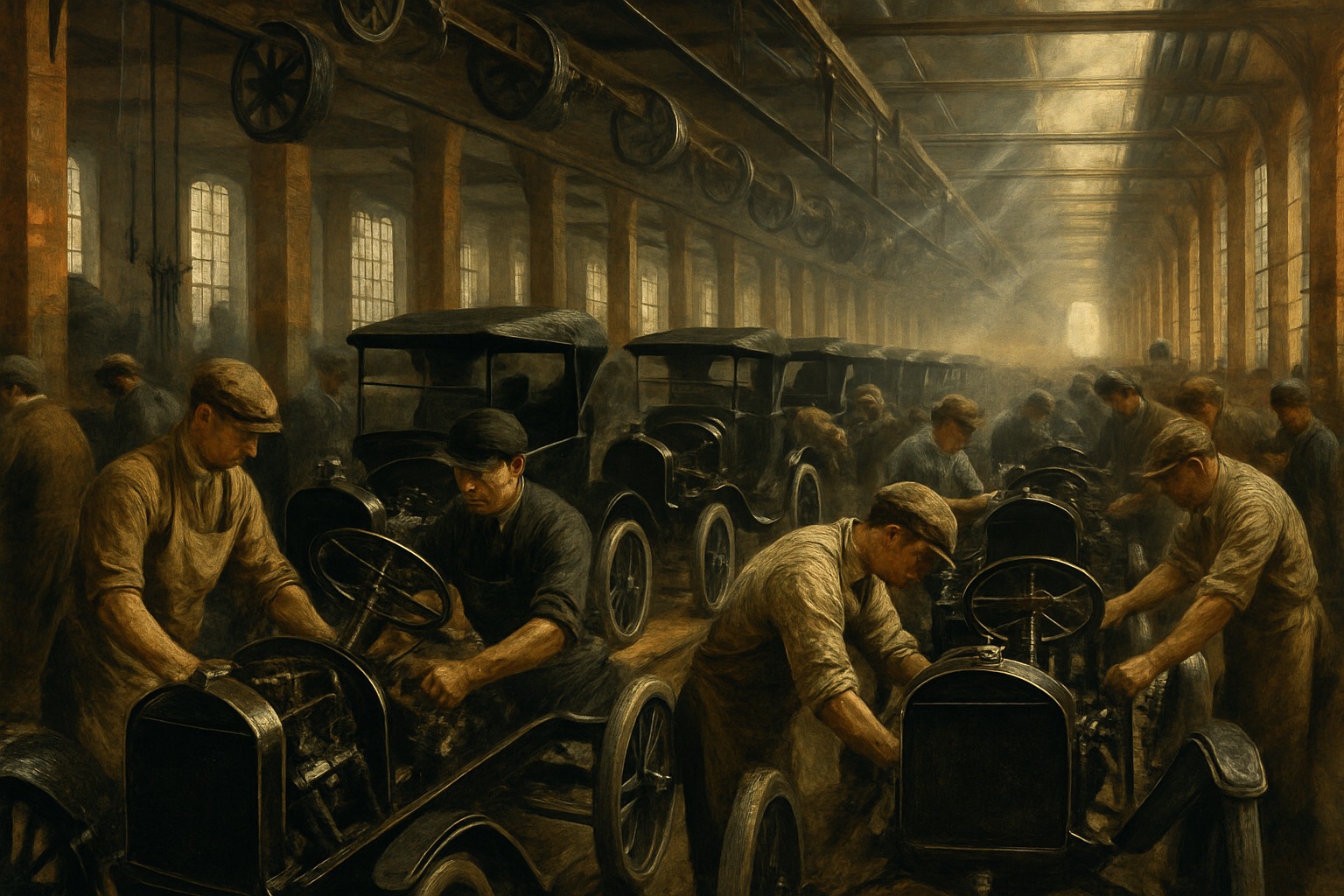
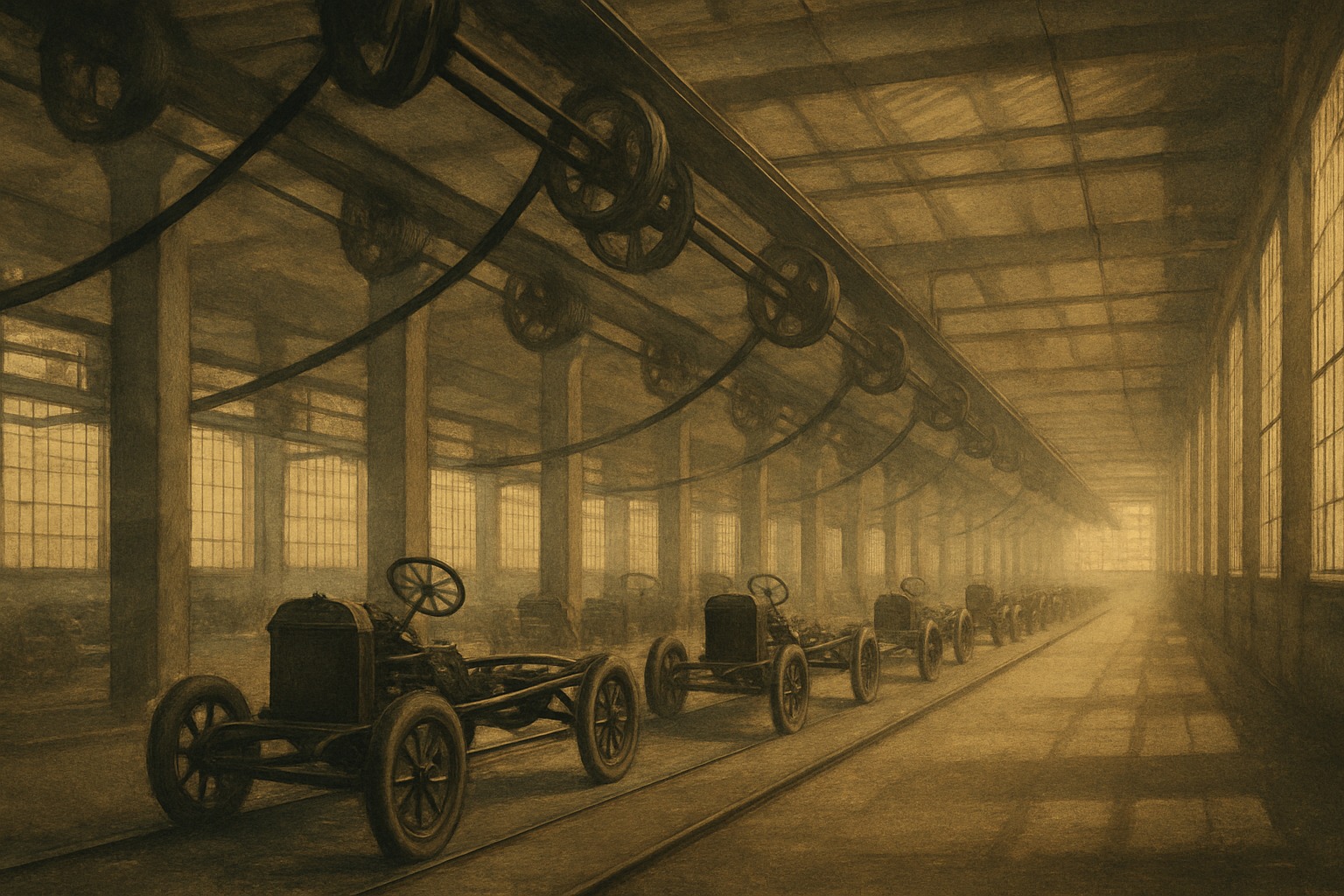
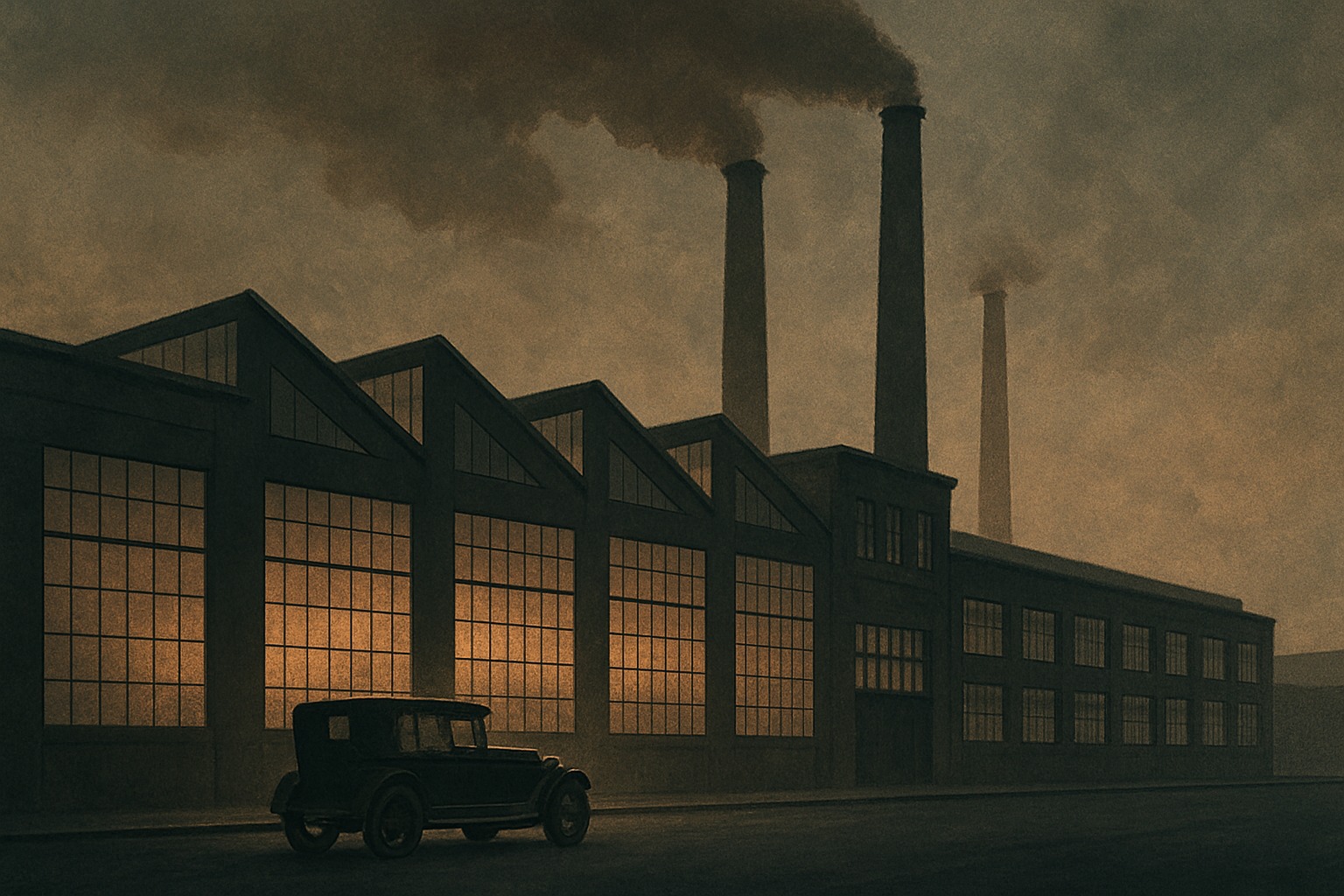
When Henry Ford founded his motor company in Detroit in 1903, the automobile was a rich man's toy, hand-built and unaffordable to the ordinary worker who might one day drive it. Ford set out to build a car for the multitude, and in 1908 he found it in the Model T — sturdy, simple, and cheap. To make it cheaper still, in 1913 his engineers installed a moving assembly line at the Highland Park plant, cutting the time to build a car from more than twelve hours to about ninety minutes and driving the price down year after year.
The assembly line's relentless pace bred a new problem: workers quit in droves. Ford's answer in 1914 stunned the business world — the five-dollar day, roughly doubling the prevailing wage. The move cut turnover, bought labor peace, and let Ford's own workers afford the cars they built, but it came with strings. A Sociological Department inspected employees' homes and habits to judge who deserved the wage, a paternalism that revealed the controlling side of Ford's vision. Ford also used his newspaper to spread antisemitic propaganda, a stain that his later apologies never erased.
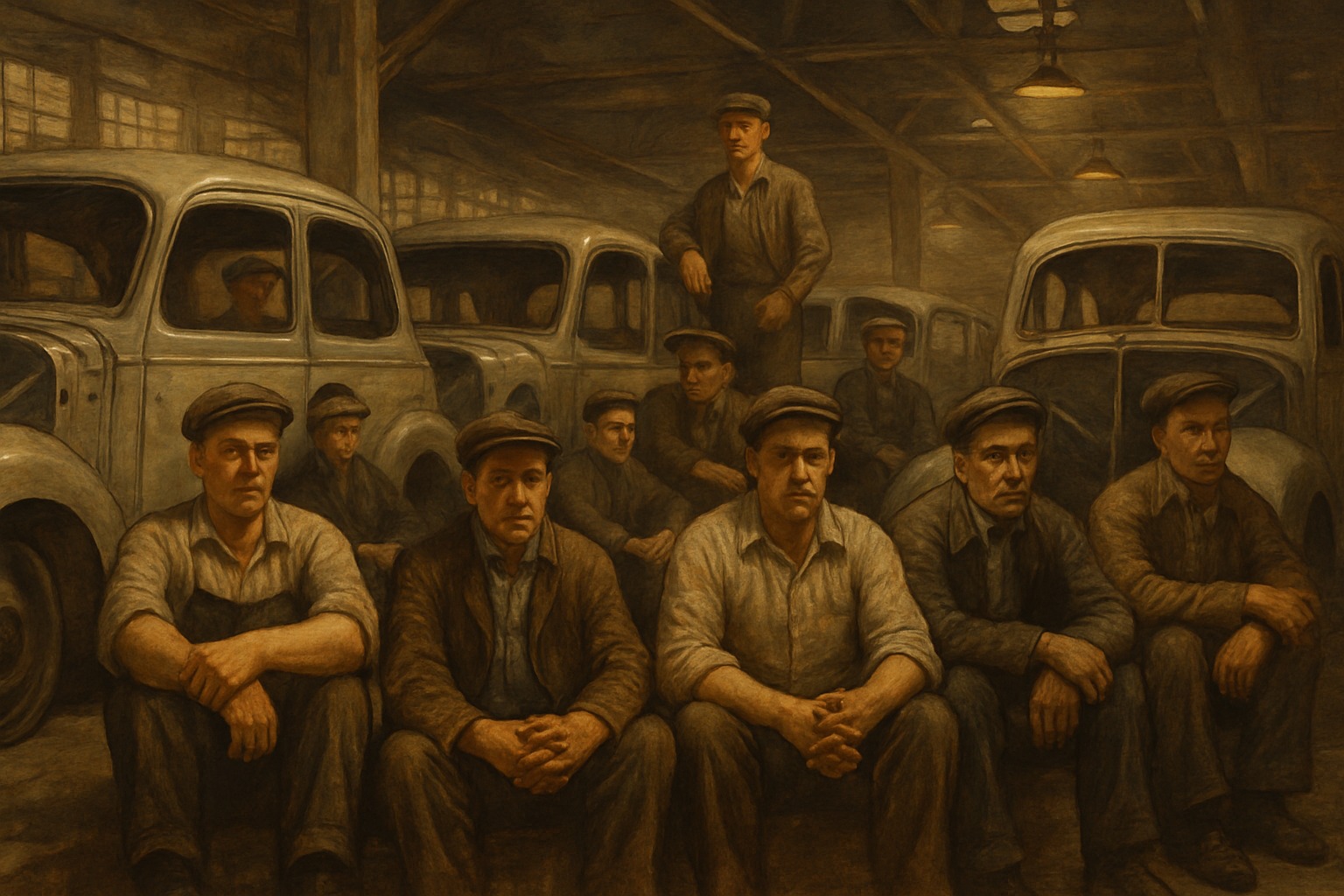
The company's early dominance did not last unchallenged. Ford's insistence on the unchanging Model T — famously offered in any color so long as it was black — let General Motors overtake him in the 1920s with yearly styling and a range of models. Ford resisted organized labor longer than his rivals, and his security men beat union organizers at the Battle of the Overpass in 1937. Only in 1941, after a strike, did Ford finally recognize the United Auto Workers.
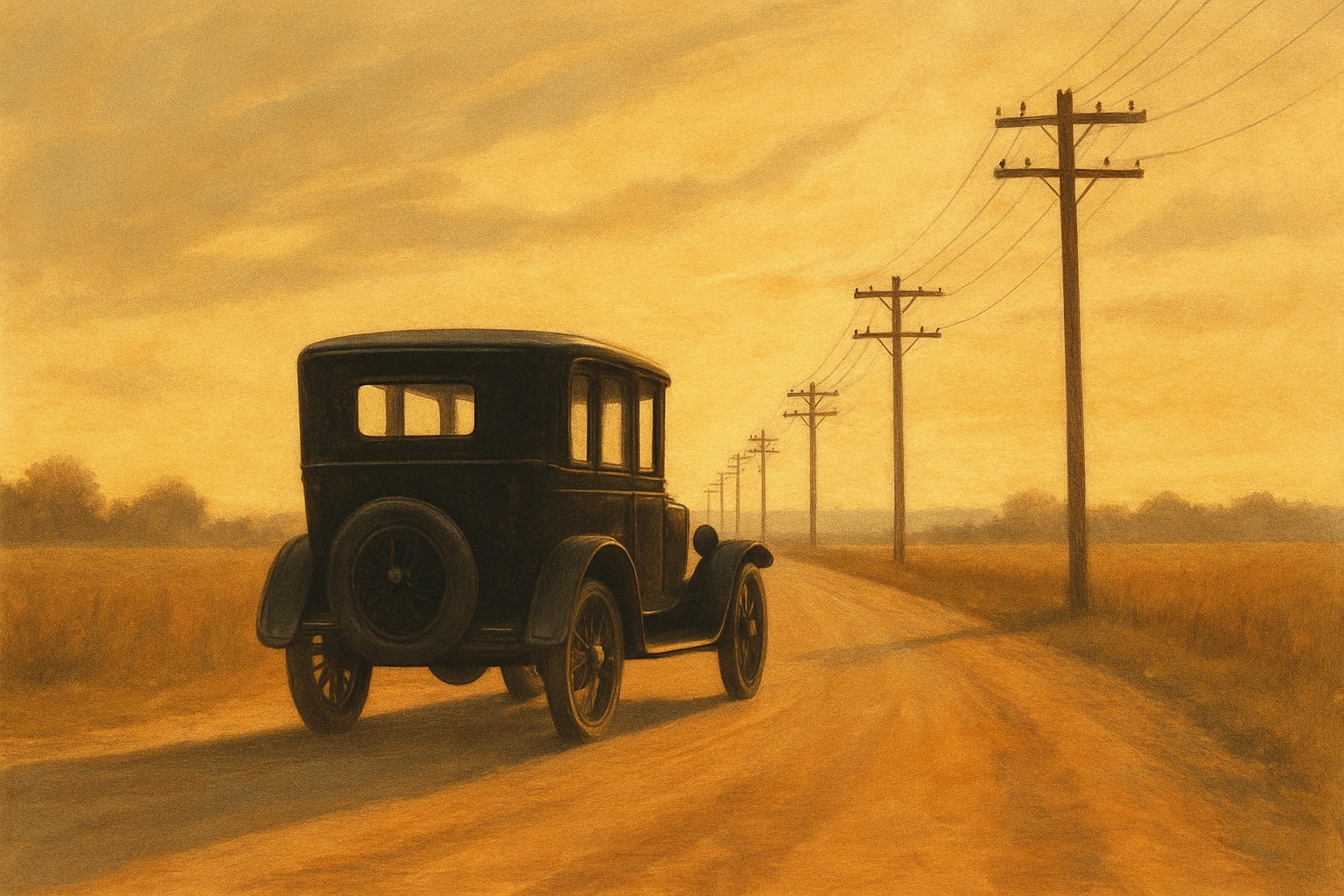
For all its contradictions, the company changed how the world made and bought things. Mass production on the Ford model — soon called Fordism — spread across industries and continents, making complex goods cheap enough for a mass market and helping create the consumer economy of the twentieth century. The car it democratized reshaped American cities, suburbs, and daily life. Few private companies have left so deep a mark on how ordinary people live.

| Founded | 1903, Detroit, by Henry Ford |
| Breakthrough car | Model T (1908) |
| Assembly line | Moving line at Highland Park, 1913 |
| Five-dollar day | 1914 — roughly double the going wage |
| Overtaken by | General Motors in the 1920s |
| Unionized | Recognized the UAW in 1941 |
| Date | Founded 1903 |
| Location | Dearborn, Michigan |