The USO
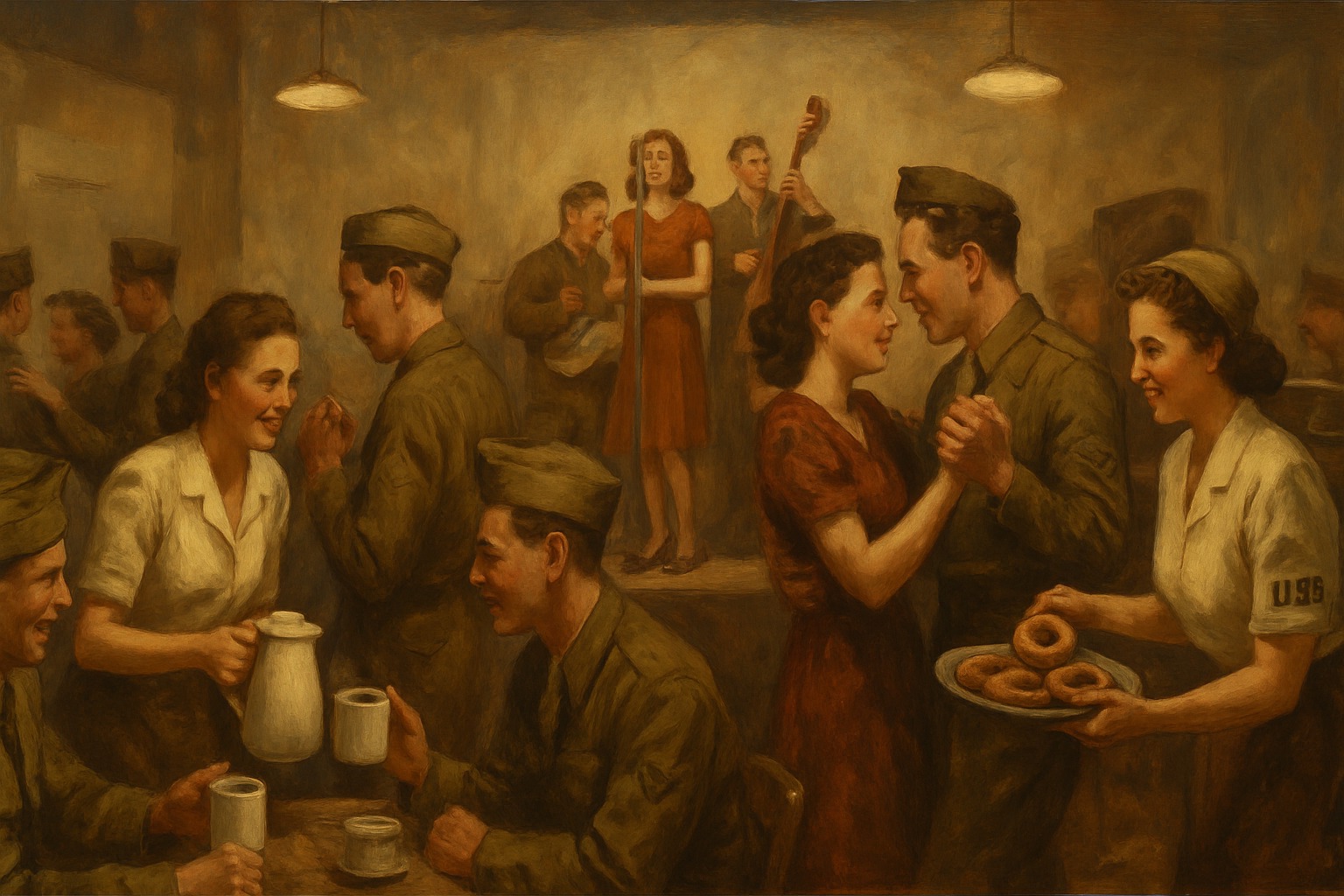
As the United States mobilized for the Second World War in 1941, President Franklin Roosevelt asked a handful of private service organizations to pool their efforts to look after the millions of young Americans being called into uniform. The result was the United Service Organizations — the USO — which brought together groups including the YMCA and the Salvation Army to provide what a government could not easily supply: a touch of home for soldiers far from it.
The USO built its legend on morale. Across the country and around the world it ran canteens where servicemembers could get a cup of coffee, a doughnut, a dance, or a letter home, and it sent entertainers to perform for troops wherever they were stationed. The comedian Bob Hope became the face of the effort, touring the front lines for decades, and the USO show became a fixture of American military life.
Though it serves the armed forces, the USO is not a government agency but a private, congressionally chartered nonprofit funded by donations. That independence let it operate in the gray zone between the military and civilian society, offering recreation, connection, and a reminder of home to people the nation had sent into danger. It carried on through Korea, Vietnam, and the wars in Iraq and Afghanistan.
For more than eighty years the USO has stood for a simple idea — that a country at war owes its soldiers not only orders and equipment but also comfort and connection. From wartime canteens to modern airport lounges and video calls home, it has been the institution through which American civilians reach out to the troops serving in their name.
| Founded | 1941 |
| Origin | FDR-requested merger of six service groups |
| Mission | Morale and recreation for the troops |
| Famous for | Bob Hope's tours and wartime canteens |
| Status | Congressionally chartered nonprofit |
| Date | Founded 1941 |
| Location | Washington, D.C. |