The Scopes Trial
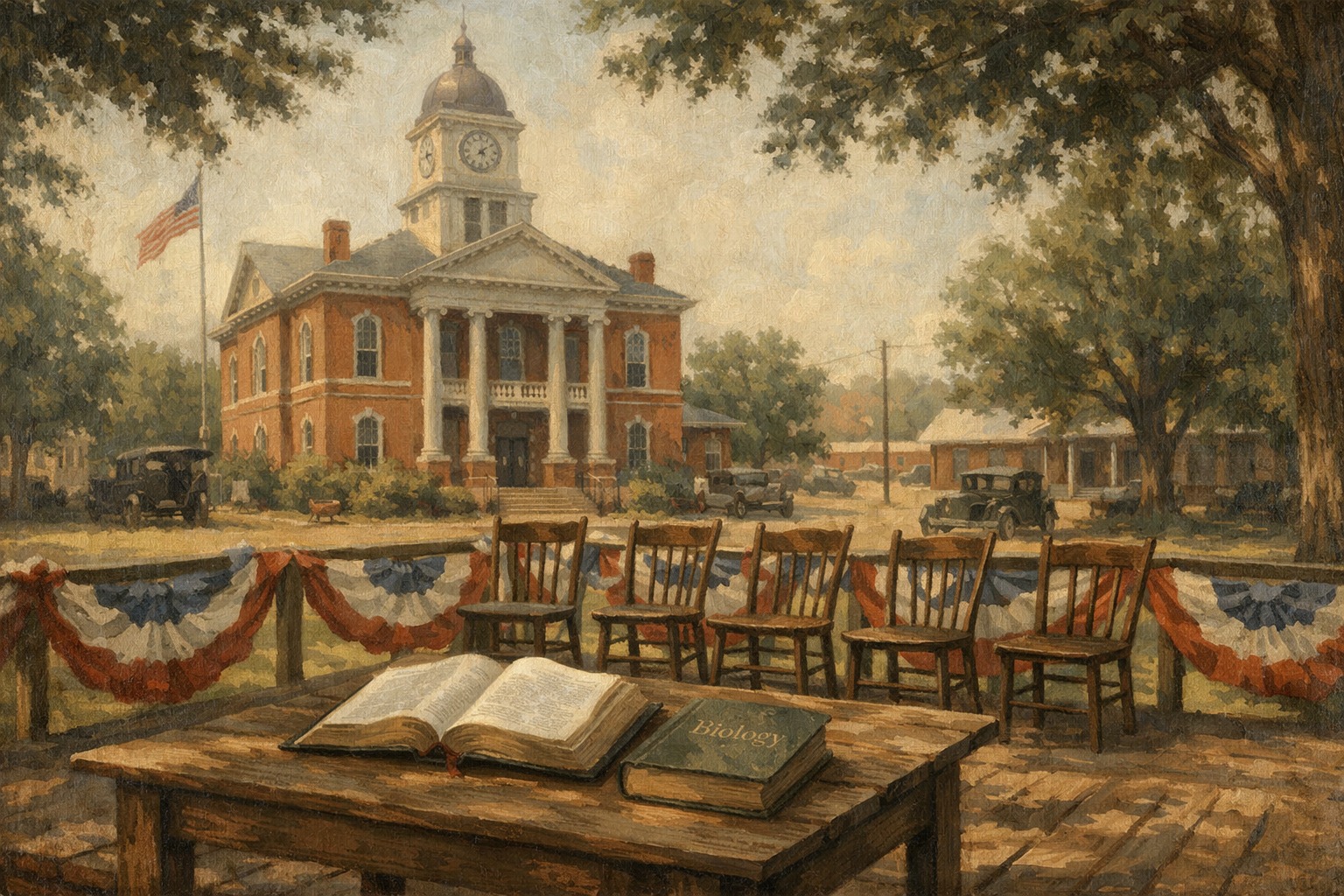
In March 1925 Tennessee passed the Butler Act, making it a crime for a public school teacher to teach any theory that denies the story of the divine creation of man as taught in the Bible. The American Civil Liberties Union advertised for a teacher willing to test the law. A group of Dayton businessmen, hoping to put their small town on the map, persuaded John T. Scopes, a twenty-four-year-old football coach who had substituted in biology, to stand as the defendant.
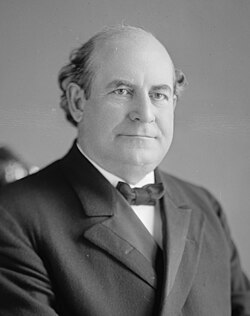
The trial drew the most famous lawyers in America. William Jennings Bryan, three-time Democratic presidential nominee and the country's leading champion of fundamentalism, joined the prosecution. Clarence Darrow, the most celebrated criminal lawyer of his day and an agnostic, led the defense. Some two hundred reporters came, among them H. L. Mencken of the Baltimore Sun, who mocked the locals as yokels. It was the first trial broadcast nationally on radio.
The judge refused to let the defense call scientists to testify about evolution. So on July 20, with the trial moved outdoors because of the heat, Darrow called Bryan himself as an expert on the Bible. For two hours he pressed him on Jonah and the whale, Joshua making the sun stand still, and the age of the earth. Bryan conceded that the days of creation might not have been twenty-four hours long. The judge struck the testimony from the record the next day, and the jury convicted Scopes in nine minutes. He was fined one hundred dollars.
Bryan died in his sleep in Dayton five days after the trial ended. The Tennessee Supreme Court overturned the conviction in 1927 on a technicality, because the judge rather than the jury had set the fine, which prevented an appeal to the U.S. Supreme Court. The Butler Act stayed on the books until 1967, and in 1968 the Court struck down a similar Arkansas law. The play and film Inherit the Wind fixed a dramatized version in national memory, and the trial still frames the American argument between science and faith.

| Dates | July 10–21, 1925 |
| Law | Tennessee's Butler Act, March 1925 |
| Defendant | John T. Scopes, 24 |
| Prosecution | William Jennings Bryan |
| Defense | Clarence Darrow, backed by the ACLU |
| Verdict | Guilty, $100 fine, overturned in 1927 on a technicality |
| Date | July 10–21, 1925 |
| Location | Rhea County Courthouse, Dayton, Tennessee |