Apple Pie
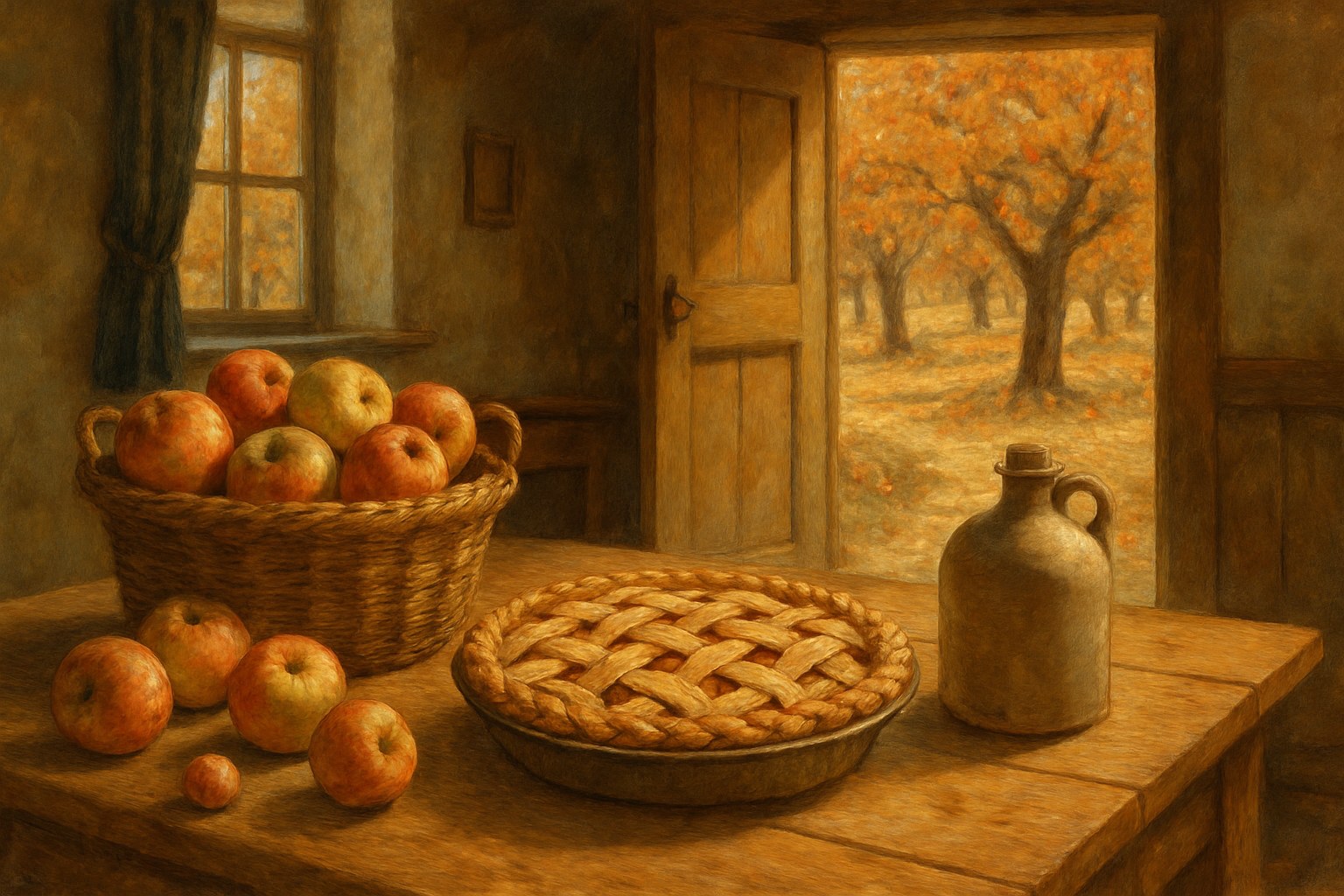
Nothing about apple pie is originally American. The apple is native to the mountains of Central Asia, reached Europe by way of the Silk Road and Rome, and arrived in North America in the seedlings and grafted stock carried by English and Dutch colonists. The only apple native to this continent is the crabapple, small and sour. Recipes for apple pie were printed in England in the fourteenth century and in the Netherlands in the fifteenth, both of them well before any European laid eyes on the Massachusetts coast.
What Americans mostly did with the apple was drink it. Orchards spread across the colonies and the early republic because cider was safer than water, kept through the winter, and could be distilled or frozen into applejack. Apples grown from seed do not breed true, so a seedling orchard produces a wilderness of odd fruit, most of it too sharp to eat and perfectly good to press. John Chapman, remembered as Johnny Appleseed, was a working nurseryman who planted seedling orchards ahead of settlement in Ohio and Indiana and sold the trees. His apples were cider apples.
Eating apples came with grafting, with the nursery catalogs of the nineteenth century, and with the naming of thousands of varieties suited to particular soils and particular uses. The pie followed the orchards west. It was eaten at breakfast in New England, packed into lunch pails, and sold in every roadside dining room in the country. Then temperance campaigns and Prohibition pushed the cider orchards under, and some growers cut their trees rather than face the accusation that they were in the liquor business.
The phrase as American as apple pie is a twentieth-century invention, in common use only from the 1920s and driven deep by the Second World War, when soldiers asked what they were fighting for were quoted answering mom and apple pie. A dish with English, Dutch, and Central Asian ancestry became the standard shorthand for national authenticity, which is a fairly exact description of how most American things arrived in the first place.


| Fruit origin | Central Asia, brought over by English and Dutch colonists |
| Native American apple | Only the crabapple |
| Main colonial use | Cider — safer than water and easy to keep |
| Earliest recipes | England, 1300s. The Netherlands, 1400s |
| John Chapman | A nurseryman planting seedling cider orchards |
| Slogan | As American as apple pie dates to the 1920s |
| Date | 1600s to today |