Baker v. Carr
Tennessee's constitution required the legislature to redraw its districts every ten years. It had not done so since 1901. In the meantime the state's population had moved to Memphis, Nashville, and Knoxville, and by 1960 a rural vote could be worth many times an urban one. Similar distortions existed across the country. Charles Baker, a Republican from the Memphis area, sued, arguing that the malapportionment denied city voters the equal protection of the laws.
The obstacle was precedent. In Colegrove v. Green in 1946 Justice Felix Frankfurter had warned that courts ought not to enter this political thicket, and apportionment had been treated as a question for legislatures alone. On March 26, 1962, the Court ruled six to two that the question was justiciable after all. Justice William Brennan wrote that a claim of unequal districting under the Fourteenth Amendment could be heard by the federal courts.
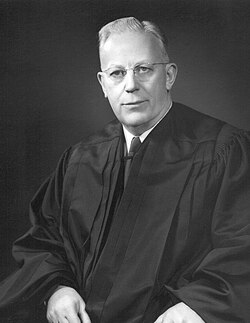
Frankfurter, in one of his last opinions, dissented at enormous length, warning that the Court was inviting itself into an endless series of partisan disputes. The case did not say what fair districts would look like. That came two years later, in Reynolds v. Sims, which required both houses of state legislatures to be apportioned by population. Chief Justice Earl Warren put the principle simply. Legislators represent people, not trees or acres.
Within a few years nearly every state legislature had been redrawn, shifting power from rural counties to cities and suburbs. Warren later called Baker v. Carr the most important case of his tenure, ahead of Brown. The principle of one person, one vote is now taken for granted, but the Court has declined to apply the same reasoning to partisan gerrymandering, ruling in 2019 that such claims are beyond the reach of federal courts.