Gerrymandering
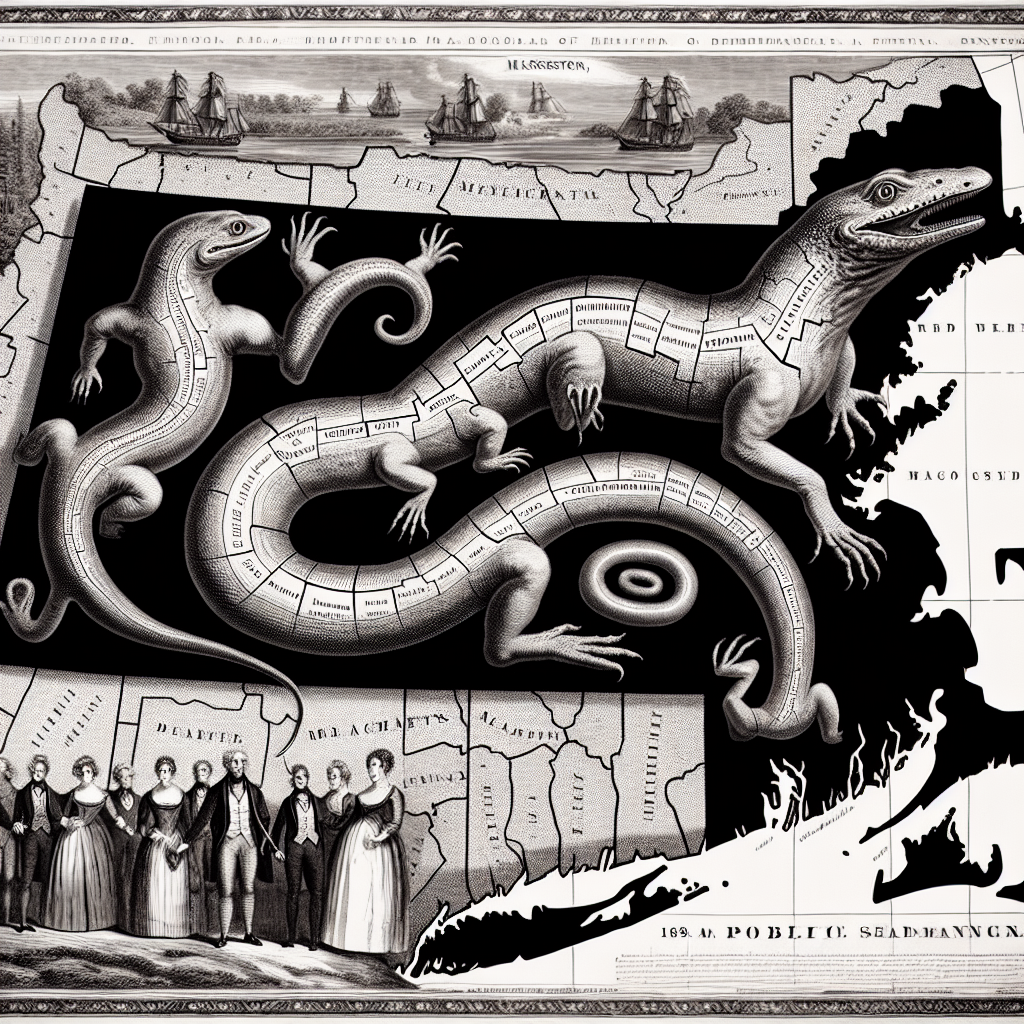
In 1812, Massachusetts Governor Elbridge Gerry signed a redistricting bill that carved his state's senate districts into contorted shapes designed to favor Democratic-Republicans over Federalists. One district in Essex County resembled — to a Boston newspaper cartoonist — a salamander. The cartoonist called it a "Gerry-mander." Gerry lost his reelection bid that autumn, but the word — and the practice it named — proved immortal. American politicians had been drawing favorable district lines since before independence; they simply hadn't had a name for it.
Gerrymandering takes two basic forms. Packing concentrates the opposing party's voters into as few districts as possible, wasting their votes in landslide losses. Cracking splits the opposing party's voters across multiple districts so they can't form a majority in any of them. Modern mapping software has made both techniques far more precise than any 19th-century cartoonist could have imagined, allowing mapmakers to engineer district maps that produce predictable partisan outcomes for a decade. The practical effect is a system where politicians choose their voters before voters choose their politicians.
Courts have drawn some limits while refusing others. The Supreme Court ruled in Shaw v. Reno (1993) that districts drawn predominantly on racial lines were subject to strict judicial scrutiny. It ruled in Rucho v. Common Cause (2019) that federal courts have no authority to review partisan gerrymandering at all — effectively leaving the practice in the hands of state legislatures and state courts. The fight has since shifted to state constitutional challenges, independent redistricting commissions adopted by several states, and the census cycle that resets the map every ten years.
| Named For | Governor Elbridge Gerry of Massachusetts, 1812 |
| Origin | Essex County, Massachusetts senate district drawn to favor Democratic-Republicans |
| Techniques | Packing (concentrating opponents) and cracking (splitting opponents) |
| Redistricting | Occurs after each decennial census (every 10 years) |
| Racial Limit | Shaw v. Reno (1993) — racial gerrymandering subject to strict scrutiny |
| Partisan Ruling | Rucho v. Common Cause (2019) — federal courts cannot review partisan gerrymandering |
| Reforms | Independent redistricting commissions adopted in California, Michigan, and others |
| Years | 1812 |
| Location | Boston, Massachusetts |