Washington's Farewell Address
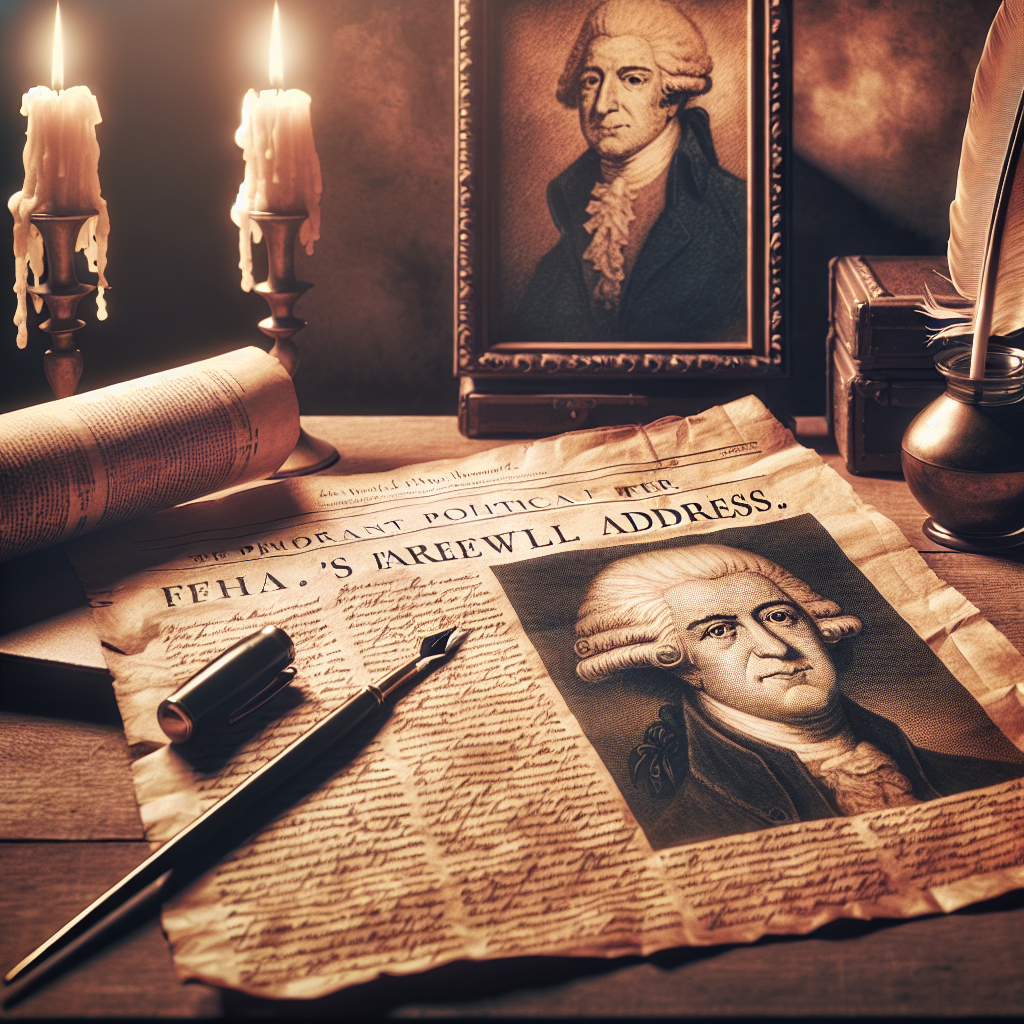
George Washington did not deliver his Farewell Address as a speech. He published it as an open letter in a Philadelphia newspaper on September 19, 1796, written with the help of Alexander Hamilton and James Madison over several years, and never read it aloud in public. He was announcing his refusal of a third term and his retirement from public life — a decision so startling in an era accustomed to power held for life that the announcement itself was news. What followed was 6,000 words of careful, earnest warning from a man who had spent 25 years building a republic he believed was fragile, addressed to a country he was not sure would survive his departure.
The warnings were precise and remarkably prescient. Washington cautioned against permanent alliances with foreign nations, arguing that emotional attachment to any foreign power — whether as ally or enemy — would distort American foreign policy in ways that served the foreign power's interests rather than America's own. He warned against political factions with a fervor that suggested he already saw them forming around him: parties, he wrote, were the government's "worst enemy," capable of becoming "potent engines by which cunning, ambitious, and unprincipled men" would seize power. He warned against excessive public debt, against regional sectionalism, and against any branch of government accumulating power at another's expense. He was describing problems that did not yet fully exist but that would define the republic's next two centuries.
The address is read aloud in the Senate every year on Washington's birthday — a tradition begun in 1862, in the middle of the Civil War, by senators who felt the need to hear the founding words during the republic's worst crisis. The irony of its reception history is that virtually every faction in American politics has claimed it as justification for contradictory positions. Isolationists cited it against both World Wars; interventionists argued those wars were precisely the crises it did not anticipate. It has been invoked against NATO and against entangling treaties, against political parties and by political parties. Washington's authority is so towering that Americans have spent two centuries arguing about what he would have thought rather than simply thinking for themselves — which was, almost certainly, not what he wanted.
| Published | September 19, 1796 |
| Published in | American Daily Advertiser, Philadelphia |
| Primary author | George Washington (with Alexander Hamilton and James Madison) |
| Length | ~6,000 words |
| Key warnings | Against foreign alliances, political factions, sectionalism, excess debt |
| Senate tradition | Read aloud annually since 1862 on Washington's birthday |
| Now held at | New York Public Library (handwritten draft) |
| Date | September 19, 1796 |
| Location | Philadelphia, Pennsylvania |