The Fujita Scale
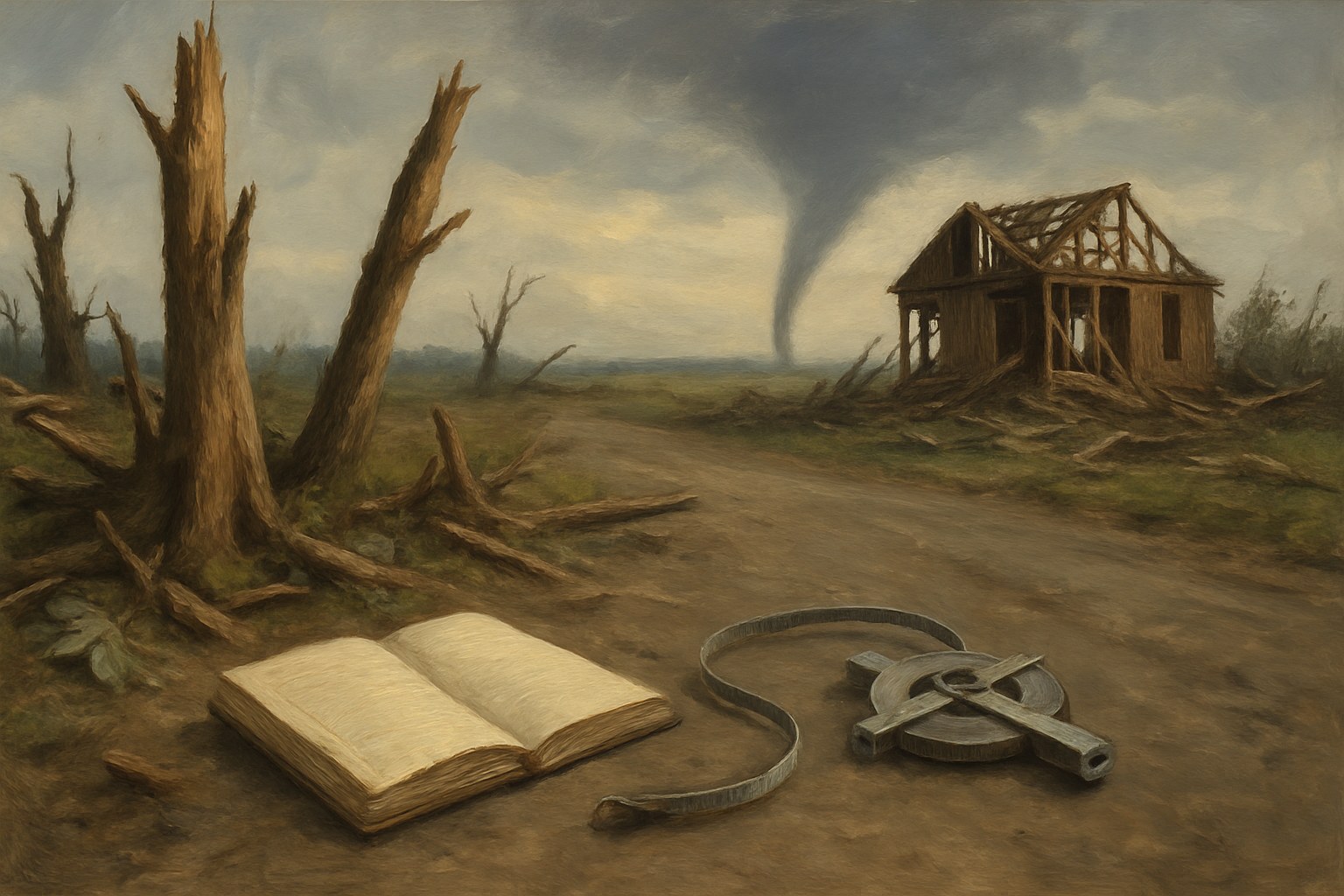
No instrument survives the center of a violent tornado, so for most of the twentieth century there was no agreed way to say that one tornado had been stronger than another. Tetsuya Theodore Fujita, a Japanese-born meteorologist at the University of Chicago who had begun his career mapping blast damage at Hiroshima and Nagasaki, proposed in 1971 that the damage itself could be read backward into wind speed. His scale, published with Allen Pearson of the national severe storms center, ran in practice from F0 to F5, stitched between the top of the Beaufort wind scale and the speed of sound.
The wind figures attached to each step were engineering estimates, never measurements, and Fujita said so. What made the method valuable was the discipline of the survey — walking the track, mapping which structures failed and in what order, and reasoning outward from the pattern. That discipline produced his most consequential finding. Asked to examine the crash of an airliner on approach to Kennedy Airport in June 1975, he plotted the damage across the wreckage and the ground beneath it and concluded that a small, intense column of air had descended out of the storm and burst outward at the surface.
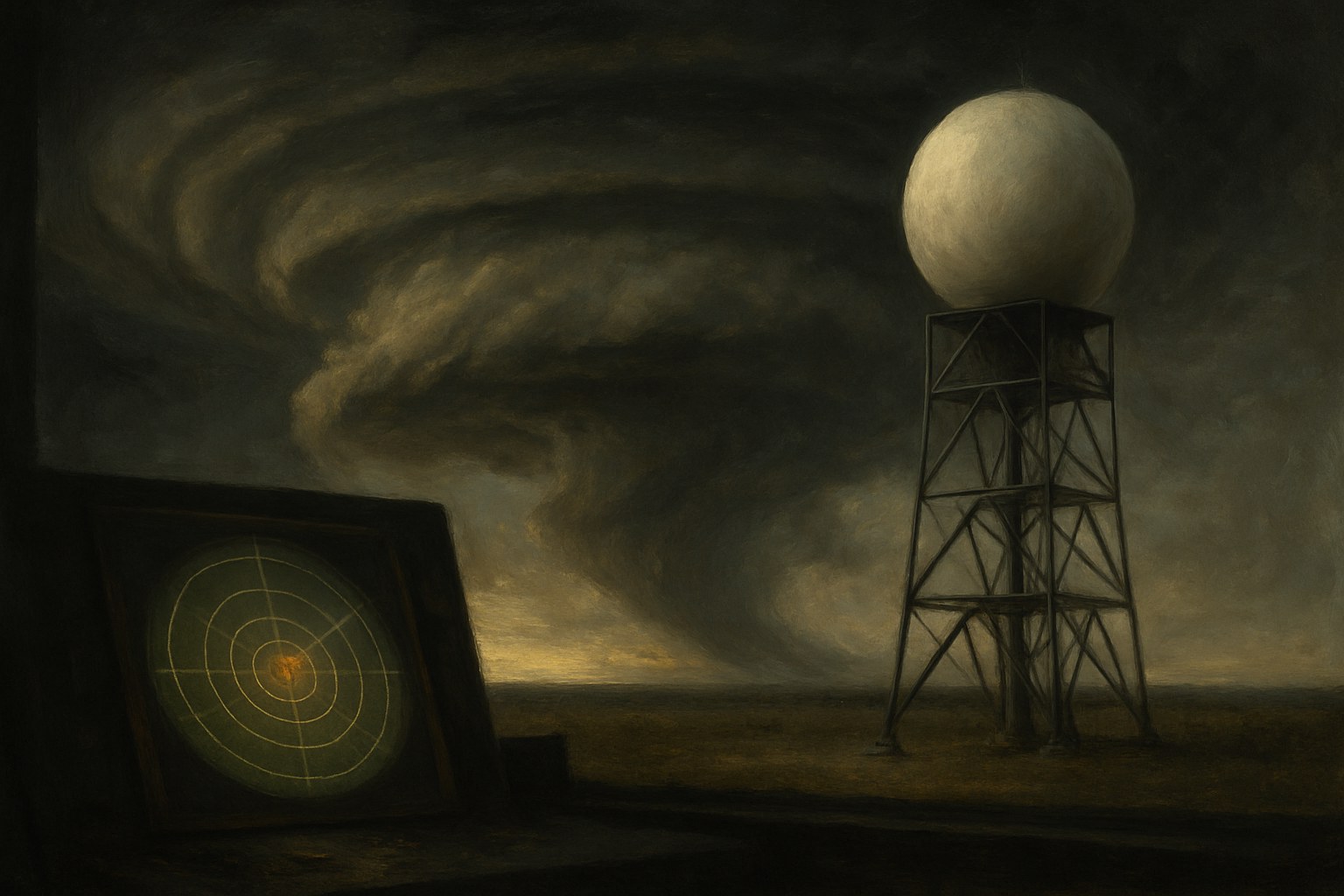
He called it a downburst, and its compact form a microburst, and most meteorologists did not believe him. A downdraft that violent and that small was thought impossible. Fujita answered with instrumented field campaigns in Illinois in 1978 and Colorado in 1982 that caught the phenomenon in the act and showed it to be common. The consequences for aviation were immediate and concrete. Airports were fitted with low-level wind shear alert systems and dedicated terminal Doppler radars, and crews were trained to fly out of a microburst rather than through it. After a fatal encounter near Dallas in 1985 the program accelerated, and microburst crashes on American airliners effectively ended.
The scale outlived him, though not unchanged. Engineers who studied buildings wrecked by tornadoes concluded that far less wind was needed to destroy them than Fujita had assumed, and that a scale calibrated on sturdy construction rated flimsy construction far too high. The Enhanced Fujita scale, adopted in February 2007, kept the six familiar numbers but rebuilt them on twenty-eight damage indicators, each with graded degrees of damage and a lowered wind estimate. It remains, deliberately, a measure of what a tornado did rather than of how fast it was turning — which means a violent storm crossing empty prairie can still rate near the bottom.

| Introduced | 1971, by Tetsuya Theodore Fujita |
| Basis | Observed damage, not measured wind |
| Range | F0 through F5 in practice |
| Spinoff | The downburst and microburst, found in a 1975 crash inquiry |
| Aviation | Wind shear alert systems and terminal Doppler radar |
| Revised | Enhanced Fujita scale, February 2007 |
| Date | Introduced 1971 |
| Location | Chicago, Illinois |