Niagara Falls
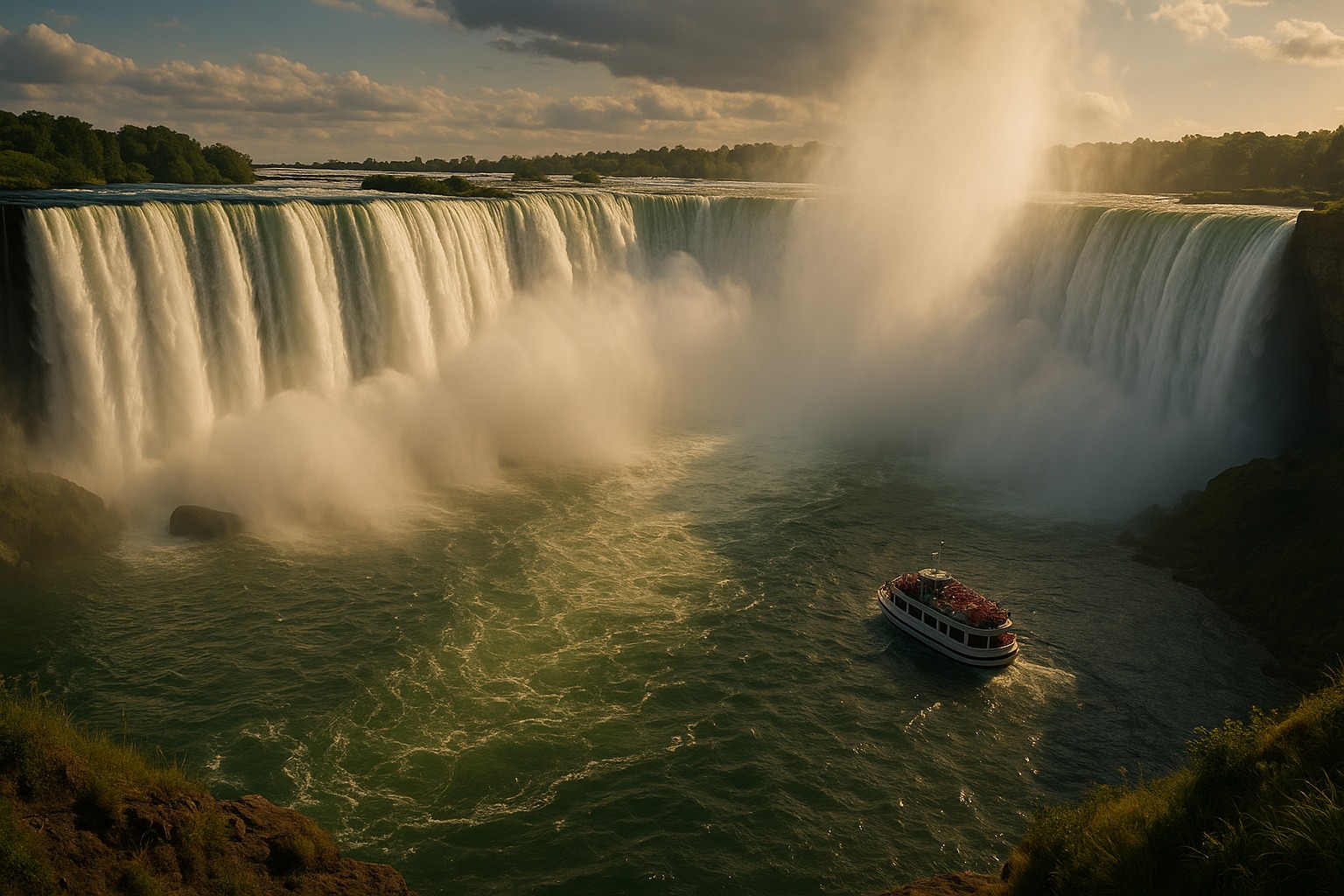
Niagara Falls is the collective name for three waterfalls on the Niagara River between Lake Erie and Lake Ontario — Horseshoe Falls, on the Canadian side, the largest by volume; American Falls and the smaller Bridal Veil Falls on the United States side. The Horseshoe alone carries roughly 90 percent of the river's flow, which averages 75,000 cubic feet per second during tourist season — the volume controlled by international treaty to maintain the falls' scenic value while diverting the rest to hydroelectric generation. The falls themselves are migrating upstream at about a foot a year as the riverbed erodes; over the 12,500 years since the last glaciation they have retreated about seven miles south from their original lip at Lake Ontario.
European tourism began almost immediately after the falls were first documented for European audiences by Father Louis Hennepin in 1683. By the early nineteenth century the American and Canadian banks were lined with hotels, observatories, and curio shops; daredevils began performing at the falls in the 1820s — Sam Patch jumped from a platform in 1829, Jean François Gravelet (Blondin) crossed on a tightrope in 1859, and Annie Edson Taylor went over Horseshoe Falls in a barrel in 1901, the first person to survive the trip. The crass commercialism became its own scandal. Frederick Law Olmsted led the campaign that produced the Niagara Reservation in 1885 — the first state park in the United States, designed explicitly to protect a natural wonder from privatization.
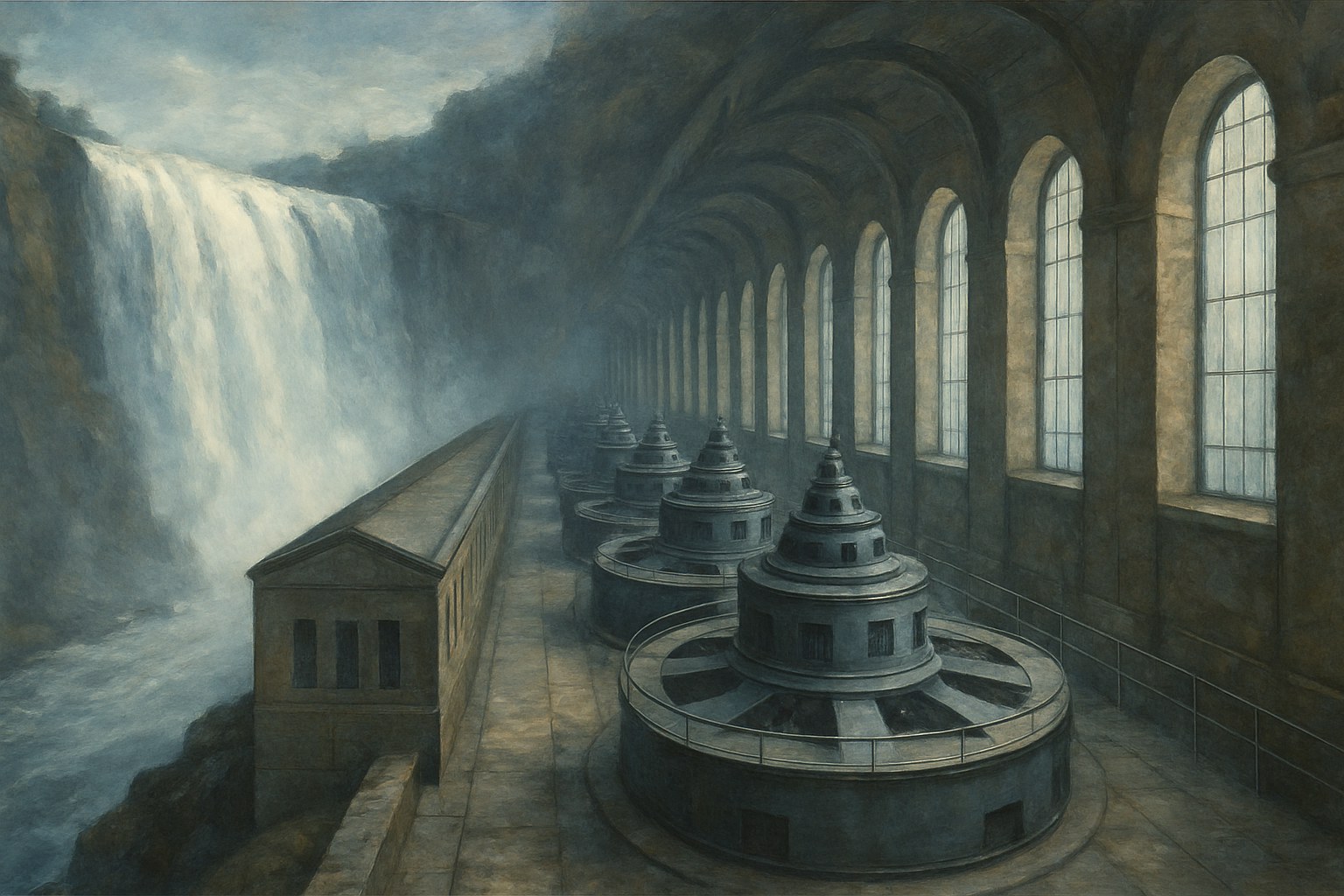
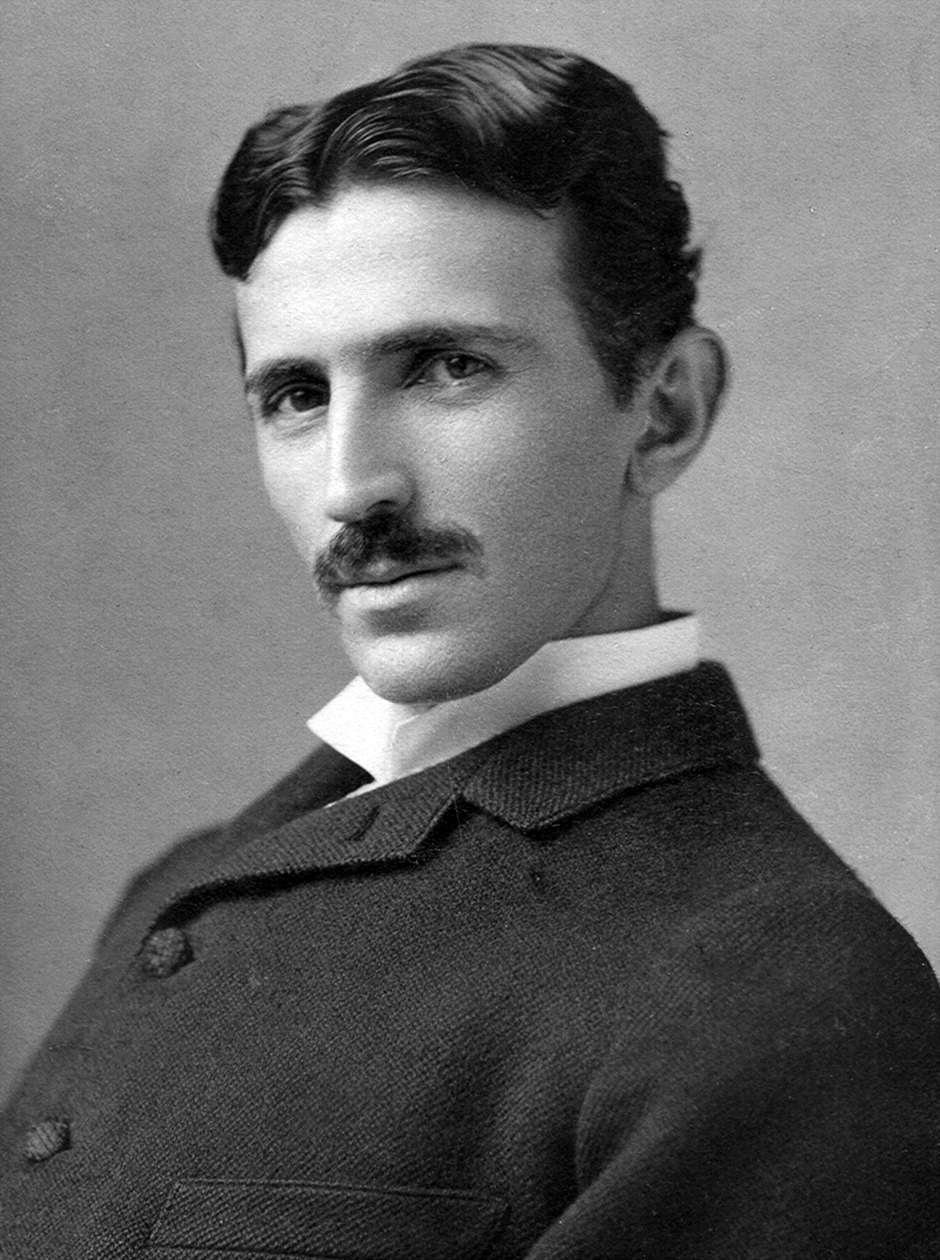
The falls became one of the foundations of the second industrial revolution. The Niagara Falls Power Company's hydroelectric station, opened in 1895 with generators designed by Nikola Tesla and built by Westinghouse, demonstrated long-distance alternating-current power transmission at industrial scale — the technology that decided the War of the Currents and that powers virtually every electric grid in the world today. Electrochemical industries clustered around the falls in the early twentieth century, including the Hooker Chemical company's Love Canal landfill, which became the founding scandal of the modern environmental movement in 1978. The Robert Moses Niagara Power Plant, opened in 1961, remains one of the largest hydroelectric facilities in the United States.
| Location | Niagara River, New York / Ontario border |
| Components | Horseshoe Falls (Canada), American Falls, Bridal Veil |
| Age | ~12,500 years |
| Horseshoe Falls height | ~167 ft |
| Niagara Reservation | 1885 (oldest state park in U.S.) |
| First hydroelectric station | 1895 — designed by Nikola Tesla, built by Westinghouse |
| Historical record | First European description: Father Louis Hennepin, 1683 |
| Date | ~12,500 years old · Niagara Reservation: 1885 · Power station: 1895 |
| Location | Niagara Falls, New York / Ontario |