The World Trade Center
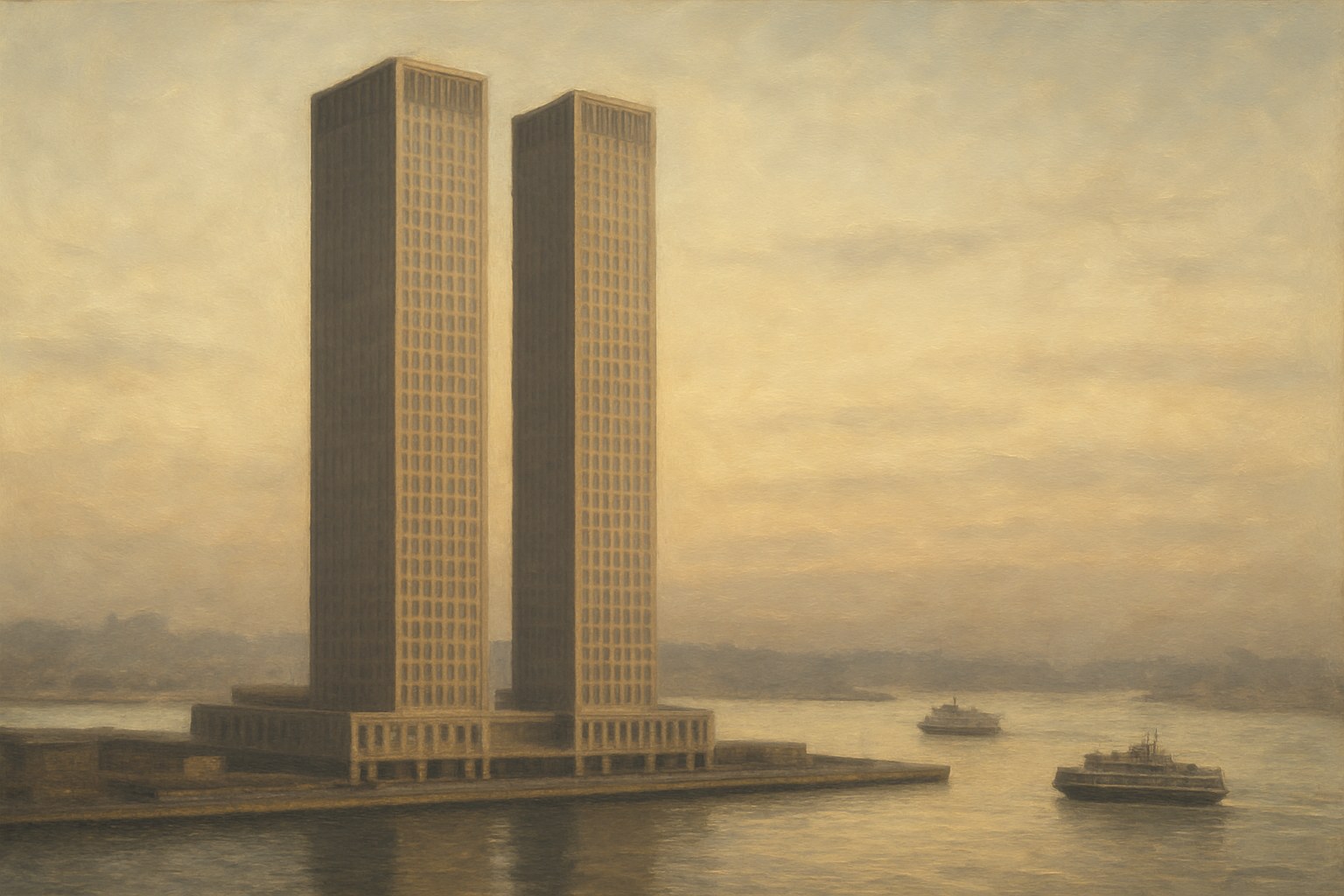
The Port Authority of New York and New Jersey conceived the World Trade Center in the early 1960s as an act of urban renewal, clearing sixteen acres of lower Manhattan — including a district of small electronics dealers known as Radio Row — to build a complex that would anchor a declining downtown. The architect Minoru Yamasaki, who disliked heights, designed a pair of towers of one hundred and ten stories each. The first tenants moved in during 1970 and the complex was dedicated in April 1973.
The towers rested on a structural idea then new to buildings that tall. Instead of an interior grid of columns, Yamasaki and the engineer Leslie Robertson set closely spaced steel columns around the perimeter so that the exterior wall itself acted as a hollow tube resisting wind, with a stiff service core carrying the elevators and long floor trusses spanning between the two. That left nearly an acre of unobstructed office space on every story. The windows were eighteen inches wide, a concession to the architect's own vertigo.
Critics disliked them at first, calling the towers blunt, repetitive, and out of scale with the city around them, and the Port Authority struggled for years to fill the space. New Yorkers came around slowly, and by the 1980s the twin silhouettes were as fixed in the skyline as the Empire State Building. On February 26, 1993, a truck bomb detonated in the parking garage beneath the north tower, killing six people and injuring more than a thousand. The buildings were repaired and reopened within weeks, and the attack faded from general memory.
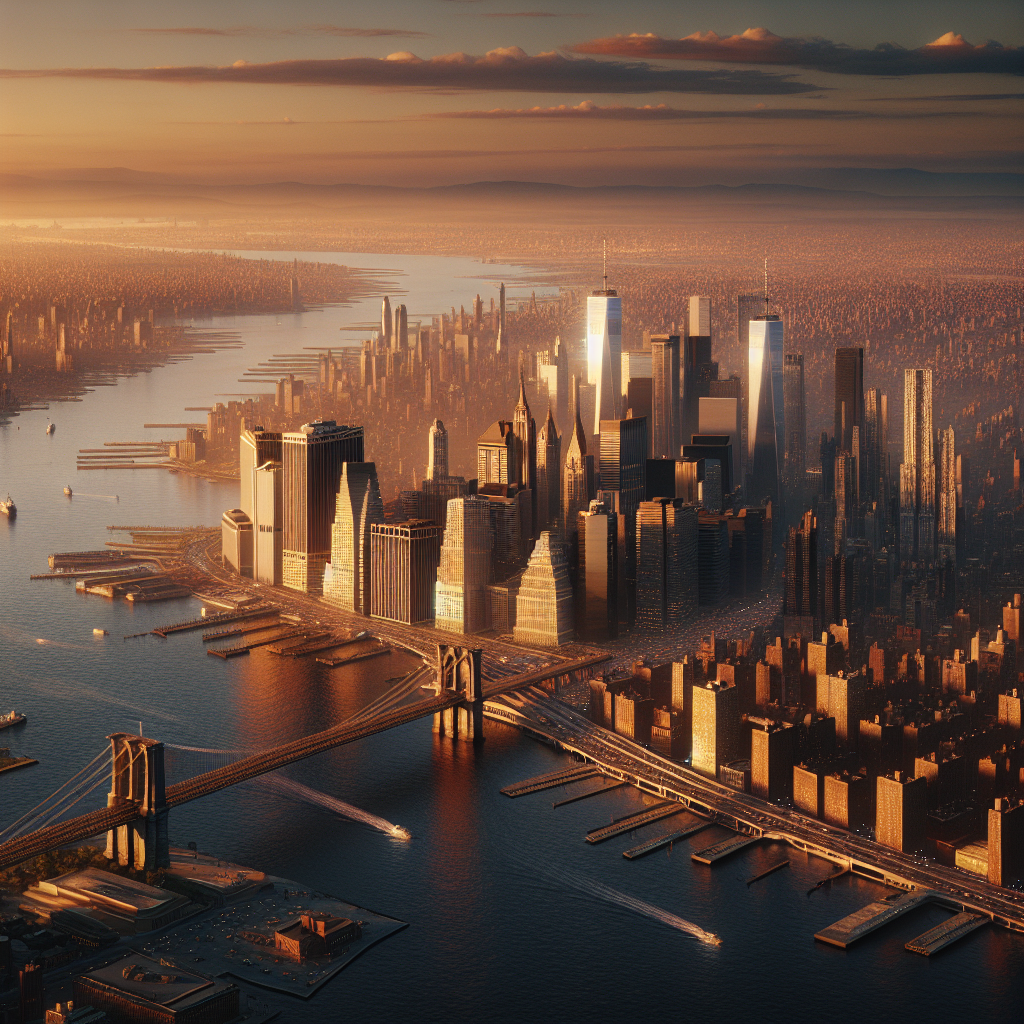
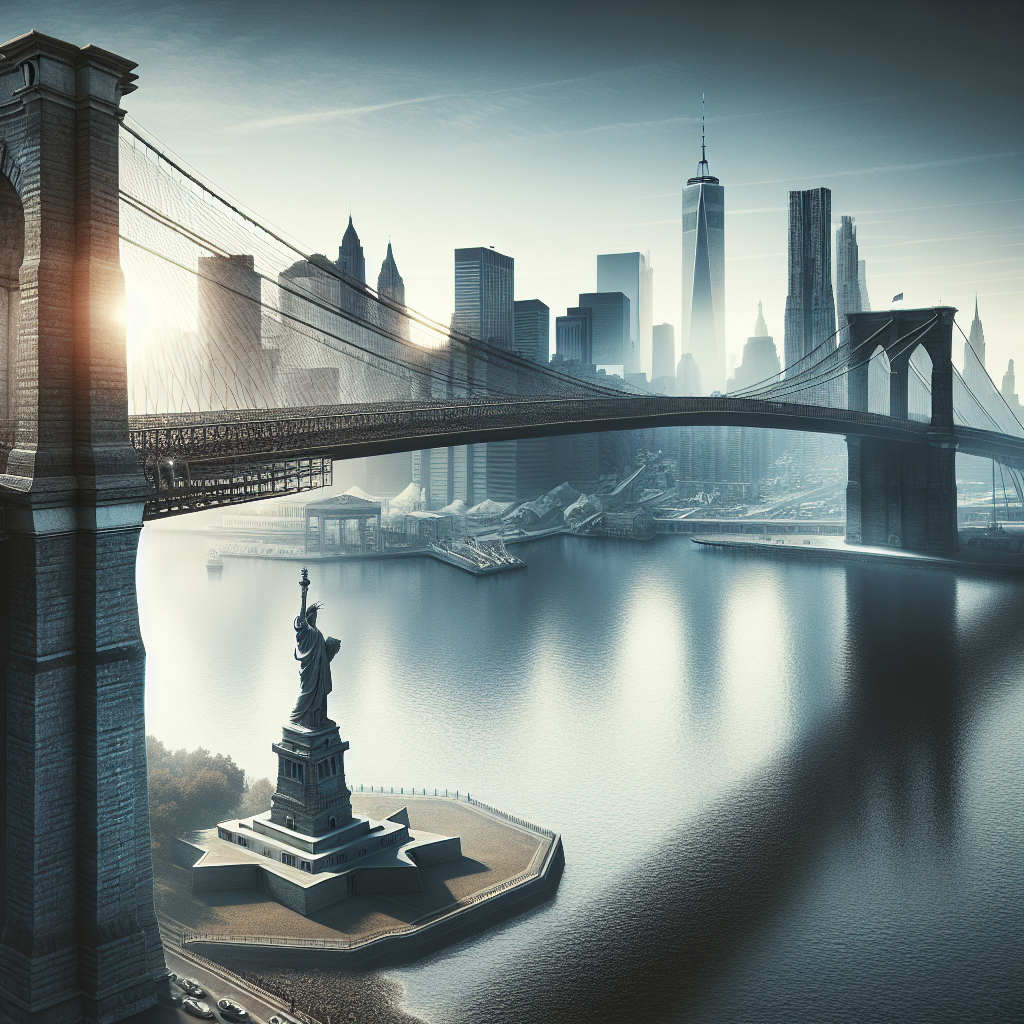
On the morning of September 11, 2001, hijacked airliners struck both towers and both collapsed within two hours. The coordinated attacks of that day killed nearly three thousand people, the great majority of them at this site. Rebuilding took more than a decade and was organized around a memorial set in the exact footprints of the two towers, with One World Trade Center rising at the northwest corner in 2014 to a deliberately symbolic one thousand seven hundred and seventy-six feet.

| Dedicated | April 1973 |
| Architect | Minoru Yamasaki |
| Engineer | Leslie E. Robertson |
| Structure | Framed-tube perimeter columns with a service core |
| Attacks | Truck bombing 1993, destroyed September 11, 2001 |
| Rebuilt | One World Trade Center opened 2014 at 1,776 feet |
| Date | 1973-2001 |
| Location | New York City |