Whitman Mission
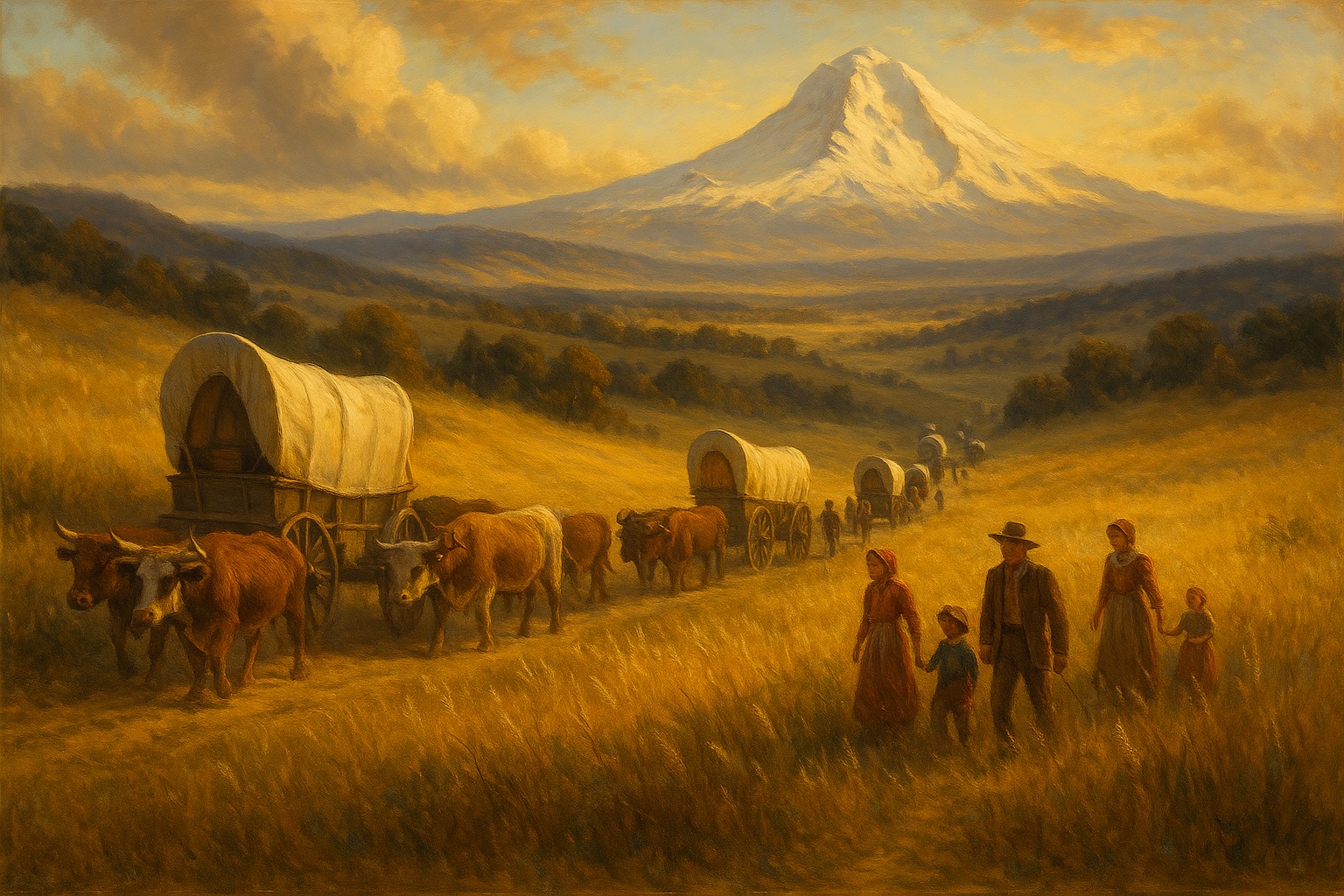
Marcus and Narcissa Whitman built their mission among the Cayuse near present-day Walla Walla, Washington, in 1836, intending to convert the Cayuse to Christianity and settled farming. The Cayuse had their own longstanding religious and social structures and showed little interest in either goal, and relations between the mission and the surrounding villages stayed tense for more than a decade as the Whitmans kept the station running anyway, increasingly serving as a waypoint for the wagon trains beginning to reach Oregon by the mid-1840s.
In 1847 a measles epidemic swept through the region, carried by the growing stream of emigrants passing the mission, and killed roughly half the Cayuse in the surrounding villages while leaving most white settlers who caught it alive. Cayuse leaders, who had watched Marcus Whitman treat sick settlers and sick Cayuse with starkly different survival rates, concluded he was deliberately poisoning them. On November 29, 1847, a group of Cayuse men killed Marcus and Narcissa Whitman along with 11 other mission residents, a response rooted in the epidemic's devastation and years of accumulated grievance over land and encroachment.
The killings, remembered as the Whitman Massacre, became the pretext the U.S. government used to end the joint occupation of Oregon and press for territorial status, and an 1850 military tribunal hanged five Cayuse men for the attack after a trial many historians consider procedurally unjust. The National Park Service now administers the site as Whitman Mission National Historic Site, interpreting both the mission's role on the trail and the epidemic and violence that ended it.

| Mission established | 1836 |
| Founders | Marcus and Narcissa Whitman |
| Measles epidemic | 1847, devastated the Cayuse |
| Whitmans and 11 others killed | November 29, 1847 |
| Cayuse men tried and hanged | 1850 |
| Operated today by | National Park Service |
| Date | Established 1836; destroyed November 29, 1847 |
| Location | Walla Walla, Washington |