The Chrysler Building
Two towers were rising in Manhattan in 1929 and each architect was lying about the height of his own. Downtown at 40 Wall Street, H. Craig Severance was building for the Bank of Manhattan Company. In midtown, on Lexington Avenue at Forty-second Street, William Van Alen was building for the automaker Walter Chrysler. The two men had been partners and had parted badly, and the contest between their buildings became a public sport, each side revising its published figures whenever the other announced a new number.
Van Alen won by cheating in plain sight. Inside the Chrysler Building's fire shaft his crews had quietly assembled a stainless-steel spire in four sections. On an October afternoon in 1929, with the Wall Street tower already topped out and its backers declaring victory, the spire was hoisted through the roof and riveted into place in about ninety minutes, adding one hundred and twenty-five feet and carrying the building to one thousand and forty-six. It was the first structure anywhere to pass the Eiffel Tower and the first to exceed a thousand feet.
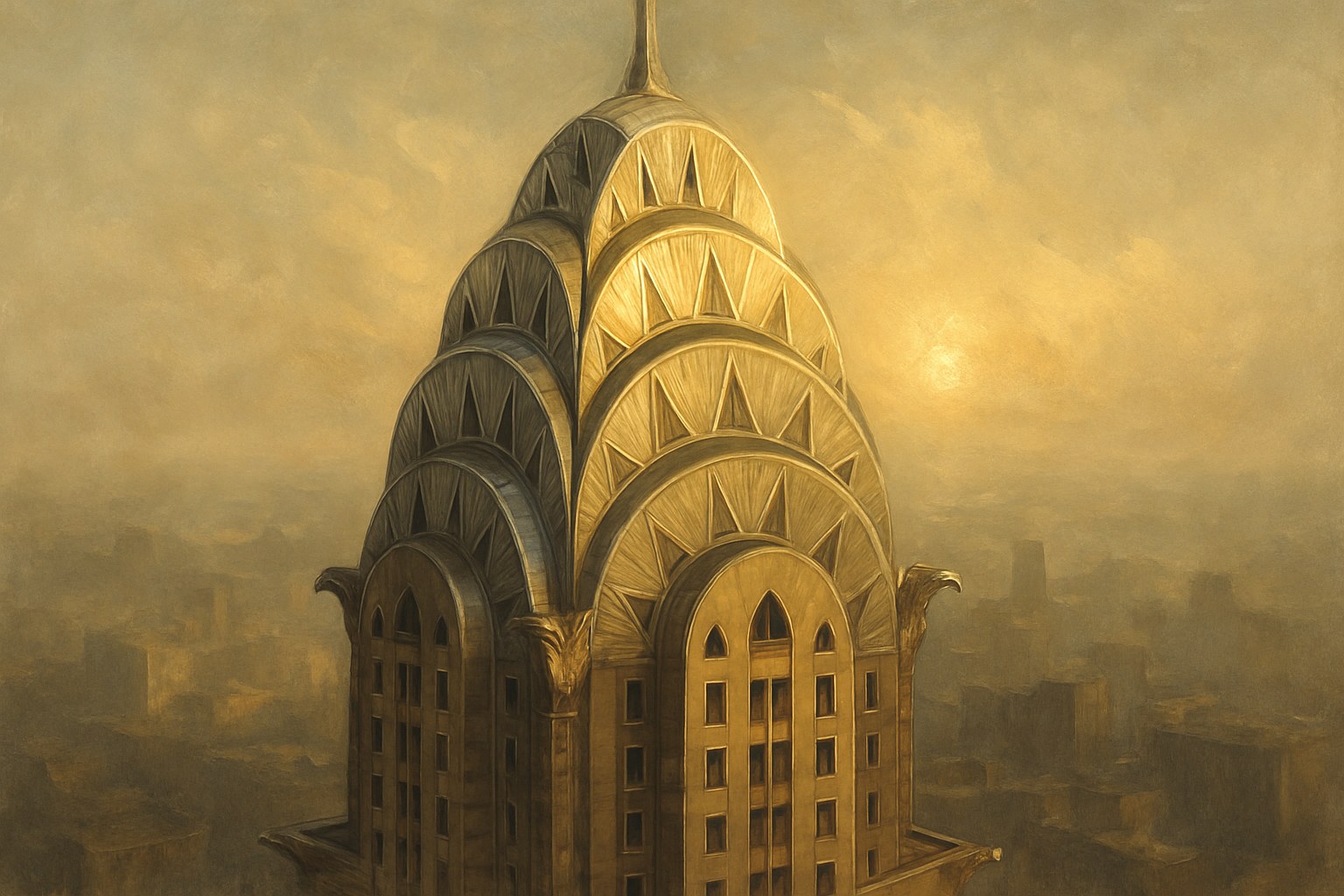
The building that carried the trick is the finest Art Deco tower in America. Chrysler wanted his automobiles quoted in the ornament and he got them — a frieze of stylized hubcaps and mudguards, corner ornaments modeled on radiator caps and on the eagle hood ornaments of his cars, and a crown of seven radiating arches in Nirosta stainless steel pierced with triangular windows that throw light back for a mile. The lobby was red Moroccan marble under a vast ceiling mural of transport, industry, and the building itself.
It was the tallest building in the world for eleven months. The Empire State Building, already under construction eleven blocks away, passed it in the spring of 1931. Van Alen never received another significant commission: Chrysler refused to pay his fee, Van Alen sued, and the suit ended his career at the height of his fame. The building has outlasted the argument entirely, and is the tower most often named when New Yorkers are asked which one they love, admired for exactly the ornamental extravagance the modernists who followed spent decades condemning.

| Completed | 1930 |
| Architect | William Van Alen |
| Client | Walter P. Chrysler |
| Height | 1,046 feet, seventy-seven stories |
| The trick | A 125-foot spire assembled inside and raised in about 90 minutes |
| Record | Tallest in the world for eleven months |
| Date | Completed 1930 |
| Location | New York City |