Angel Island
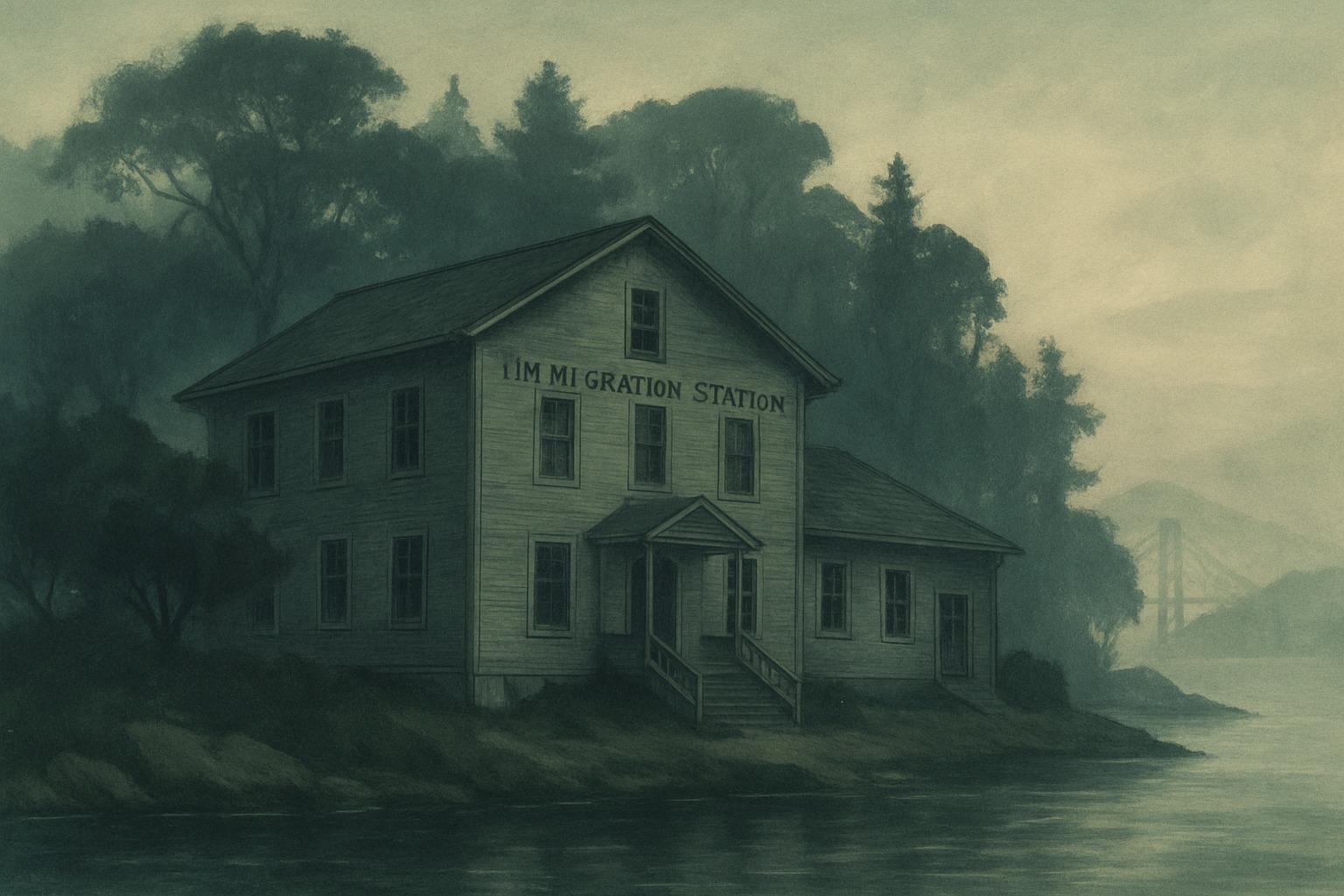
If Ellis Island was the front door of American immigration, Angel Island was the back gate — and for many it was barred. From 1910 to 1940, the immigration station in San Francisco Bay processed roughly a million people, most of them arriving from Asia across the Pacific. It is often called the "Ellis Island of the West," but the comparison flatters it.
Where Ellis Island aimed to admit, Angel Island was built to screen and exclude. It opened in the era of the Chinese Exclusion Act, and Chinese arrivals in particular faced long interrogations and detentions that could stretch from weeks to months while officials tried to disprove their right to enter. The barracks were less a waystation than a holding pen.
Detainees carved and brushed poems into the wooden walls of the barracks — hundreds of them, in classical Chinese, expressing loneliness, anger, and hope. Rediscovered decades later, these poems survive as a rare firsthand record of the immigrant experience written by the immigrants themselves, and they are the reason the station is preserved today.
A fire closed the station in 1940, and its history faded until a park ranger noticed the carvings in 1970. Angel Island now stands as a memorial — the counterweight to the Statue of Liberty in the national memory, a reminder that the American welcome was always selective, and that the Pacific gateway told a harder story than the Atlantic one.
| Location | San Francisco Bay, California |
| Operated | 1910–1940 |
| Nickname | "Ellis Island of the West" |
| Processed | ~1 million people, mostly from Asia |
| Legacy | Carved Chinese poetry preserved in the barracks |
| Date | 1910–1940 |
| Location | San Francisco Bay, California |