Jefferson Davis
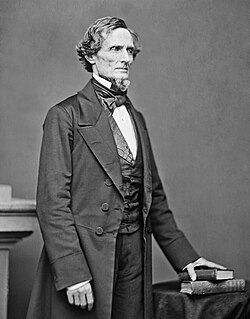
Jefferson Davis was among the best-prepared men in America for the presidency he never wanted and spent the rest of his life defending. A West Point graduate, combat veteran of the Mexican-American War, former Secretary of War under Franklin Pierce, and U.S. Senator from Mississippi, Davis had the political and military credentials the Confederacy needed. He had opposed secession as premature and told the Mississippi legislature he would rather have avoided it — then accepted the provisional presidency of the Confederate States in February 1861 as a matter of duty, was inaugurated permanently in February 1862, and led the Confederate war effort until the cause collapsed around him in April 1865.
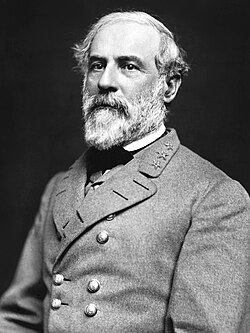
His performance as Confederate president was the subject of bitter argument during the war and has remained so since. His micromanagement of military strategy, his difficult personal relationships with generals who disagreed with him, his insistence on a defensive strategy when some argued for aggressive offense, and his rigid constitutionalism — which made it difficult to raise taxes, conscript troops, or override states' rights even in wartime — frustrated the war effort at critical moments. He also made inspired decisions: his choice to retain Robert E. Lee in command of the Army of Northern Virginia after Lee's predecessor was wounded at Seven Pines may have prolonged Confederate resistance by two years.
Davis was captured by Union cavalry in Georgia in May 1865, imprisoned at Fort Monroe, Virginia, for two years, and indicted for treason. He was never tried — the government concluded that a trial risked either martyrdom if convicted or acquittal by a sympathetic jury, and released him on bail in 1867. He spent his remaining decades writing his memoirs, defending Confederate principles, and watching the Lost Cause mythology he helped build become the dominant Southern interpretation of the war. He was posthumously restored to U.S. citizenship by Congress in 1978, 89 years after his death.

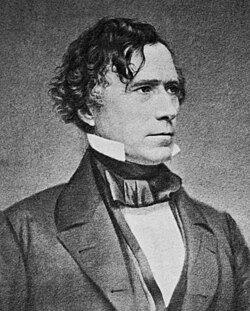
| Born | June 3, 1808 — Fairview, Kentucky |
| Died | December 6, 1889 — New Orleans, Louisiana |
| Role | President, Confederate States of America, 1861–1865 |
| Prior roles | U.S. Senator (Mississippi); Secretary of War under Pierce |
| Military | West Point 1828; Mexican-American War veteran |
| Captured | May 10, 1865 — Irwinville, Georgia |
| Citizenship | Posthumously restored by Congress, October 17, 1978 |
| Years | 1808–1889 |
| Location | Fairview, Kentucky |