Jonas Salk
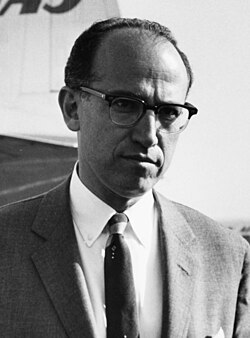
In the summer of 1952 — the worst polio epidemic in American history — nearly 58,000 cases were reported in the United States. Polio paralyzed its victims without warning, struck children with particular cruelty, and had resisted every attempt at prevention for decades. Parents kept children away from swimming pools and movie theaters in the summer months. Iron lungs filled hospital wards. Jonas Salk, a virologist at the University of Pittsburgh, had been working on a killed-virus vaccine since 1948, and by 1952 he was ready to begin human trials. The stakes were unlike those of almost any other medical experiment in American history.
The field trial of the Salk vaccine in 1954 was the largest in medical history: 1.8 million children participated, called Polio Pioneers. On April 12, 1955 — the tenth anniversary of Franklin Roosevelt's death — the results were announced. The vaccine was safe, potent, and effective. Church bells rang in cities across the country. When a reporter asked Salk who owned the patent, he replied that there was no patent — it belonged to the people. He had deliberately declined to patent the vaccine, a decision that cost him an estimated $7 billion in today's terms and that he never expressed regret about.
Salk became one of the most celebrated Americans of the 20th century almost overnight, though his relationship with the scientific community was complicated by questions about credit — Albert Sabin, who developed a rival oral vaccine, was contemptuous of Salk's methods and his fame. The Sabin oral vaccine eventually became the global standard for its ease of administration. Polio was eliminated from the United States by 1979 and from most of the world in subsequent decades. Salk spent his final years attempting to develop an AIDS vaccine and died in 1995 without succeeding, a failure he found more interesting than most people's successes.
| Born | October 28, 1914 — New York City |
| Died | June 23, 1995 — La Jolla, California |
| Vaccine announced | April 12, 1955 |
| Field trial | 1954 — 1.8 million child participants ("Polio Pioneers") |
| Patent decision | No patent filed — vaccine given freely to the public |
| Result | Polio eliminated from the United States by 1979 |
| Institution | University of Pittsburgh School of Medicine |
| Years | 1914–1995 |
| Location | Pittsburgh, Pennsylvania |