Jackie Robinson
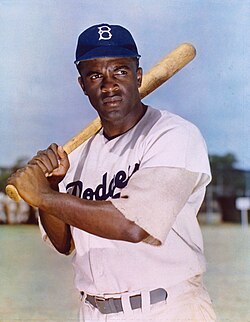
Branch Rickey, the Brooklyn Dodgers executive who recruited Jackie Robinson to break professional baseball's color line, did not simply search for the most talented Black player available. He looked for one who could, as he told Robinson directly, "have guts enough not to fight back." Robinson — a four-sport letterman at UCLA, former Army officer, and man of fierce personal pride — agreed to absorb whatever came for three years before asserting himself without restraint. What came was extraordinary: death threats, beanballs aimed at his head, segregated hotels in cities where his teammates slept in comfort, and slurs from players and dugouts he answered with nothing but his play.
Robinson took the field for the Brooklyn Dodgers on April 15, 1947, going 0 for 3 with a sacrifice bunt, one run scored, and the full weight of American history on his back. By the end of that season he had been named National League Rookie of the Year. By 1949 he was batting .342, leading the league, and named its Most Valuable Player. His athletic performance was never seriously in question; it was always, in a deeper sense, beside the point. Robinson understood that he was conducting a moral argument in public, and that losing his composure on any given afternoon would be used as evidence against the argument's entire premise.
Robinson was 28 when he broke the color line — older than he would have been without the years of exclusion — and the physical toll of his compressed career was severe. He retired in 1956, and his last years were not spent in nostalgia but in activism: writing columns, marching with King, and growing publicly impatient with a civil rights movement he felt was moving too slowly. He died at 53, legally blind from diabetes, in 1972. In 1997, Major League Baseball retired his number 42 across all teams simultaneously — an honor granted to no other player in the sport's history.
| Born | January 31, 1919 — Cairo, Georgia |
| Died | October 24, 1972 — Stamford, Connecticut |
| MLB Debut | April 15, 1947 — Brooklyn Dodgers |
| Awards | NL Rookie of the Year (1947); NL MVP (1949) |
| Career Batting Avg | .311 over 10 seasons; 6× All-Star |
| Number Retired | #42 — retired league-wide by MLB in 1997 |
| Military Service | U.S. Army, World War II; court-martialed and acquitted for refusing to move to back of bus |
| Years | 1919–1972 |
| Location | Brooklyn, New York |