Betty Friedan
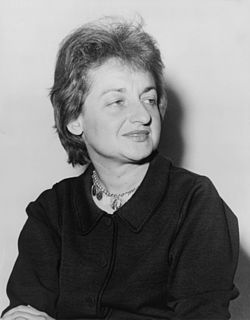
Betty Friedan called it "the problem that has no name" — the pervasive, unacknowledged dissatisfaction she observed among educated middle-class American women in the late 1950s who had been told that domesticity was fulfillment and found instead that something essential in them was going unmet. The Feminine Mystique, published in February 1963, named that problem in language millions of women recognized on first reading. Its first-year sales were modest. Its second and third years were not. Within a decade it had sold three million copies and fundamentally altered the terms on which American women understood their own lives.
Friedan had spent years as a labor journalist and magazine writer before The Feminine Mystique, and the book's argument drew on social science and psychology as much as personal experience. She indicted the postwar consensus that had equated women's liberation with homemaking — naming the domestic ideal itself, rather than individual failure or inadequacy, as the source of what so many women were feeling. The book's reach extended far beyond its intended audience: it is credited, more than any other single text, with launching second-wave feminism in the United States.
Friedan co-founded the National Organization for Women in 1966 and helped drive the push for the Equal Rights Amendment. She was a complicated and often combative figure — dismissive of lesbian feminists and the movement's more radical wing, and frequently described by younger activists as obstructionist. None of that diminishes what The Feminine Mystique accomplished: it told millions of women that the unhappiness they had been taught to internalize as personal failing was, in fact, political. She died on her 85th birthday in 2006.
| Born | February 4, 1921 — Peoria, Illinois |
| Died | February 4, 2006 — Washington, D.C. (her 85th birthday) |
| Major Work | The Feminine Mystique (1963) |
| Co-founded | National Organization for Women (NOW), 1966 |
| Movement | Second-wave feminism |
| Key Campaign | Equal Rights Amendment (ERA) |
| Sales | Approx. 3 million copies (U.S.) within a decade of publication |
| Years | 1921–2006 |
| Location | New York, New York |