Ralph Waldo Emerson
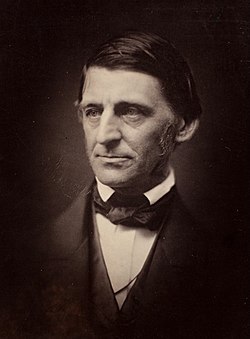
When Ralph Waldo Emerson stood before the Harvard Divinity School graduates in 1838 and declared that institutional religion was a dead form and that each person could encounter the divine directly through nature and self-reflection, the scandal was immediate. Harvard didn't invite him back for thirty years. The address — and the broader philosophy of Transcendentalism he had been building since his 1836 essay "Nature" — reshaped American intellectual life, and through it, American culture itself.
Emerson was, by any measure, the central mind of 19th-century American letters. His essays — "Self-Reliance," "The American Scholar," "The Over-Soul" — gave the country a philosophical vocabulary for individualism, self-invention, and the rejection of European cultural authority. Walt Whitman called receiving a letter of praise from Emerson after sending him "Leaves of Grass" the greatest moment of his life. Henry David Thoreau built his cabin at Walden Pond on land Emerson owned and considered Emerson his intellectual father.
His influence extended beyond literature into American identity. The Emersonian faith in self-creation — the idea that a person is not bound by birth, class, or tradition — threads through everything from the self-help industry to the mythology of the American entrepreneur. He died in 1882 in Concord, Massachusetts, having watched his ideas ripple outward for half a century in directions he could not always have anticipated or approved.
| Born | May 25, 1803 — Boston, Massachusetts |
| Died | April 27, 1882 — Concord, Massachusetts |
| Movement | Transcendentalism |
| Key works | "Nature" (1836), "Self-Reliance" (1841), "The American Scholar" (1837) |
| Occupation | Essayist, lecturer, poet, former Unitarian minister |
| Notable associate | Henry David Thoreau (protégé and friend) |
| Years | 1803–1882 |
| Location | Concord, Massachusetts |