Emma Lazarus
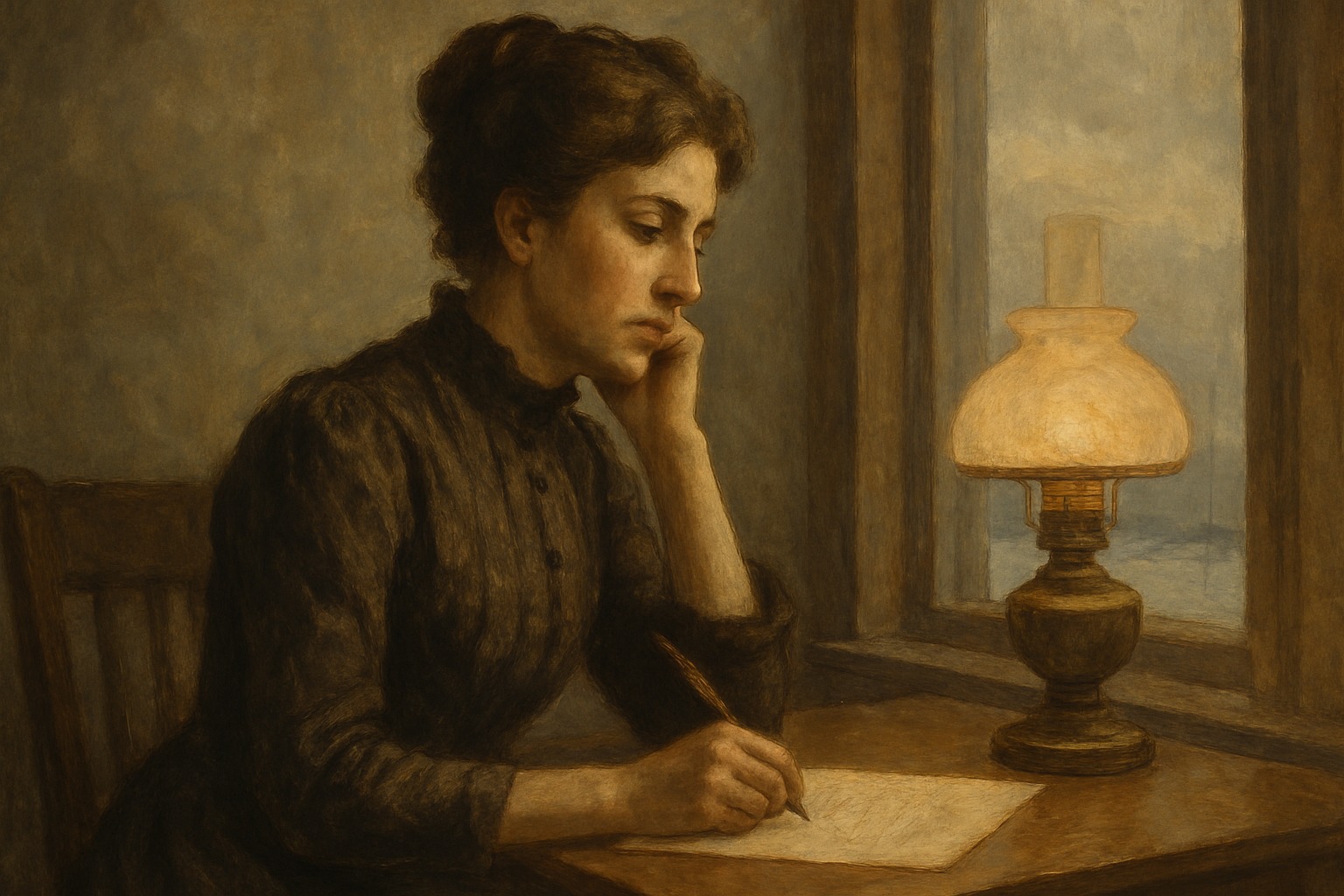
Emma Lazarus wrote fourteen lines that would define how Americans understood their own country. A poet from a established New York Sephardic Jewish family, she penned "The New Colossus" in 1883 to help raise money for the pedestal of the Statue of Liberty — and in doing so gave the statue a meaning its French designers had never intended.
The statue was conceived as a monument to liberty and Franco-American friendship, not immigration. Lazarus changed that. Her sonnet reimagined it as the "Mother of Exiles," lifting her lamp beside the "golden door" — and her closing lines, "Give me your tired, your poor, your huddled masses yearning to breathe free," became the unofficial creed of an immigrant nation.
Lazarus came to the cause through her own people. Moved by the plight of Jewish refugees fleeing pogroms in the Russian Empire, she became an advocate for immigrants and a defender of the persecuted, and her poetry turned that commitment into something larger than any one group.
She died young, in 1887, and the poem was largely forgotten until a friend campaigned to have it engraved on a bronze plaque inside the statue's pedestal in 1903. Only then did Lazarus's words fuse permanently with the monument — and through it, with the American idea of welcome.
| Lived | 1849–1887 |
| Famous Work | "The New Colossus" (1883) |
| Famous Line | "Give me your tired, your poor…" |
| Cause | Advocate for Jewish refugees and immigrants |
| Legacy | Poem engraved on the Statue of Liberty's pedestal, 1903 |
| Date | 1849–1887 |