The SEIU (Service Employees)
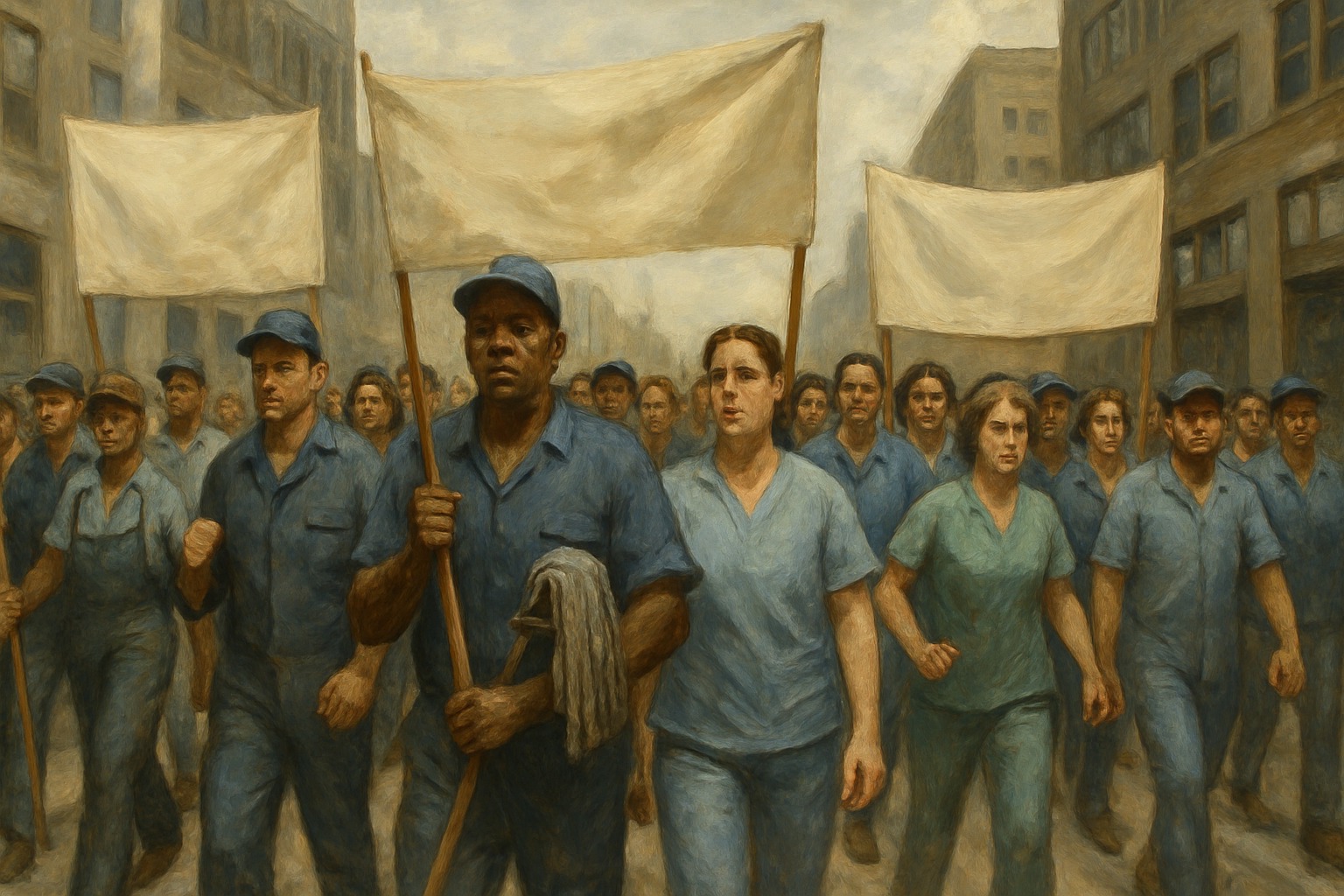
The Service Employees International Union began in 1921 among the janitors who cleaned the buildings of Chicago, a modest local of workers the industrial unions largely overlooked. Its history ran against the current of American labor: as the factory jobs that built the great unions vanished, the SEIU grew by organizing the service economy that replaced them — the people who clean offices, care for patients, and staff the public sector.
The union made its name organizing the low-wage, often immigrant workers that others thought impossible to unionize. Its Justice for Janitors campaign, launched in the 1980s, used marches and civil disobedience to win contracts for building cleaners, and it poured resources into organizing home-care and hospital workers. By the turn of the century the SEIU had become one of the largest and fastest-growing unions in the country.
That growth translated into political muscle. The SEIU became a major force in Democratic politics and a driving engine behind the Fight for 15, the campaign to raise the minimum wage to fifteen dollars an hour that reshaped the national debate over low-wage work. In 2005, frustrated with the direction of the labor movement, it broke from the AFL-CIO to help form a rival federation called Change to Win.
The SEIU stands as a portrait of American labor's attempt to reinvent itself for a post-industrial age. Where earlier unions organized the assembly line, the SEIU organized the hospital ward and the office tower after hours, betting that the future of the labor movement lay with the service workers who could not be shipped overseas.
| Founded | 1921, Chicago |
| Members | Janitors, healthcare, and public-service workers |
| Campaigns | "Justice for Janitors," "Fight for 15" |
| Distinction | Among the largest U.S. unions |
| 2005 | Left the AFL-CIO to form Change to Win |
| Date | Founded 1921 |
| Location | Chicago, Illinois |