IBM
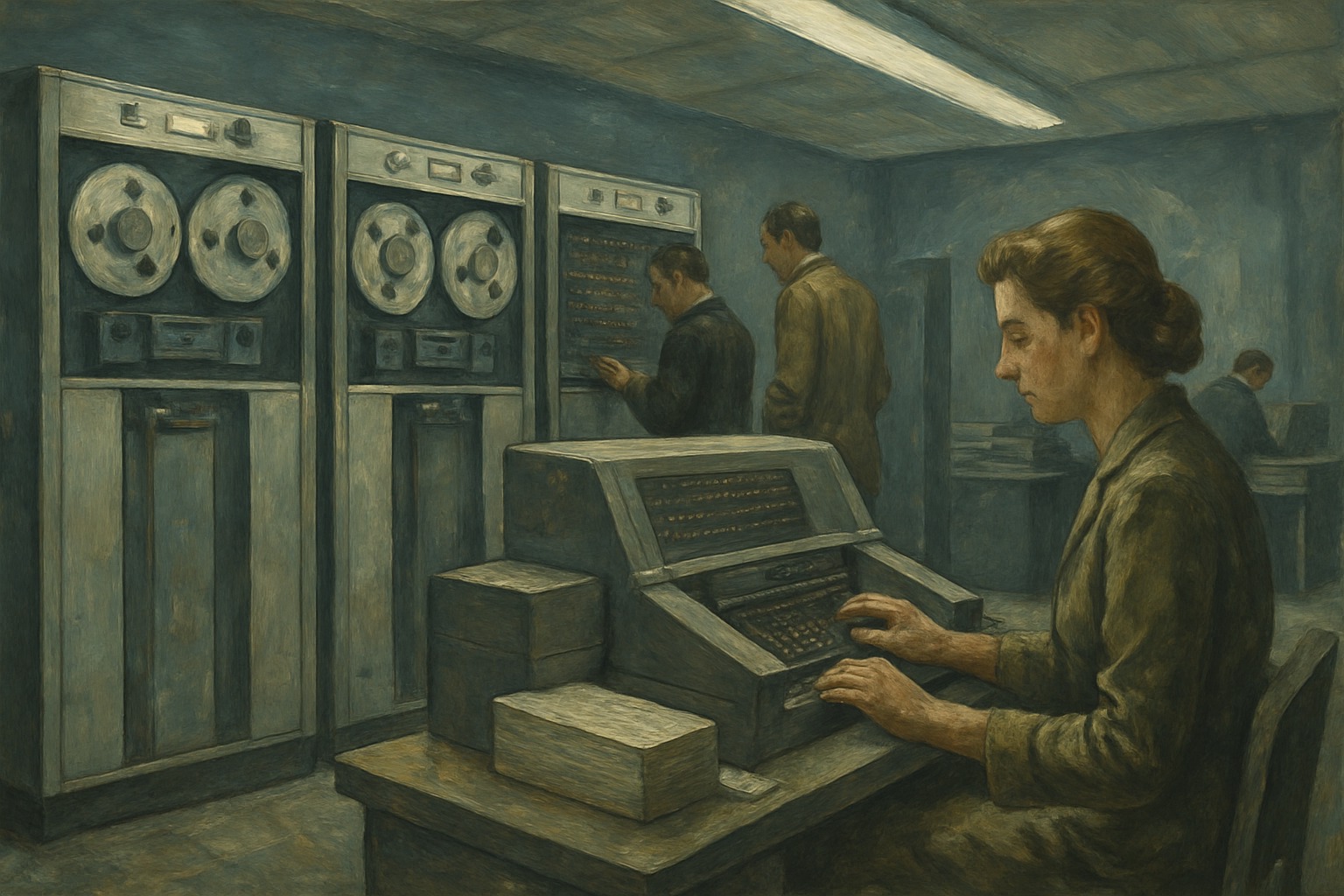
The company that would define corporate computing began by counting people. Its roots lay in the punch-card tabulating machines that Herman Hollerith built to process the 1890 U.S. Census, mechanizing a count that had threatened to take most of a decade by hand. Hollerith's firm merged into a conglomerate in 1911, and in 1924 the salesman-turned-executive Thomas J. Watson renamed it the International Business Machines Corporation — IBM — and set about selling not just machines but a gospel of order, loyalty, and the slogan THINK.
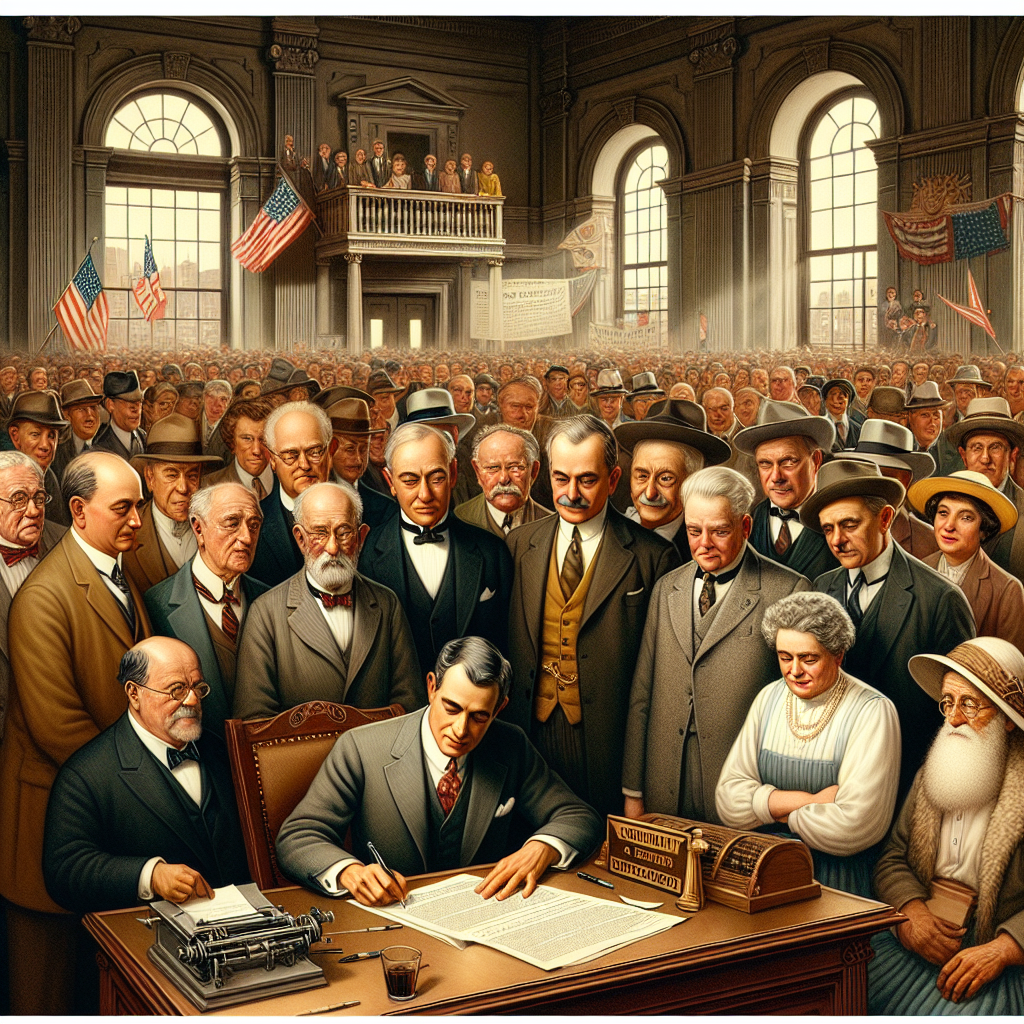
IBM rose by renting the machinery of large-scale record-keeping. Through the Great Depression it kept building tabulators while others cut back, a gamble that paid off when the new Social Security system of 1935 required the government to track the earnings of millions of Americans — work IBM's machines were built to do. That same data technology had a darker chapter: the company's German subsidiary supplied tabulating equipment used by the Nazi regime, and the extent of the American headquarters' knowledge and responsibility remains a subject of documented historical debate.
After the Second World War IBM made the leap from tabulators to computers and came to dominate the new industry. Its System/360, launched in 1964, standardized the mainframe and locked corporate America into IBM's ecosystem so thoroughly that a proverb took hold: nobody ever got fired for buying IBM. The company's blue-suited salesmen and towering market share made it the very image of the postwar corporation, powerful enough to draw a long federal antitrust suit.
IBM introduced the personal computer in 1981 and, by choosing an open design built on outside parts, inadvertently handed the future to Microsoft and Intel rather than itself. It survived a near-death crisis in the early 1990s by reinventing itself around software and services rather than hardware. From census cards to mainframes to artificial intelligence, IBM's long history traces the arc of the information age itself — and the rise of the data-driven corporation.


| Roots | Hollerith's 1890 census tabulating machines |
| Formed | 1911 (as CTR); renamed IBM in 1924 |
| Named by | Thomas J. Watson |
| Landmark | System/360 mainframe, 1964 |
| PC | IBM Personal Computer, 1981 |
| Headquarters | Armonk, New York |
| Date | Founded 1911 |
| Location | Armonk, New York |