American Innovation
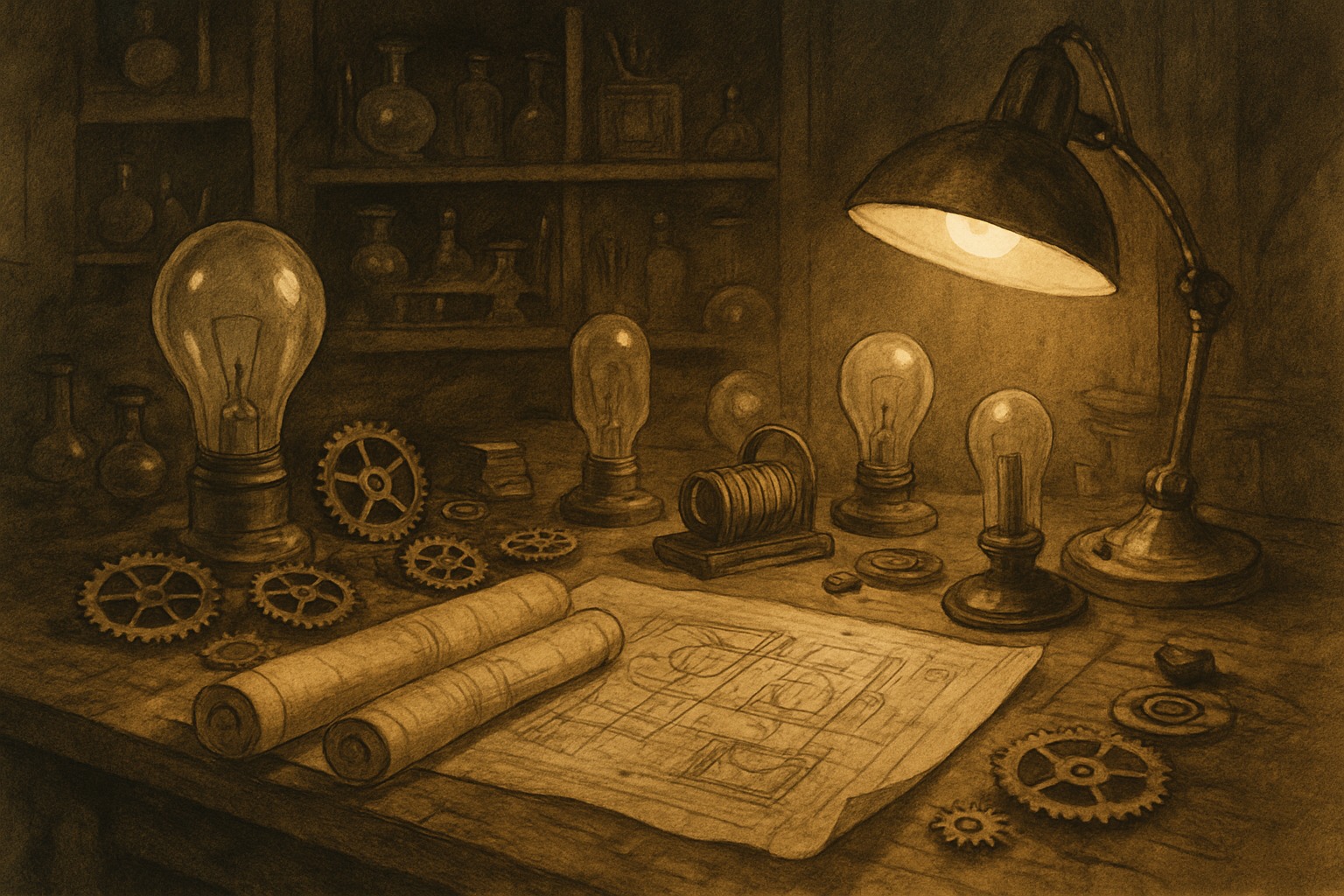
From the cotton gin to the smartphone, the United States has been one of the most prolific sources of invention in human history. A combination of restless practicality, a patent system written into the Constitution, abundant resources, and waves of talented immigrants made American innovation a defining national trait — and the foundation of its economic power.
The roots ran deep. The founders prized "useful arts," and the Constitution gave Congress the power to grant patents, putting the protection of new ideas at the heart of the republic. Through the 19th century, a stream of inventors — Whitney, Morse, Bell, Edison — turned tinkering into industry, and "Yankee ingenuity" became a point of national pride.
In the 20th century, invention scaled up. Corporate research labs, the wartime Manhattan Project, federally funded universities, and the venture capital of Silicon Valley turned the lone inventor's garage into a vast innovation system — one that produced flight, the atomic age, the transistor, the computer, and the internet.
That system reshaped not just the American economy but daily life around the world. The story of American innovation is, in many ways, the story of how the modern world was built — and a reminder that ideas, as much as land or armies, made the United States a superpower.
| Constitutional Root | Congress empowered to grant patents (1787) |
| 19th Century | Whitney, Morse, Bell, Edison turn invention into industry |
| 20th Century | Corporate labs, the Manhattan Project, Silicon Valley |
| Reach | Flight, the atom, the transistor, the computer, the internet |
| Date | From the patent clause to Silicon Valley |