The Gulf War
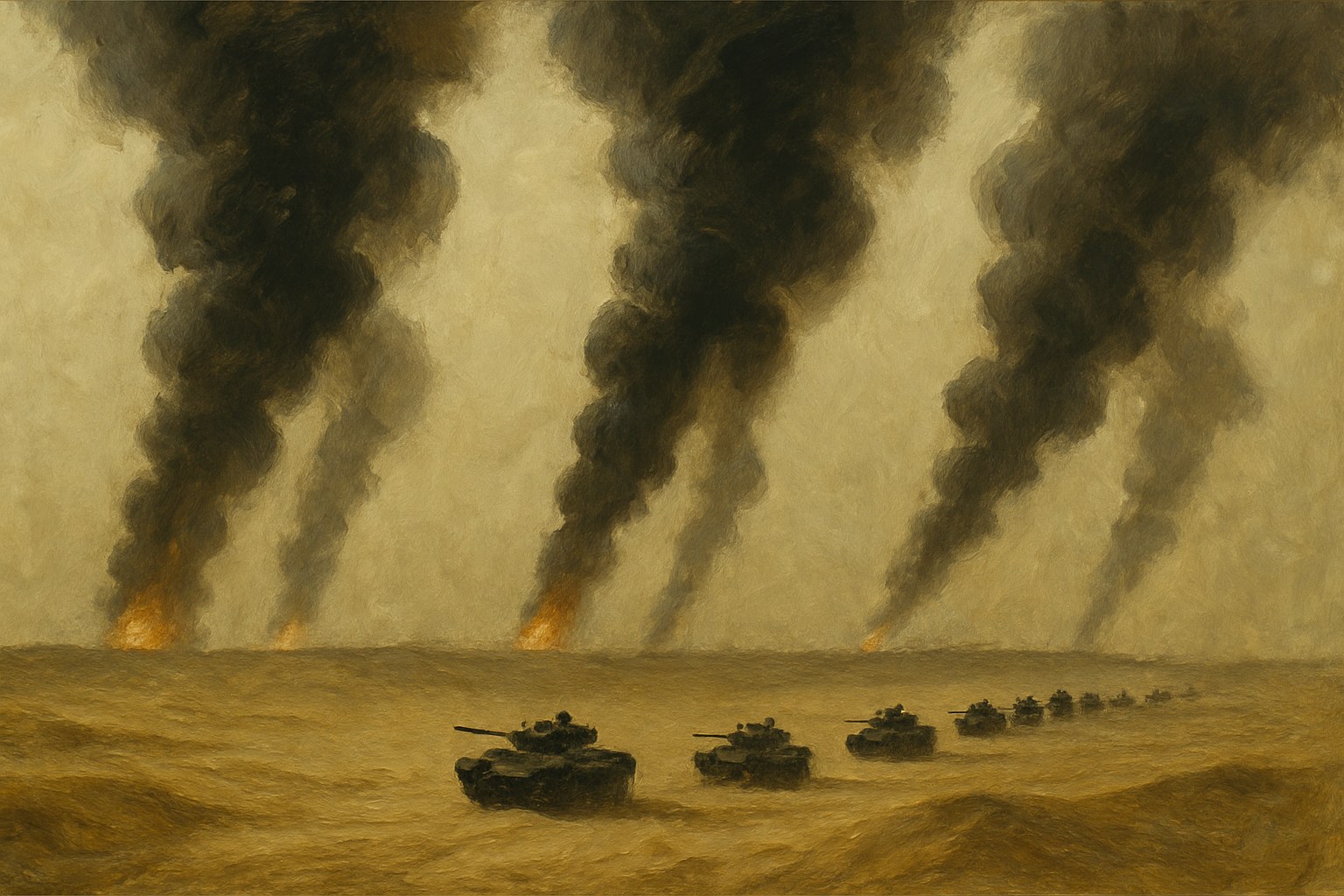
On August 2, 1990, Iraqi armored columns crossed the border into Kuwait and overran the small oil emirate in a matter of hours. Saddam Hussein had emerged from eight years of war with Iran deep in debt, and he accused his neighbor of overproducing oil and of siphoning crude from a field that straddled the frontier. He declared Kuwait an Iraqi province. The seizure put roughly a fifth of the world's proven oil reserves under his control and placed his army on the Saudi border, and Washington read the move as a threat to the entire Gulf.
President George H. W. Bush answered with Operation Desert Shield, rushing American forces to Saudi Arabia while he assembled a coalition of some thirty-five nations that included Britain, France, Egypt, Syria, and the Saudis themselves. The United Nations Security Council authorized the use of force if Iraq did not withdraw by January 15, 1991. Congress debated the question openly and voted narrowly to approve — 250 to 183 in the House, 52 to 47 in the Senate — with many members warning of a long war and heavy American casualties.
Operation Desert Storm opened on January 17, 1991, with five weeks of air attacks that shattered Iraqi command networks, air defenses, and supply lines. The ground offensive began on February 24 and lasted about a hundred hours. Coalition armor swung far west of the Kuwaiti border and cut in behind the Iraqi army, which broke and streamed north out of Kuwait City under punishing air attack. Bush ordered a ceasefire on February 28. Iraqi losses ran into the tens of thousands. Coalition deaths numbered a few hundred, a striking share of them from accidents and friendly fire.
The coalition stopped at the Iraqi border. Its United Nations mandate covered the liberation of Kuwait and nothing more, and Bush and his advisers feared that taking Baghdad would fracture the alliance and leave American troops policing a country they did not understand. Saddam survived and crushed the Shiite and Kurdish uprisings that American broadcasts had encouraged. Twelve years of no-fly zones, sanctions, and weapons inspections followed. Bush said the victory had cured the country of its Vietnam syndrome, but the war's unfinished ending framed the argument that produced a second invasion in 2003.


| Dates | August 1990 to February 1991 |
| Trigger | Iraq's invasion of Kuwait, August 2, 1990 |
| Operations | Desert Shield, then Desert Storm |
| Coalition | About 35 nations, under U.N. authorization |
| Ground war | Roughly 100 hours, February 24-28, 1991 |
| Outcome | Kuwait liberated, Saddam Hussein left in power |
| Date | 1990-1991 |
| Location | Kuwait City, Kuwait |