The First Thanksgiving
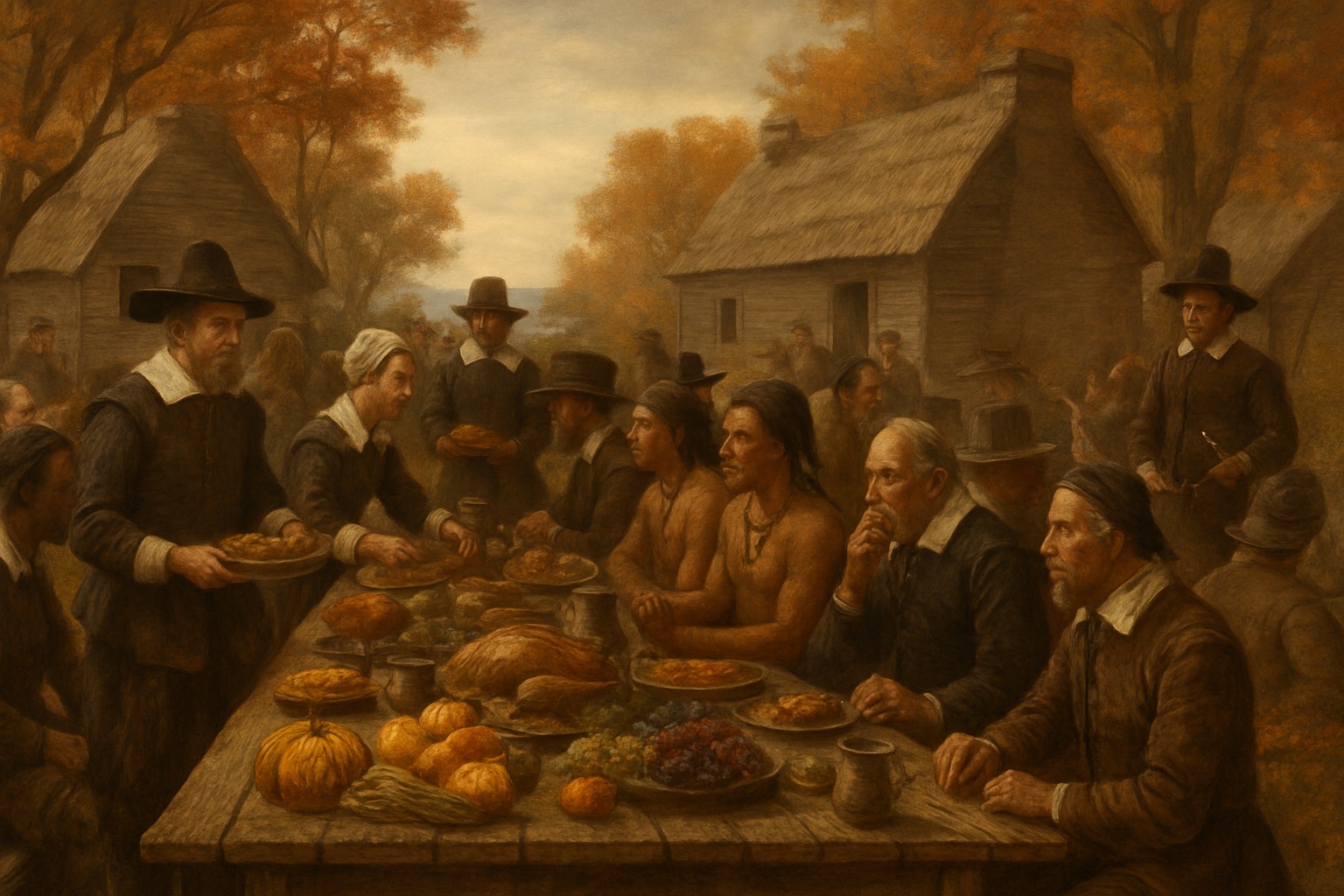
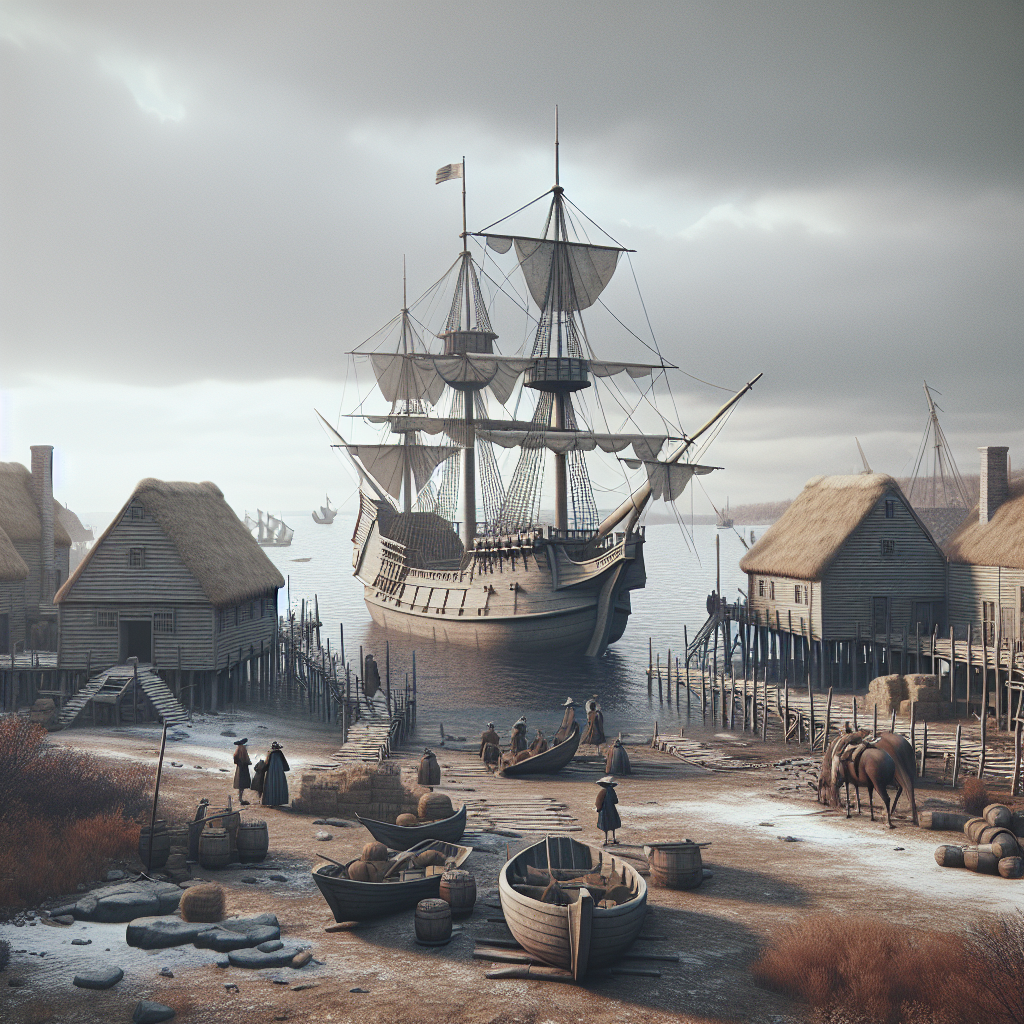
In the autumn of 1621, the surviving English colonists at Plymouth gathered with about ninety Wampanoag men for a harvest celebration that lasted several days. Roughly half the colonists who had arrived on the Mayflower the previous winter were already dead, and the harvest they were marking had been made possible only with Wampanoag help — particularly that of Tisquantum, known as Squanto, who taught them where to fish and how to plant. Only two brief contemporary accounts of the gathering survive, and neither calls it a thanksgiving.
The menu of popular imagination is mostly invention. The colonists likely ate venison, brought by the Wampanoag, along with wild fowl, corn, and whatever the harvest had yielded; there is no evidence of turkey, pumpkin pie, or cranberry sauce. The event was not a religious thanksgiving in the Puritan sense — those were solemn days of prayer and fasting — but a secular harvest feast of a kind common in England, and it was not repeated as an annual tradition.
The alliance the feast represented was real but fragile. Massasoit, the Wampanoag leader, had made a strategic peace with the newcomers against rival groups, and that arrangement held for a generation. Within fifty years it collapsed into King Philip's War, one of the deadliest conflicts per capita in American history, which devastated the Wampanoag and shattered the cooperation the 1621 gathering had briefly embodied.
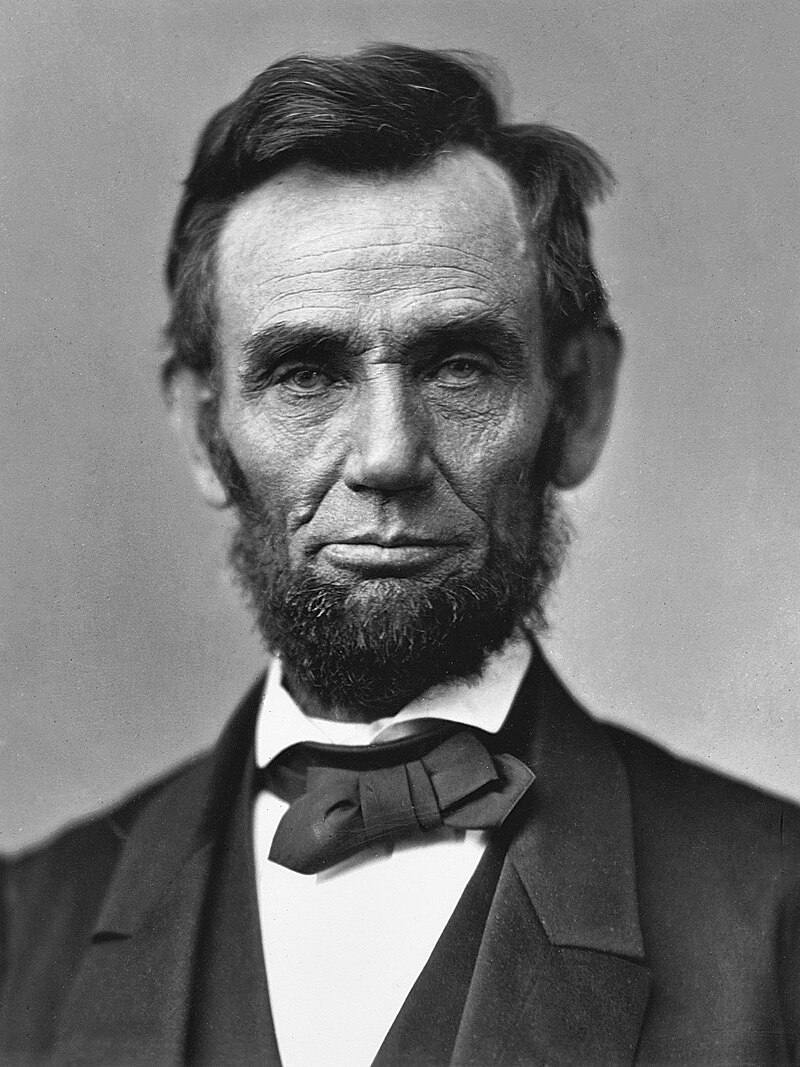
The modern holiday owes more to the nineteenth century than to 1621. Writer Sarah Josepha Hale campaigned for decades to make Thanksgiving a national observance, and Abraham Lincoln proclaimed it in 1863 as a unifying ritual during the Civil War. The Pilgrim story was attached later, hardening into a national origin myth that many Native Americans mark instead as a National Day of Mourning.
| Date | Autumn 1621 |
| Place | Plymouth Colony |
| Participants | Plymouth colonists and about 90 Wampanoag |
| Key Figure | Tisquantum (Squanto); Massasoit |
| Likely Foods | Venison, wild fowl, corn — no turkey or pie recorded |
| National Holiday | Proclaimed by Lincoln, 1863 |
| Date | Autumn 1621 |
| Location | Plymouth, Massachusetts |