1906 San Francisco Earthquake
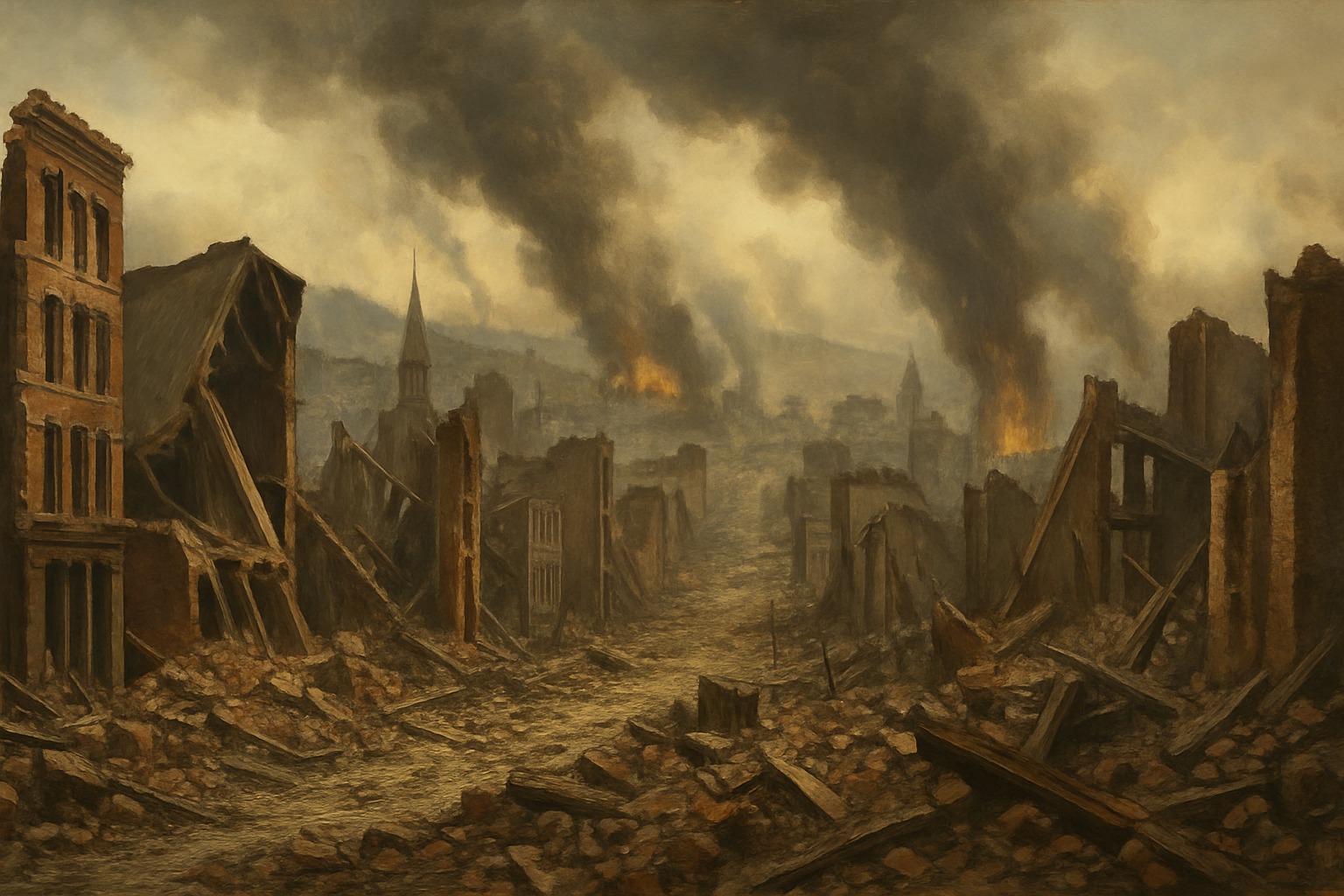
At 5:12 on the morning of April 18, 1906, a violent earthquake struck along the San Andreas Fault, shaking San Francisco for less than a minute but rupturing the ground for nearly 300 miles. Modern estimates place its magnitude near 7.9. Buildings buckled, streets split open, and the city's water mains shattered — a detail that would prove far more deadly than the shaking itself.
The fires came next. Ruptured gas lines and overturned stoves ignited blazes across the city, and with the water system broken, firefighters could do little to stop them. The flames burned for three days, consuming the dense wooden core of the city. In a series of decisions still debated, officials dynamited whole blocks to create firebreaks, in some cases spreading the very fires they meant to halt.
When it was over, roughly 80 percent of San Francisco lay in ruins. More than 28,000 buildings were destroyed and over half the city's 400,000 residents were left homeless, camping in tents in Golden Gate Park and the Presidio. Official death tolls of a few hundred were later judged a deliberate undercount; historians now estimate the dead at 3,000 or more, including many in the city's Chinatown whose deaths went unrecorded.
The disaster reshaped the country in lasting ways. It bankrupted insurers and helped spur reforms in building codes and earthquake engineering, and the catastrophic losses contributed to the financial strains behind the Panic of 1907. San Francisco rebuilt with remarkable speed, but the quake remains a defining reference point for American disaster preparedness and the seismic risk of the West Coast.

| Date | April 18, 1906 |
| Magnitude | Estimated ~7.9 |
| Deadliest Cause | Three-day fire after water mains broke |
| Destruction | ~80% of the city; 28,000+ buildings |
| Homeless | Over half of 400,000 residents |
| Death Toll | Estimated 3,000+ (long undercounted) |
| Date | April 18, 1906 |
| Location | San Francisco, California |