The Northeast Blackout of 1965
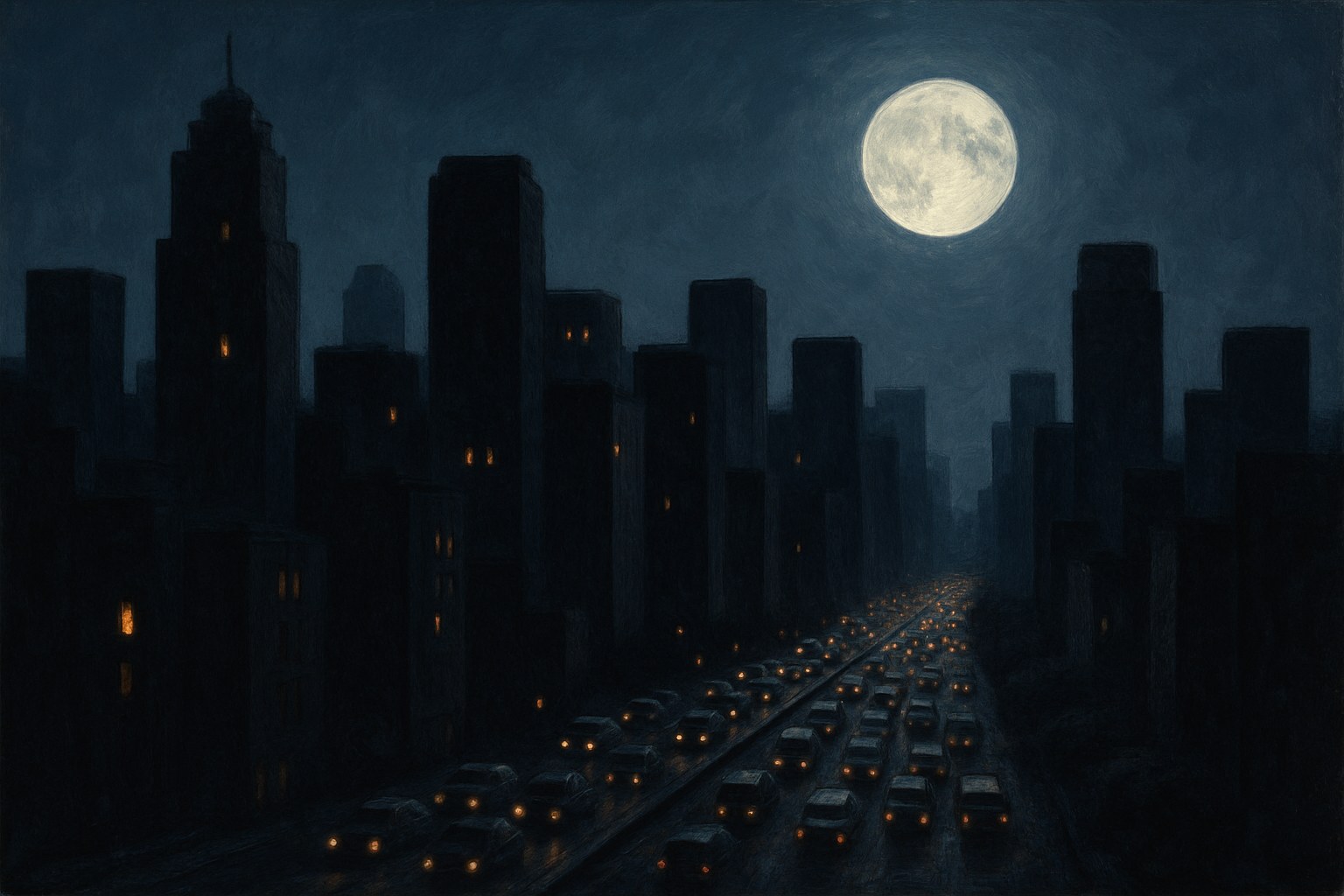
At about 5:16 on the evening of November 9, 1965, in the middle of the rush hour, a protective relay on a transmission line leaving the Sir Adam Beck hydroelectric station near Queenston, Ontario, decided that the current flowing through it was too high and opened the circuit. The relay was working exactly as designed. The trouble was that it had been set three years earlier for a smaller load and nobody had adjusted it as demand grew, so it tripped on a perfectly normal evening flow.
The power that line had been carrying instantly redistributed itself onto the four remaining lines, which were now overloaded and tripped in turn, all within about two and a half seconds. With Ontario's generation suddenly cut off from its load, an enormous surge of power reversed direction and swept south and east through the interconnection faster than any operator could respond. In roughly thirteen minutes the lights went out across some eighty thousand square miles — most of New York State, parts of New Jersey, Pennsylvania, Connecticut, Rhode Island, Massachusetts, Vermont, and New Hampshire, and much of Ontario. About thirty million people were in the dark, and in New York City the power stayed off for close to thirteen hours.
What followed was not what anyone expected. Eight hundred thousand people were trapped in the New York subway, thousands more in elevators and in the towers of Manhattan, and the city discovered it had almost no emergency lighting. Yet arrests that night ran below a normal Tuesday. Strangers directed traffic at dead intersections with flashlights, hotels and church basements put out cots, bars gave away melting ice cream, and the evening acquired an almost festive reputation that lasted for years. The story that a wave of babies arrived nine months later was checked by demographers in 1970 and found to be false.
The Federal Power Commission investigation made plain that a continent-spanning machine had no continent-spanning rules. Utilities had interconnected for mutual support without agreeing on how much support each could be asked to give, or how to shed load and island themselves before a disturbance spread. The industry responded in 1968 by forming the National Electric Reliability Council and a set of regional councils to write voluntary standards. Those standards stayed voluntary until another cascade in 2003 blacked out fifty million people, after which Congress made them mandatory and enforceable.
| Date | November 9, 1965, beginning about 5:16 p.m. |
| Cause | A backup relay near Queenston, Ontario, set too low for the load |
| Spread | Cascade complete in roughly 13 minutes |
| Affected | About 30 million people over 80,000 square miles |
| Duration | Up to about 13 hours in New York City |
| Result | The National Electric Reliability Council, formed 1968 |
| Date | November 9, 1965 |
| Location | New York City |