Glacier National Park
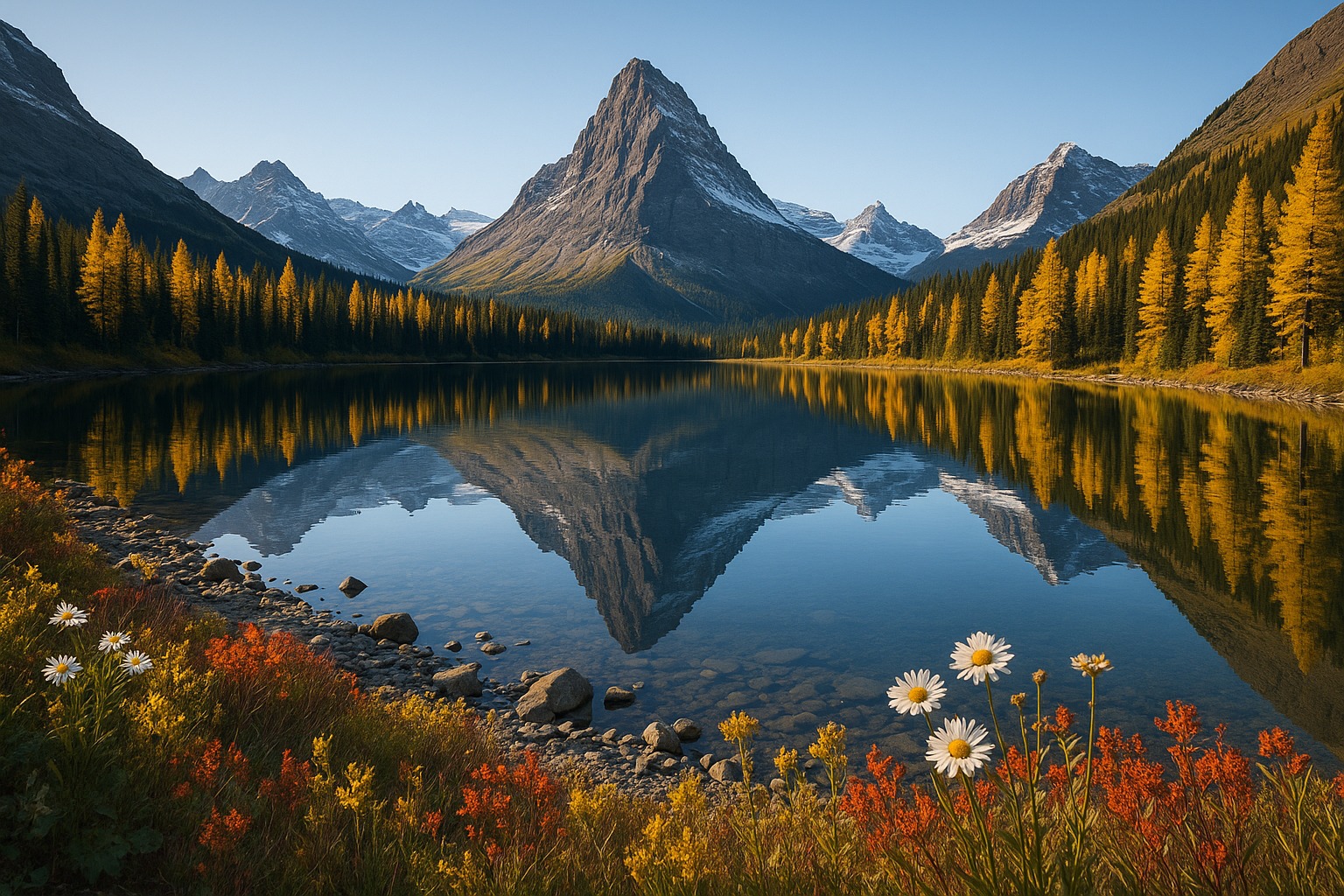
Glacier National Park covers about 1,600 square miles of the northern Rocky Mountains along the Canadian border in Montana, on lands that have been Blackfeet, Salish, Kootenai, and Pend d'Oreille homeland for thousands of years. The Great Northern Railway, which had cut a transcontinental route through Marias Pass in 1891, lobbied Congress to designate the surrounding country a national park to drive passenger traffic. President Taft signed the act on May 11, 1910. The railroad then built a chain of Swiss-chalet-style lodges — Glacier Park Lodge, Many Glacier Hotel, Lake McDonald Lodge — that still operate and that almost single-handedly invented the American "rustic luxury" architecture of mountain national parks.
In 1932 the park was paired with Canada's Waterton Lakes National Park to form the world's first International Peace Park — a symbolic merger of two sovereign protected areas, recognized by UNESCO in 1995 as a World Heritage Site. The Going-to-the-Sun Road, completed in 1933, is one of the great engineering achievements of the early National Park Service, climbing over Logan Pass at 6,646 feet and carved into vertical cliffs in sections built by Civilian Conservation Corps crews. It closes for most of the year and is plowed open each spring in an operation that itself draws press coverage.
The glaciers are the problem. When the park was established, surveys identified 80 active glaciers within its boundaries; the most recent count is 26, and at current rates of warming the park is expected to lose all of them within the lifetimes of children visiting today. The U.S. Geological Survey has documented the retreat with paired photographs taken from the same spots a century apart — images that have become some of the most-cited evidence of climate change in North America. The name will outlast the namesakes.
| Established | May 11, 1910 |
| Area | ~1,600 square miles |
| Location | Northern Montana, on the Canadian border |
| International Peace Park | 1932 — paired with Waterton Lakes, Alberta |
| UNESCO | World Heritage Site (1995) |
| Glaciers in 1910 | ~80 active glaciers |
| Glaciers today | ~26 (all expected to disappear this century) |
| Going-to-the-Sun Road | Completed 1933 |
| Date | Established May 11, 1910 · International Peace Park: 1932 |
| Location | West Glacier, Montana |