Gerald R. Ford Presidential Library and Museum

Gerald Ford's presidential library is unique in the system for being divided between two Michigan cities. The archive of his papers sits in Ann Arbor, on the campus of the University of Michigan, his alma mater, while the public museum stands about 130 miles away in Grand Rapids, the city he represented in Congress for a quarter century. Both opened in 1981, run as a single institution in two buildings.
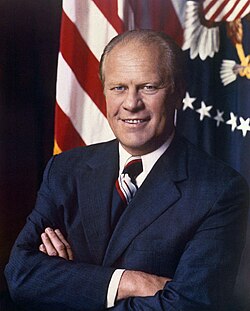
Ford reached the presidency as no one else has — never elected to national office, appointed vice president under the Twenty-Fifth Amendment after Spiro Agnew resigned, then sworn in as president when Nixon resigned in 1974. The collections document that constitutional first and the brief, turbulent presidency that followed: the pardon of Nixon, the fall of Saigon, stagflation, and the nation's bicentennial in 1976.
The Grand Rapids museum, on the bank of the Grand River, presents Ford as a steady, modest figure brought in to restore trust after Watergate. Ford and his wife, Betty — herself a major public figure for her candor about addiction and breast cancer — are buried on the museum grounds, overlooking the river and the city that sent him to Washington.
| Location | Grand Rapids (museum) & Ann Arbor (library), Michigan |
| Dedicated | 1981 |
| Distinction | The only two-city presidential library |
| Holdings | The Nixon pardon, fall of Saigon, the bicentennial |
| Burial | Gerald and Betty Ford in Grand Rapids |
| Date | Dedicated 1981 |
| Location | Grand Rapids & Ann Arbor, Michigan |