The Interstate Highway System

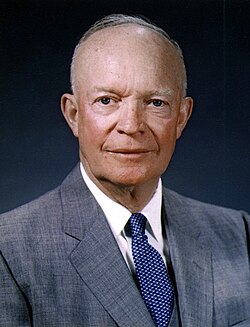
The Federal-Aid Highway Act of 1956, signed by President Dwight D. Eisenhower, authorized 41,000 miles of limited-access expressways and committed the federal government to pay 90 percent of the cost. It set in motion the largest public works project the country had ever undertaken — a continent-spanning network that would take more than three decades to complete and reshape nearly every aspect of American geography.
Eisenhower's enthusiasm was rooted in personal experience. As a young officer in 1919 he had joined an army convoy that took two months to cross the country on miserable roads, and in World War II he had seen the speed Germany's autobahns gave a modern army. The 1956 act was framed partly as a defense measure — its formal name invoked national defense, and the roads were meant to move troops and evacuate cities in the nuclear age — but its deepest effects were civilian.
The highways remade how and where Americans lived. They accelerated the postwar flight to the suburbs, enabling commuters to live far from the cities where they worked, and they powered the rise of trucking, fast food, motels, and the long family road trip. They also did real damage: urban segments were frequently routed through Black and immigrant neighborhoods, displacing hundreds of thousands of people and severing communities in ways that remain contentious today.
By draining traffic and investment from passenger railroads and downtown commercial districts, the interstates locked in an automobile-centered way of life that defines the United States more than almost any other physical structure. Numbered with the now-familiar red-white-and-blue shields, they carry a quarter of the nation's vehicle traffic on roughly one percent of its roads.
| Authorized | Federal-Aid Highway Act of 1956 |
| President | Dwight D. Eisenhower |
| Original Plan | 41,000 miles of limited-access highway |
| Federal Share | 90 percent of construction cost |
| Rationale | Commerce, suburban growth, and national defense |
| Cost | Communities displaced by urban routing |
| Date | Authorized June 29, 1956 |
| Location | United States |