St. Augustine
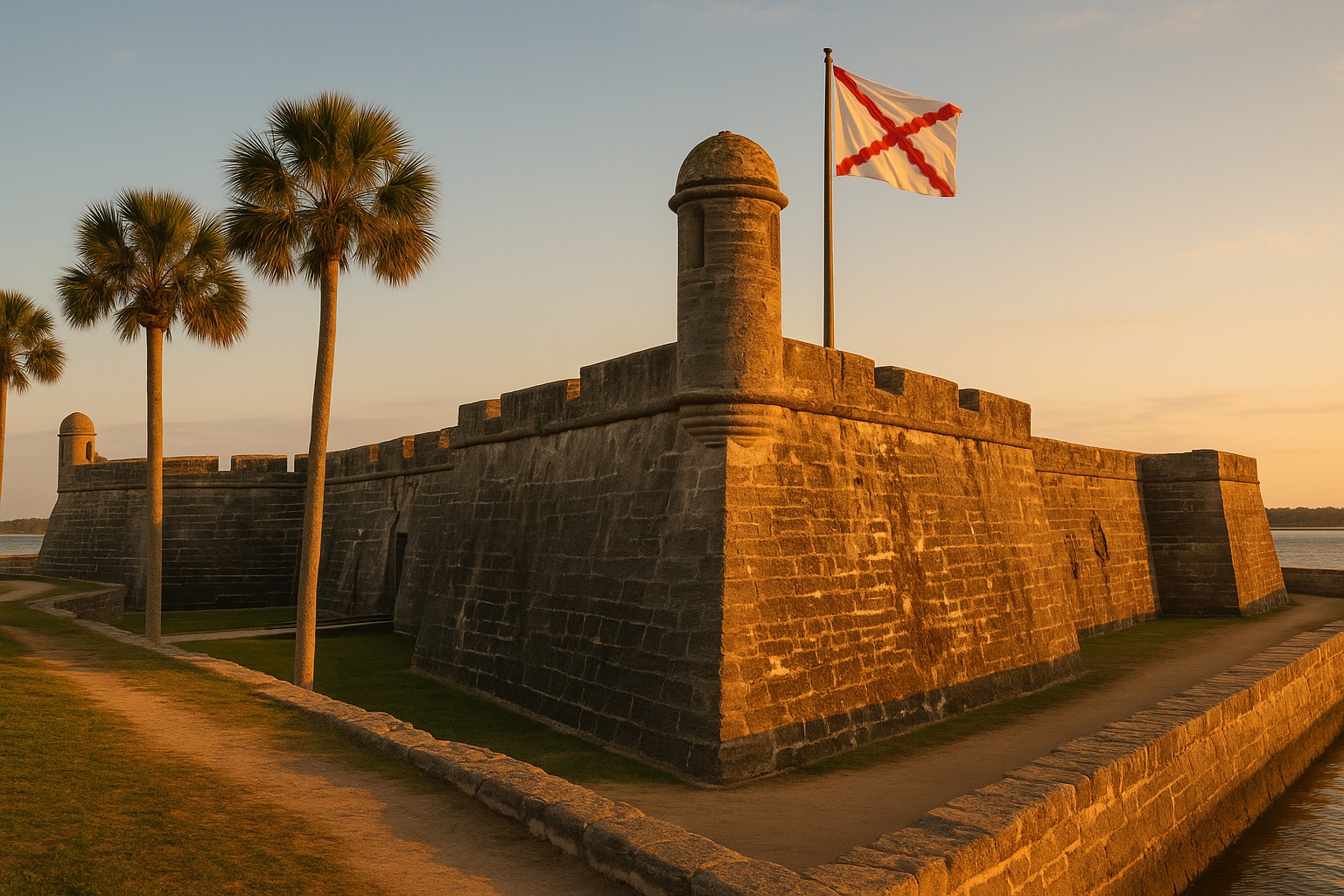
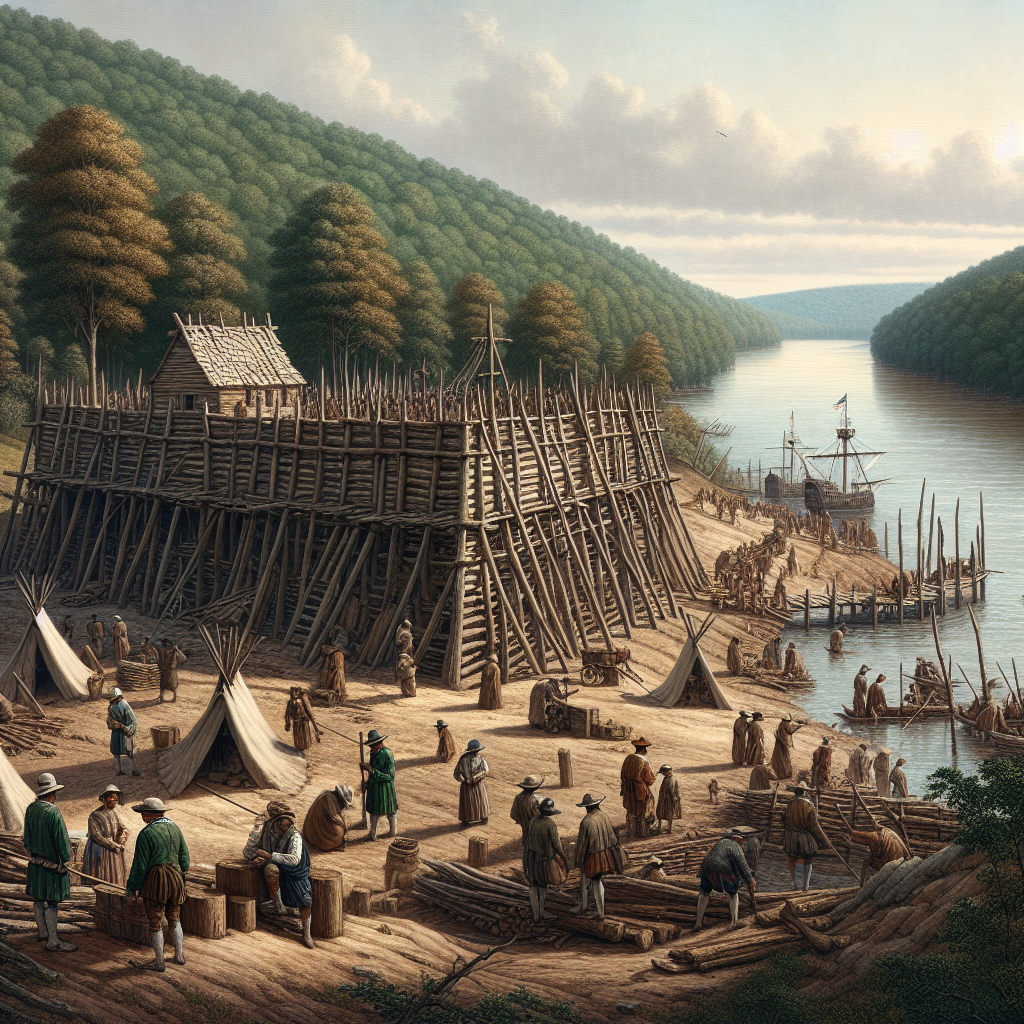
Pedro Menéndez de Avilés sighted the Florida coast on August 28, 1565 — the feast day of Saint Augustine of Hippo — and landed his Spanish expedition there on September 8 to found a fortified town and a base of operations against the French Huguenot colony at Fort Caroline 35 miles north. Menéndez took Fort Caroline by surprise three weeks later and executed nearly all of its surviving inhabitants, including those who surrendered, at a tidal inlet ever after called Matanzas — Spanish for "slaughters." St. Augustine itself remained as the northern outpost of the Spanish Caribbean for the next two centuries. It is the oldest continuously inhabited European settlement within the boundaries of the present United States, predating Jamestown by 42 years and Plymouth by 55.
The Castillo de San Marcos, the masonry fortress that still anchors the town, was begun in 1672 in response to repeated English raids — Sir Francis Drake had burned the wooden predecessor in 1586, and Robert Searle had sacked the town again in 1668. The Castillo's walls were built of coquina, a soft limestone of compacted shell that absorbed cannonballs without shattering, and the fortress was never taken by force. The English besieged it twice without success in the eighteenth century. Spain ceded Florida to Britain by the 1763 Treaty of Paris, got it back in 1783, and finally sold it to the United States by the Adams-Onís Treaty of 1819.
Three centuries of multinational rule left a Spanish, then briefly British, then Spanish, then American town in a country that had otherwise inherited only English colonial roots. The Spanish missions that radiated from St. Augustine across north Florida and southern Georgia in the seventeenth century converted tens of thousands of Timucua and Apalachee — communities that were largely destroyed by English-allied Creek slaving raids in the early eighteenth century. The Gullah Geechee free Black population at Fort Mose, established just north of St. Augustine in 1738, was the first legally sanctioned free Black community in what is now the United States, formed by Africans who had escaped slavery in the English Carolinas and were granted freedom in Spanish Florida in exchange for military service.
| Founded | September 8, 1565 — by Pedro Menéndez de Avilés |
| Distinction | Oldest continuously inhabited European settlement in the U.S. |
| Founder's charge | Eliminate French Huguenot colony at Fort Caroline |
| Castillo de San Marcos | Construction begun 1672 (oldest masonry fort in U.S.) |
| Sovereignty changes | Spanish → British (1763) → Spanish (1783) → American (1821) |
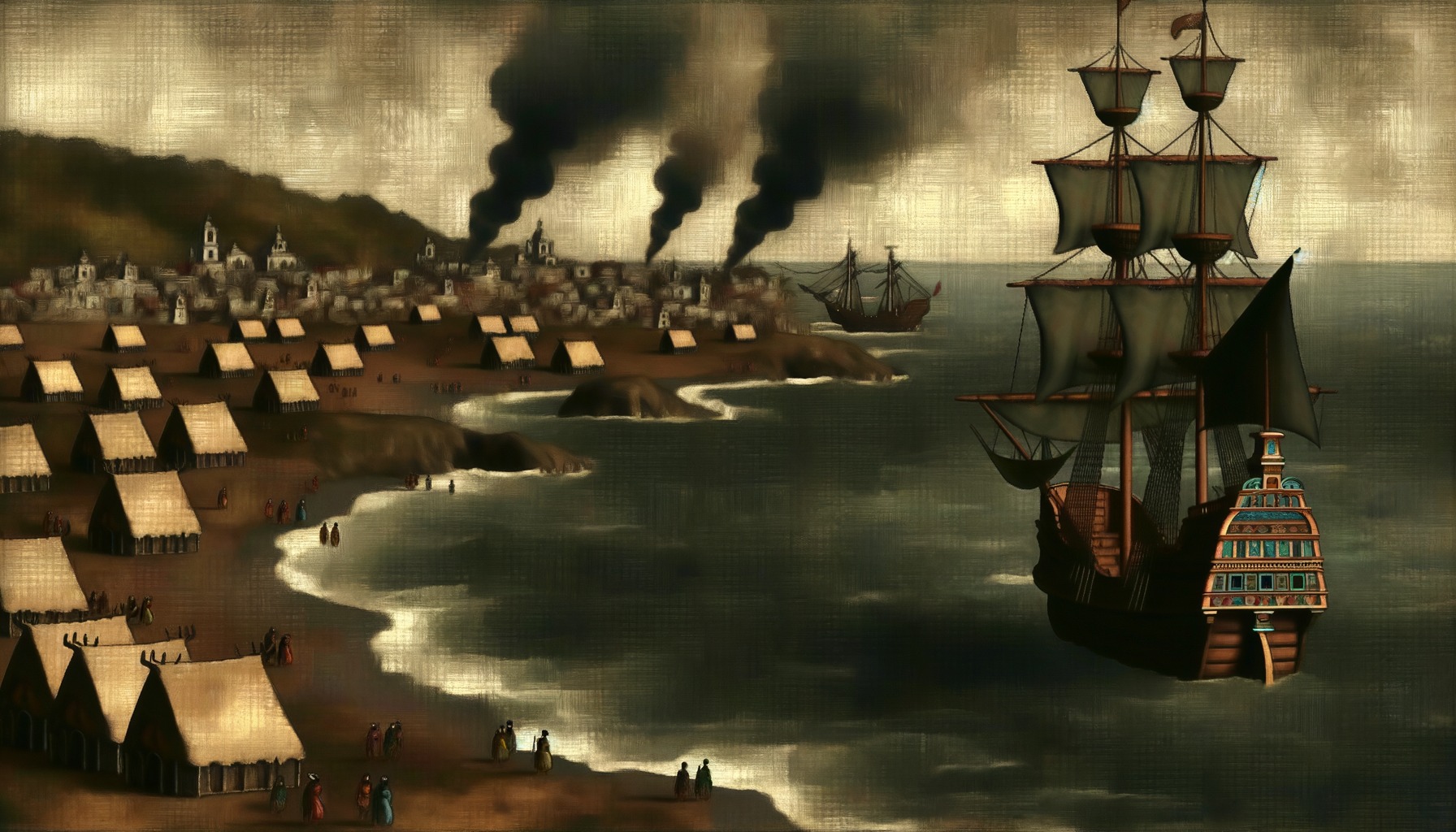
| Drake's raid | June 1586 — wooden town burned |
| Civil rights history | Site of key 1964 demonstrations led by MLK |
| Date | Founded September 8, 1565 |
| Location | St. Augustine, Florida |