John C. Frémont
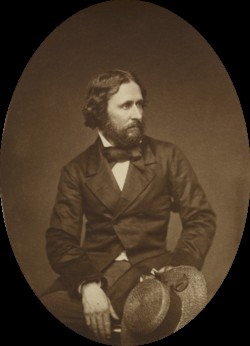
John Charles Frémont led five federally funded expeditions through the trans-Mississippi West between 1842 and 1854, mapping the Oregon Trail, the Great Salt Lake, the Sierra Nevada passes, and routes across the Rockies that became the basis of every western railroad survey. His patron and father-in-law, Senator Thomas Hart Benton of Missouri, used Frémont's reports — co-written with his wife Jessie Benton Frémont, a far better writer than he was — to drive a generation of expansionist policy. The reports were government documents but read like adventure novels. They drove the Mormon migration to Utah, the Forty-Niners to California, and the wave of overland settlers who eventually outnumbered the Spanish and Indigenous populations of both regions.
Frémont's actual exploring was real but uneven. His third expedition in 1845 entered Mexican California on dubious authority and ended with him riding ahead of the Mexican-American War as a self-appointed military commander, helping to engineer the Bear Flag Revolt that briefly produced an independent "California Republic." He was court-martialed in 1847 for insubordination toward Brigadier General Stephen Watts Kearny, convicted, and pardoned by President Polk on condition he resign. He took it as vindication. His fourth expedition in 1848 lost ten of its thirty-three men to cold in the San Juan Mountains of Colorado in an attempt to prove that a railroad could be built through them in winter.
In 1856 Frémont was the first Republican candidate for president, running on a platform of "Free Soil, Free Labor, Free Speech, Free Men, Frémont." He lost to James Buchanan but established the Republican Party as a national force four years before Lincoln. He served as a Union general in Missouri in 1861 — unilaterally emancipating slaves in his department, an order Lincoln countermanded — and spent the rest of his life on mining and railroad speculations that mostly bankrupted him. Jessie wrote the books and articles that kept the family solvent. When he died in New York in 1890, he was 77 and out of money.
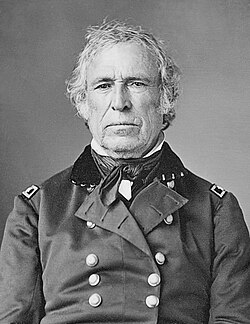
| Born | January 21, 1813 — Savannah, Georgia |
| Died | July 13, 1890 — New York City |
| Nickname | The Pathfinder |
| Expeditions | 5 major western surveys, 1842–1853 |
| Bear Flag Revolt | June 1846 — helped incite and organize |
| Court-martial | 1847 (convicted of mutiny; pardoned by President Polk) |
| 1856 presidential run | First Republican presidential nominee; lost to James Buchanan |
| Civil War | Twice removed by Lincoln for unauthorized emancipation orders |
| Date | January 21, 1813 – July 13, 1890 |
| Location | St. Louis, Missouri |