Sand Creek Massacre
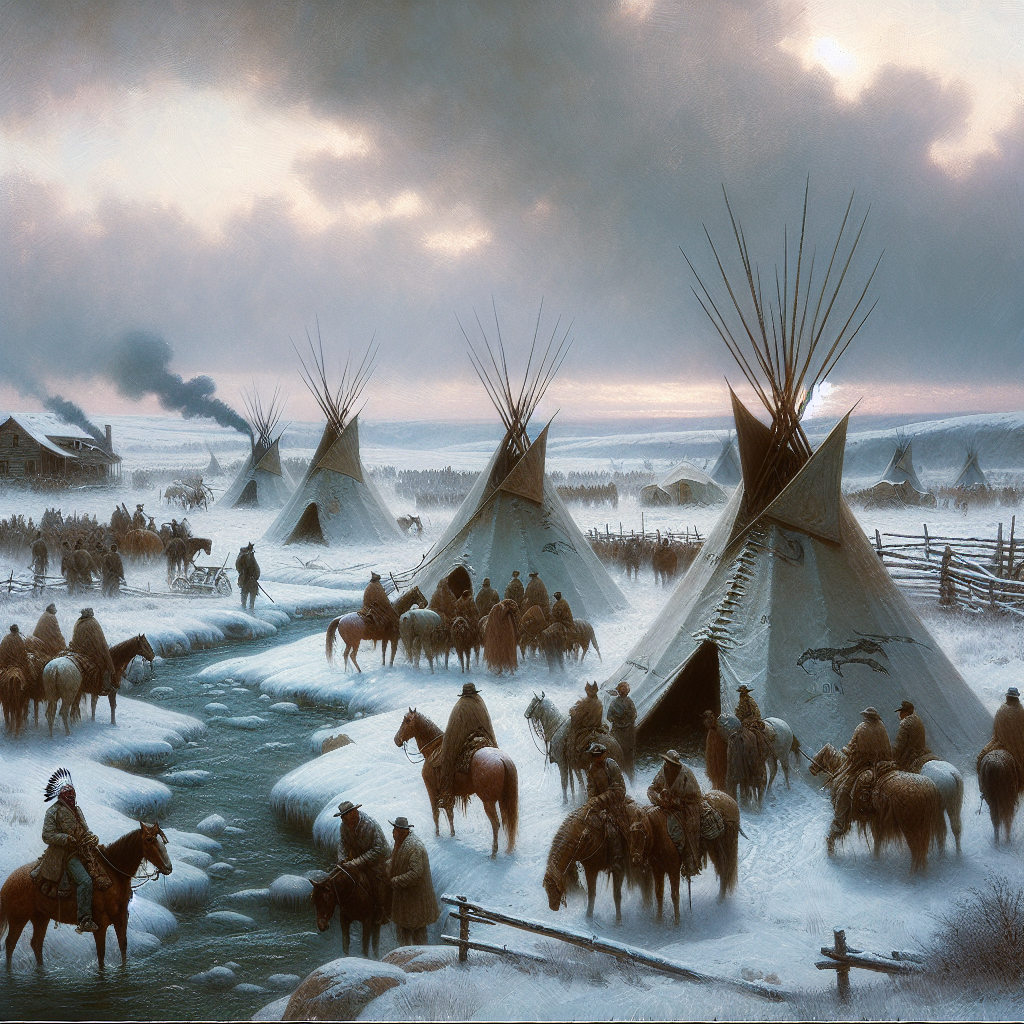
At dawn on November 29, 1864, Colonel John Chivington led approximately 700 Colorado Territory militia down on a Cheyenne and Arapaho encampment at Sand Creek in southeastern Colorado. The encampment was flying both a U.S. flag and a white flag of truce; its leader, Black Kettle, had been explicitly assured by U.S. officials that his band was under government protection. Chivington's men killed somewhere between 150 and 500 people — predominantly women, elderly, and children, as most of the men were away hunting — and returned to Denver to a hero's welcome.
Chivington had instructed his officers beforehand to kill and scalp all, "big and little." The militia mutilated the bodies of the dead, taking fingers, ears, and other body parts as trophies later displayed at a Denver theater to cheering crowds. Three separate Congressional and military investigations condemned the attack as a massacre and Chivington's conduct as criminal. He escaped prosecution only because he resigned his commission before charges could formally be brought, and spent the rest of his life insisting the assault had been a military necessity.
Sand Creek was not an aberration but a concentrated expression of the policy of violent dispossession that defined U.S. relations with the Plains nations throughout this period. Black Kettle survived and continued seeking peace — only to be killed four years later when George Custer attacked his camp on the Washita River, once again while he believed himself to be under government protection. The Cheyenne and Arapaho lands Chivington's militia attacked had been guaranteed by treaty just three years before the massacre.
| Date | November 29, 1864 |
| Location | Sand Creek, Colorado Territory (present-day Kiowa County) |
| Victims | 150–500 Cheyenne and Arapaho, primarily women and children |
| Perpetrator | Colonel John Chivington, 1st Colorado Cavalry |
| Truce Flags | U.S. flag and white flag of truce both present — ignored by attackers |
| Investigations | Three Congressional and military inquiries condemned the attack |
| Black Kettle | Survived Sand Creek; killed by Custer at the Battle of the Washita, 1868 |
| Date | November 29, 1864 |
| Location | Sand Creek, Colorado Territory (present-day Kiowa County, Colorado) |