Fort Pillow Massacre
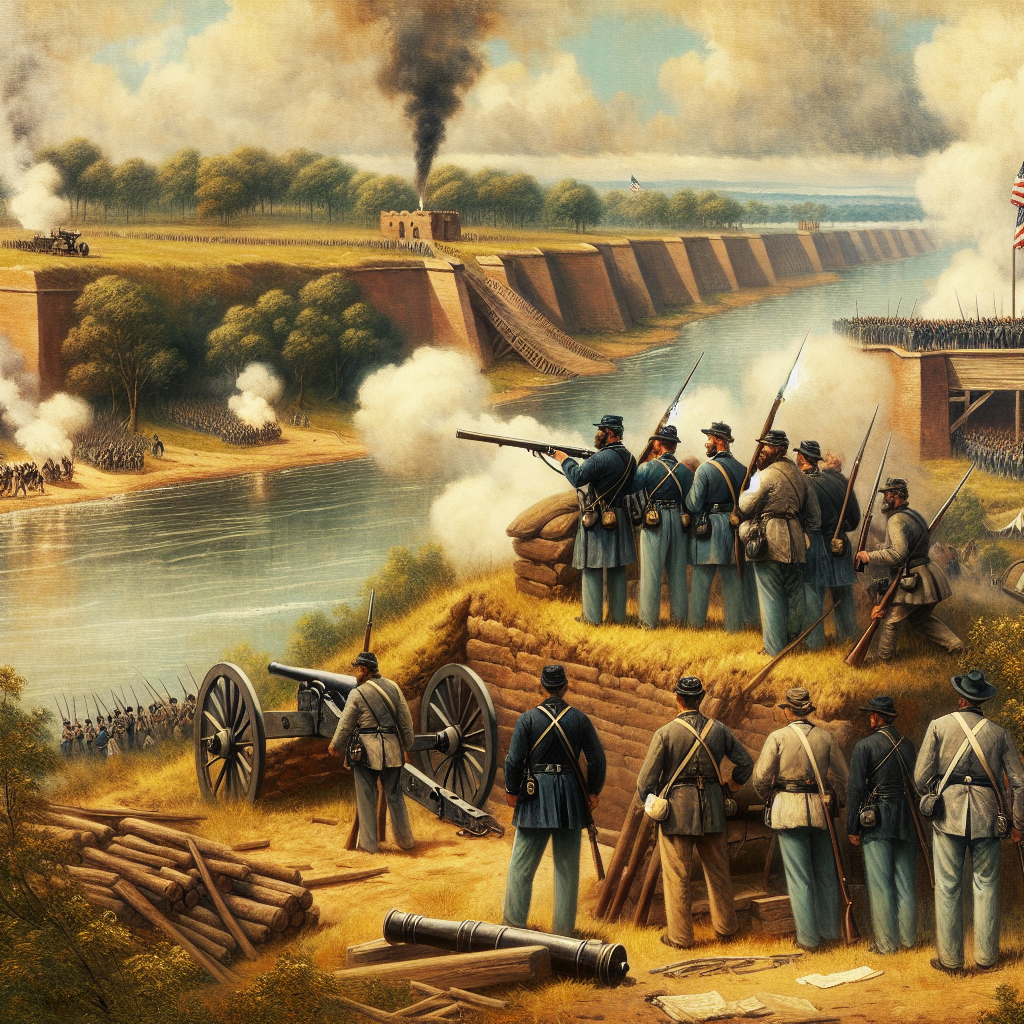
On April 12, 1864, Confederate cavalry under Major General Nathan Bedford Forrest overran Fort Pillow, a Union garrison on the Mississippi River bluff in Tennessee garrisoned by roughly 600 men — nearly half of them United States Colored Troops. The fort fell within hours. What happened after the Confederate flag went up became one of the most contested and consequential atrocities of the Civil War: Union survivors, Congressional investigators, and subsequent historians documented that large numbers of Black soldiers who attempted to surrender were shot, stabbed, or buried alive. Confederate soldiers were reported to have shouted "No quarter!" as they fired into men with their hands raised.
Confederate reports listed 14 Union soldiers killed — a figure that defied the physical evidence. The Joint Committee on the Conduct of the War documented approximately 300 Union dead, a mortality rate wildly disproportionate to what combat losses alone could explain. Survivors described systematic execution of soldiers attempting to surrender, with some buried while still breathing. The massacre provided immediate, galvanizing proof that the fear was real: Confederate forces would not treat Black Union soldiers as legitimate prisoners of war, regardless of their uniform.
"Remember Fort Pillow" became a battle cry among United States Colored Troops for the remainder of the war — simultaneously a promise and an assertion that their service and their lives demanded the same recognition as any white soldier's. The massacre also forced Lincoln's hand on prisoner exchanges: he suspended the exchange cartel until the Confederacy agreed to treat Black prisoners under the same terms as white ones. The Confederacy refused. The suspension meant Union prisoners languished in Confederate camps for months — a consequence Lincoln accepted as the price of the principle.
| Date | April 12, 1864 |
| Location | Fort Pillow, Tennessee (Mississippi River bluff) |
| Union Garrison | Approx. 600 men, nearly half U.S. Colored Troops (USCT) |
| Confederate Commander | Major General Nathan Bedford Forrest |
| Union Dead | Approx. 300 — far exceeding normal combat loss ratios |
| Significance | Documented mass execution of Black soldiers attempting to surrender |
| Aftermath | Lincoln suspended prisoner exchange cartel over Confederate refusal to treat Black POWs equally |
| Date | April 12, 1864 |
| Location | Henning, Tennessee |