Keynesian Economics
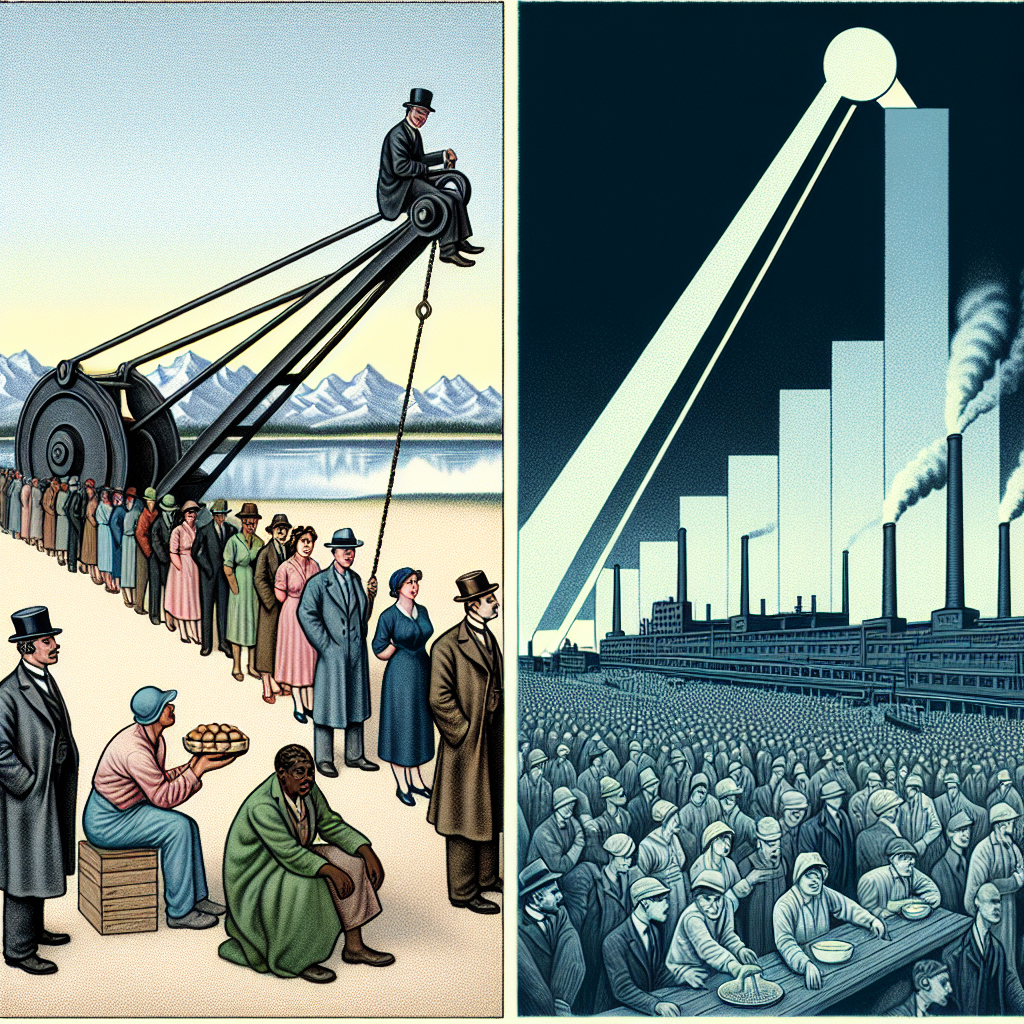
In 1936, British economist John Maynard Keynes published The General Theory of Employment, Interest and Money — a systematic challenge to the classical assumption that markets, left to themselves, would naturally return to full employment after a downturn. Keynes argued that economies could become trapped in high-unemployment equilibrium, and that the only reliable path out was government intervention: deficit spending to stimulate demand when private investment had collapsed. The theory arrived in the middle of the Great Depression, when the evidence for its central claim was visible on the street corners of every industrial city in the Western world.
Keynesian ideas profoundly shaped the New Deal, though Roosevelt himself was an inconsistent practitioner — he cut federal spending in 1937 in an attempt to balance the budget, triggering a sharp recession that demonstrated exactly the mechanism Keynes had described. The theory's fullest American application came during World War II, when massive military spending ended the Depression in months in a way a decade of New Deal programs had not managed. After the war, Keynesian economics became the dominant framework for Western macroeconomic policy, codified in the Employment Act of 1946, which formally committed the federal government to managing the economy toward full employment and stable prices.
The consensus fractured in the 1970s, when simultaneous high inflation and high unemployment — "stagflation" — appeared to contradict Keynesian predictions and opened space for Milton Friedman's monetarism and, later, the supply-side economics of the Reagan era. But the framework never disappeared: it returned forcefully after the 2008 financial crisis, when governments across the world deployed deficit spending to arrest economic collapse, and again during the COVID-19 pandemic, when the U.S. government injected trillions of dollars into the economy within weeks of shutdown. The argument between Keynesian stimulus and fiscal restraint remains the central debate of macroeconomic policy.

| Origin | The General Theory of Employment, Interest and Money — Keynes (1936) |
| Core Argument | Markets can fail to self-correct; deficit spending restores demand |
| U.S. Application | New Deal; WWII spending; Employment Act of 1946 |
| Dominant Era | 1945 through the 1970s |
| Challenged By | Monetarism (Milton Friedman); supply-side economics (Reagan era) |
| Revived | 2008 financial crisis; COVID-19 stimulus (2020–21) |
| Key Concepts | Aggregate demand; the multiplier effect; counter-cyclical spending |
| Years | 1936–1936 |
| Location | Cambridge, England / Washington, D.C. |