Oak Ridge, Tennessee
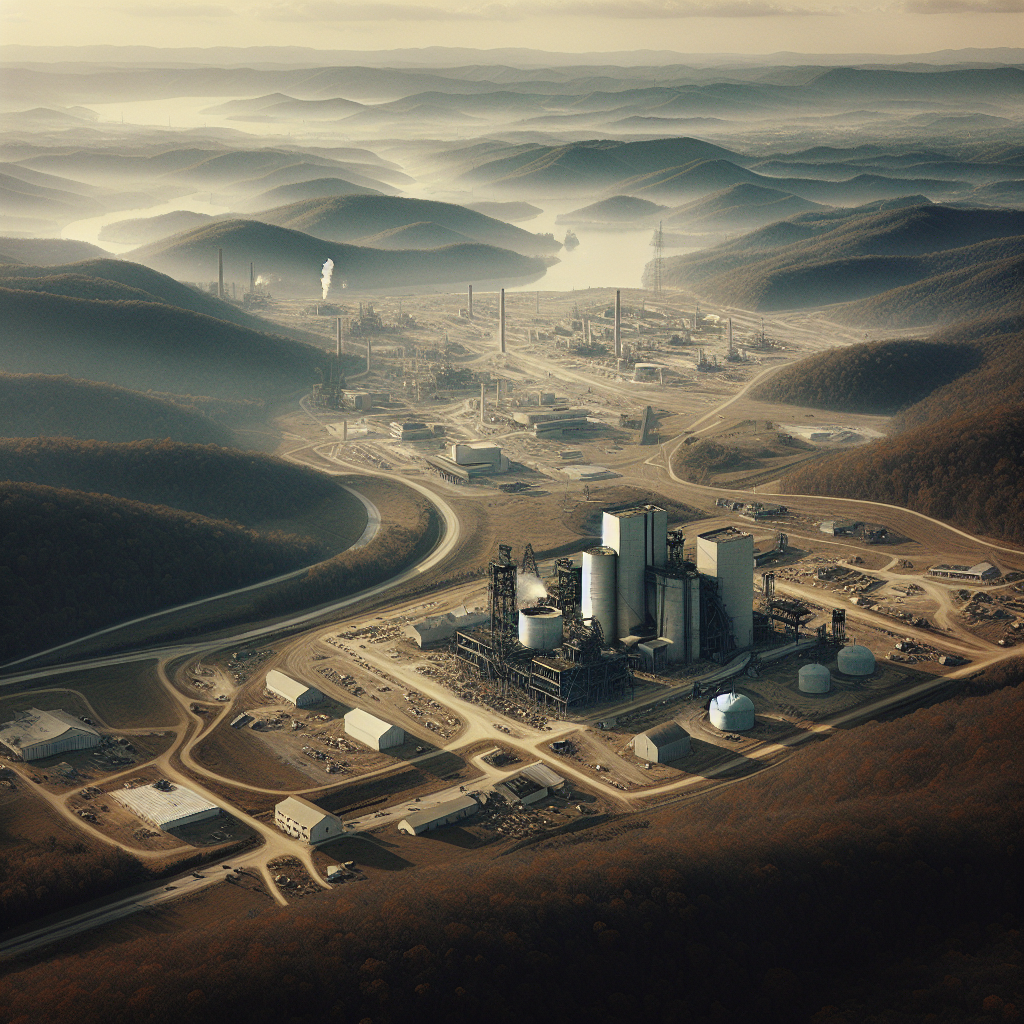
Oak Ridge, Tennessee did not exist before 1942. The Army Corps of Engineers seized approximately 59,000 acres of farmland in the Tennessee Valley in September of that year, relocating more than 1,000 families with minimal notice and minimal compensation, and began construction on a secret city whose purpose the workers building it — and most of those who would work in it — were never told. At its wartime peak in 1945, Oak Ridge had a population of 75,000 people, making it the fifth-largest city in Tennessee. It appeared on no public map. Its mission was producing the enriched uranium that fueled Little Boy, the atomic bomb dropped on Hiroshima on August 6, 1945.
The Oak Ridge complex housed three massive production facilities, each operating on a different isotope-separation technology because no one knew with certainty which approach would succeed. The K-25 gaseous diffusion plant was at the time of its construction the largest building under a single roof in the world. The Y-12 electromagnetic separation plant used a process developed by Ernest Lawrence at Berkeley. The X-10 Graphite Reactor — the world's first continuously operated nuclear reactor — produced small quantities of plutonium for research and demonstrated the principle used at Hanford, Washington, where the plutonium for the Trinity test and the Fat Man bomb was manufactured at scale. At peak construction, Oak Ridge consumed more electricity than the city of New York.
Oak Ridge was declassified and incorporated as a city in 1959, and its national laboratory — now Oak Ridge National Laboratory — has operated as one of the leading scientific research institutions in the United States ever since, with programs spanning energy science, materials research, and supercomputing that extend well beyond its nuclear origins. The K-25 building, once the largest structure in the world, was demolished between 2011 and 2013 after decades of radioactive contamination cleanup. The city's history — of forced displacement, operational secrecy, staggering industrial scale, and scientific consequence — remains one of the most concentrated expressions of what the American government can organize when it has decided something must be done.
| Established | 1942 — seized from 1,000+ displaced Tennessee farm families |
| Location | Anderson and Roane counties, Tennessee |
| Peak Population | 75,000 (1945) — secret, unmapped city |
| Primary Mission | Enriched uranium production for the Manhattan Project |
| Key Facilities | K-25 (gaseous diffusion); Y-12 (electromagnetic); X-10 Graphite Reactor |
| Product | Enriched uranium for Little Boy — Hiroshima bomb, August 6, 1945 |
| Current Status | Oak Ridge National Laboratory — major U.S. scientific research institution |
| Years | 1942 |
| Location | Oak Ridge, Tennessee |