The Quasi-War
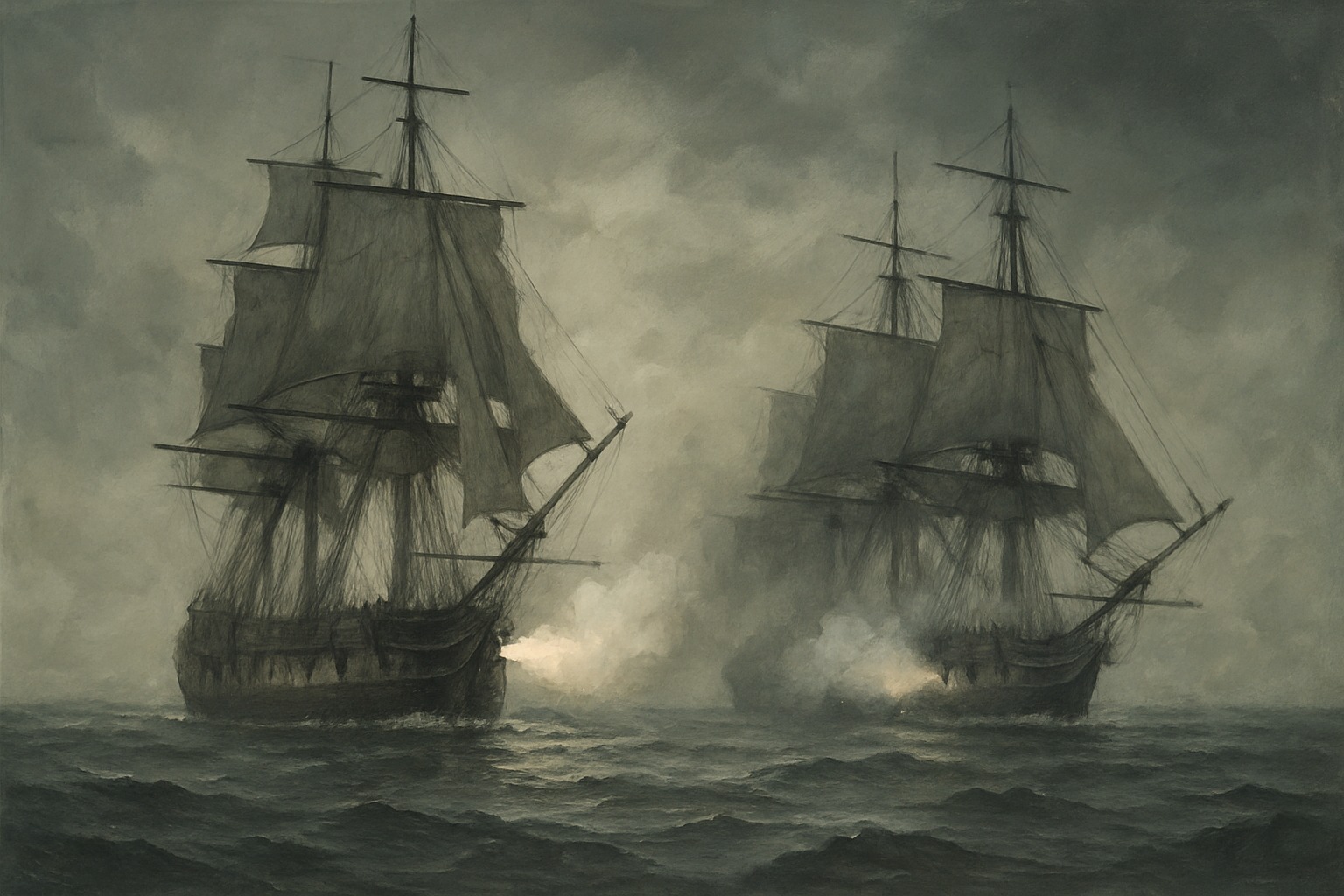
Barely fifteen years after France helped win American independence, the two former allies were firing on each other at sea. The Quasi-War of 1798 to 1800 was an undeclared naval conflict fought almost entirely in the Atlantic and Caribbean, the low point of the early Franco-American relationship.
The roots were tangled in Europe's wars. As revolutionary France fought Britain, it resented American neutrality and the 1795 Jay Treaty with London, and began seizing American merchant ships. When American envoys were met with demands for bribes — the XYZ Affair — outrage at home pushed the two nations to the brink.
President John Adams built a navy almost from scratch to fight it, and American warships clashed with French vessels for two years without a formal declaration of war. Adams resisted pressure for full war, and the conflict stayed limited.
It ended with the Convention of 1800, which released the United States from its Revolutionary-era alliance with France and restored peace. Adams considered keeping the country out of a wider war his proudest achievement — and the alliance, though strained nearly to breaking, survived to be renewed in later centuries.
| Dates | 1798–1800 |
| Type | Undeclared naval war |
| Trigger | French ship seizures and the XYZ Affair |
| U.S. President | John Adams |
| Ended by | Convention of 1800; ended the 1778 alliance |
| Date | 1798–1800 |