The Johnstown Flood
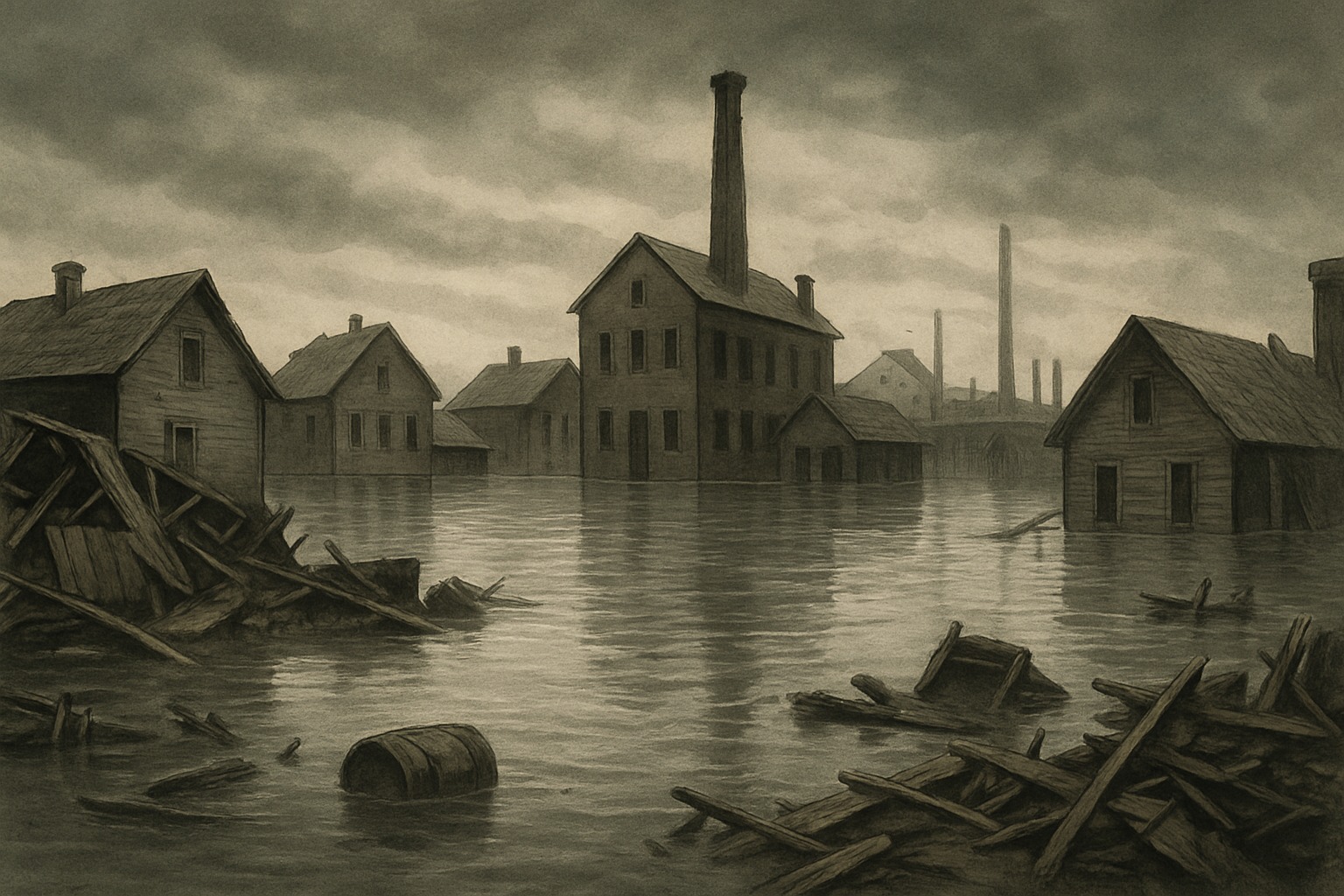
On May 31, 1889, a poorly maintained dam above Johnstown, Pennsylvania, failed after heavy rains, sending a wall of water some 40 feet high crashing into the steel town below. More than 2,200 people were killed in minutes — one of the deadliest disasters in American history to that point.
The dam held back a private lake that served an exclusive mountain retreat for wealthy industrialists, including members tied to Andrew Carnegie and Henry Clay Frick. The club had altered and neglected the dam to suit its leisure, lowering it and blocking its spillways, despite warnings about its safety.
The disaster became a Gilded Age scandal. The flood killed working-class townspeople while the elite who had compromised the dam escaped legal liability, and the injustice fueled public anger at the era's unaccountable wealth. The newly formed American Red Cross, under Clara Barton, mounted one of its first major relief efforts.
The Johnstown Flood endures as a parable of negligence and inequality — a preventable catastrophe caused by the carelessness of the powerful, borne by the people below them. It helped change American law on liability for such failures.
| Date | May 31, 1889 |
| Toll | More than 2,200 killed |
| Cause | Failure of a neglected dam above the town |
| Scandal | Dam served an elite club tied to Gilded Age tycoons |
| Relief | An early major effort by Clara Barton's Red Cross |
| Date | May 31, 1889 |
| Location | Johnstown, Pennsylvania |