The Zimmermann Telegram
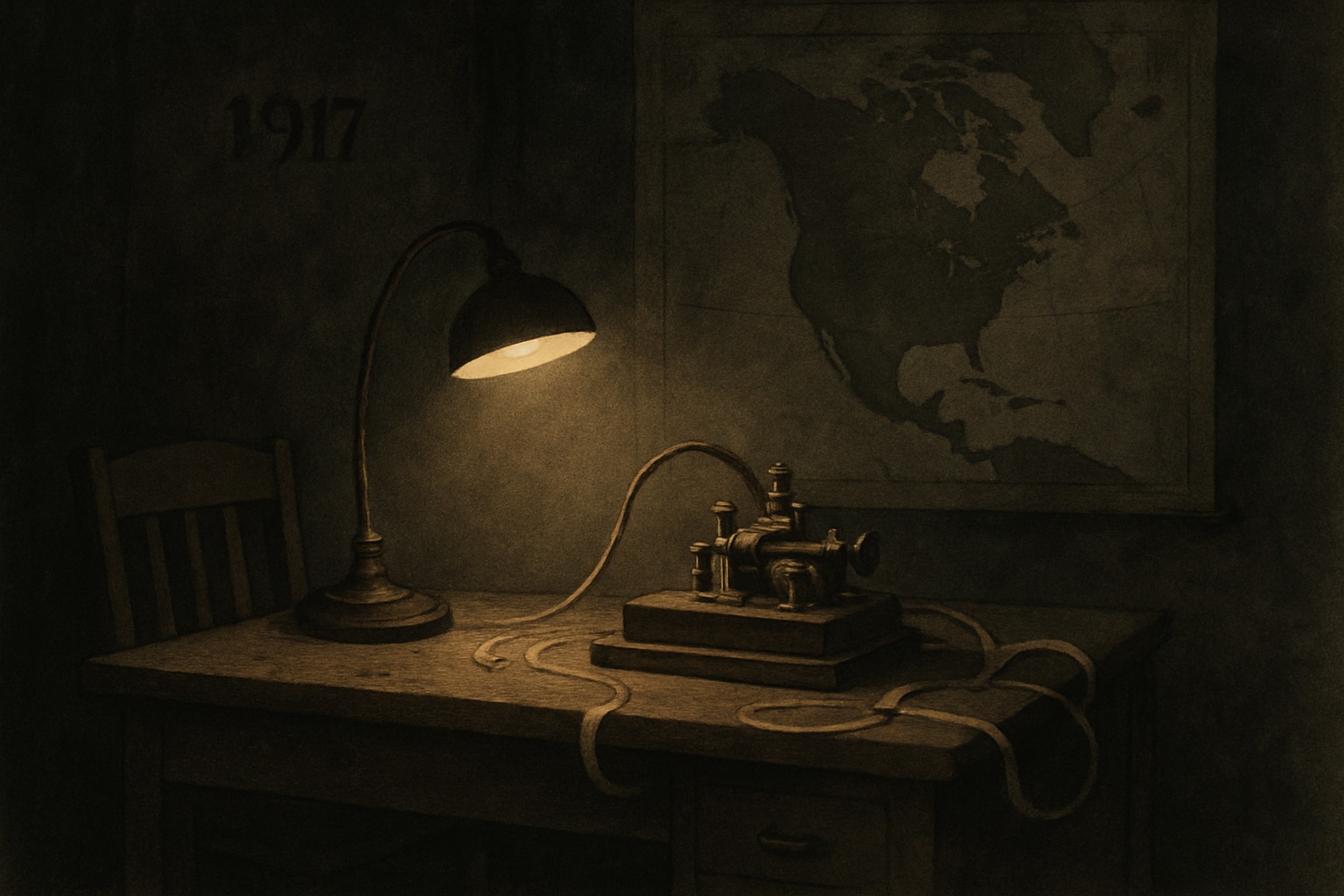
In January 1917, German Foreign Secretary Arthur Zimmermann sent a coded telegram proposing a military alliance with Mexico should the United States enter the war against Germany. In exchange, Germany promised to help Mexico recover the territory it had lost in 1848 — Texas, New Mexico, and Arizona. British codebreakers intercepted and decrypted it.
The British handed the decoded message to Washington, and its publication in the American press in March 1917 caused a sensation. The idea of Germany dangling the American Southwest in front of Mexico turned a distant European war into a direct threat to American soil.
Coming weeks after Germany resumed unrestricted submarine warfare, the telegram helped collapse the last resistance to American intervention. President Wilson, who had won re-election in 1916 on having kept the country out of war, asked Congress for a declaration of war in April 1917.
The episode was also a landmark in the history of intelligence — a war helped decided by broken codes rather than broken lines. It bound the United States, Mexico, and the European powers into a single web of consequence, and marked the moment America stepped onto the world stage as a belligerent power.
| Date | January 1917; published March 1917 |
| Sender | German Foreign Secretary Arthur Zimmermann |
| Proposal | German–Mexican alliance; recovery of TX, NM, AZ |
| Intercepted by | British naval intelligence (Room 40) |
| Consequence | Helped bring the U.S. into WWI, April 1917 |
| Date | January–March 1917 |