Uncle Sam
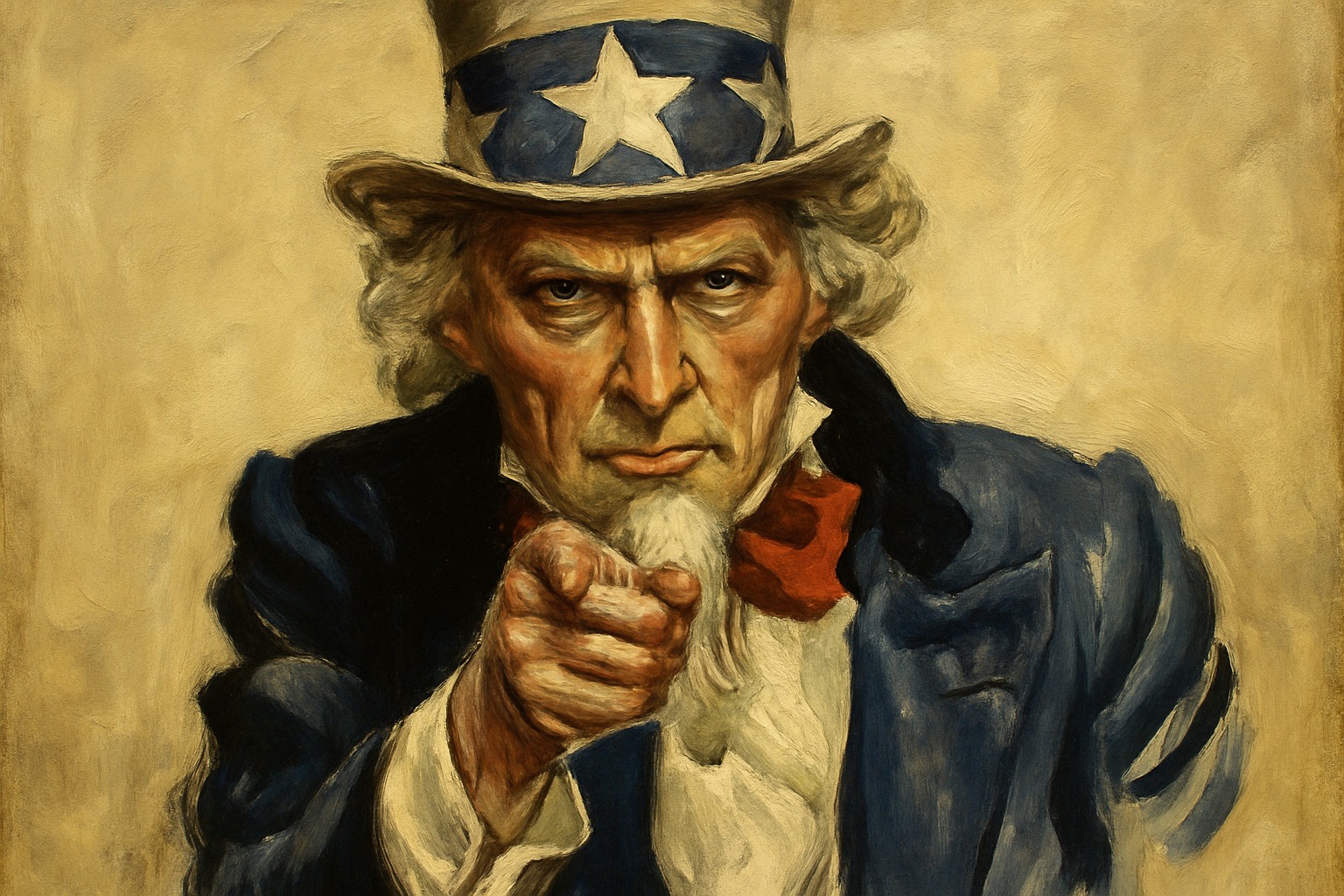
Uncle Sam is the human face the United States gives to itself — a tall, lean man with white hair and a goatee, dressed in a star-spangled top hat and red-white-and-blue suit. He stands for the federal government in the way that John Bull stands for Britain, and over two centuries he has scolded, recruited, taxed, and rallied Americans from the walls of post offices and the pages of newspapers.
His name has a folk origin. During the War of 1812, a Troy, New York meatpacker named Samuel Wilson supplied barrels of beef to the army stamped "U.S." Soldiers joked that the initials stood for "Uncle Sam" Wilson, and the nickname for the government stuck and spread. In 1961 Congress formally recognized Wilson as the namesake of the national symbol.
The figure took its familiar look later. Political cartoonist Thomas Nast, who also shaped the modern images of Santa Claus and the political party animals, gave Uncle Sam his whiskers and striped trousers in the years after the Civil War. The image hardened into an icon and a tool of persuasion, deployed to explain government policy and to embody the nation in editorial cartoons.
Then came the most famous version of all. For a 1917 recruiting poster, illustrator James Montgomery Flagg drew Uncle Sam pointing straight at the viewer above the words "I Want YOU for U.S. Army." Printed by the millions in two world wars, it became one of the most reproduced images in American history and fixed Uncle Sam permanently in the national eye — stern, direct, and impossible to ignore.
| Stands for | The U.S. federal government |
| Origin | A War of 1812 nickname for meatpacker Samuel Wilson |
| Look | Shaped by cartoonist Thomas Nast |
| Famous Poster | Flagg's 1917 "I Want YOU for U.S. Army" |
| Recognized | Congress named Wilson the namesake in 1961 |
| Date | From the War of 1812 |