Judaism in America
In September 1790, George Washington wrote to the Hebrew Congregation of Newport, Rhode Island, assuring them that the new nation "gives to bigotry no sanction, to persecution no assistance." It was the most explicit promise of religious equality any sovereign had ever extended to Jews — and it named the terms of an American Jewish experience that has spent two centuries testing whether the promise holds. The first Jewish community in North America had arrived in New Amsterdam in 1654: Sephardic Jews expelled from Brazil after the Portuguese reconquest, 23 souls who petitioned Governor Stuyvesant for the right to stay and were granted it over his strong objections.
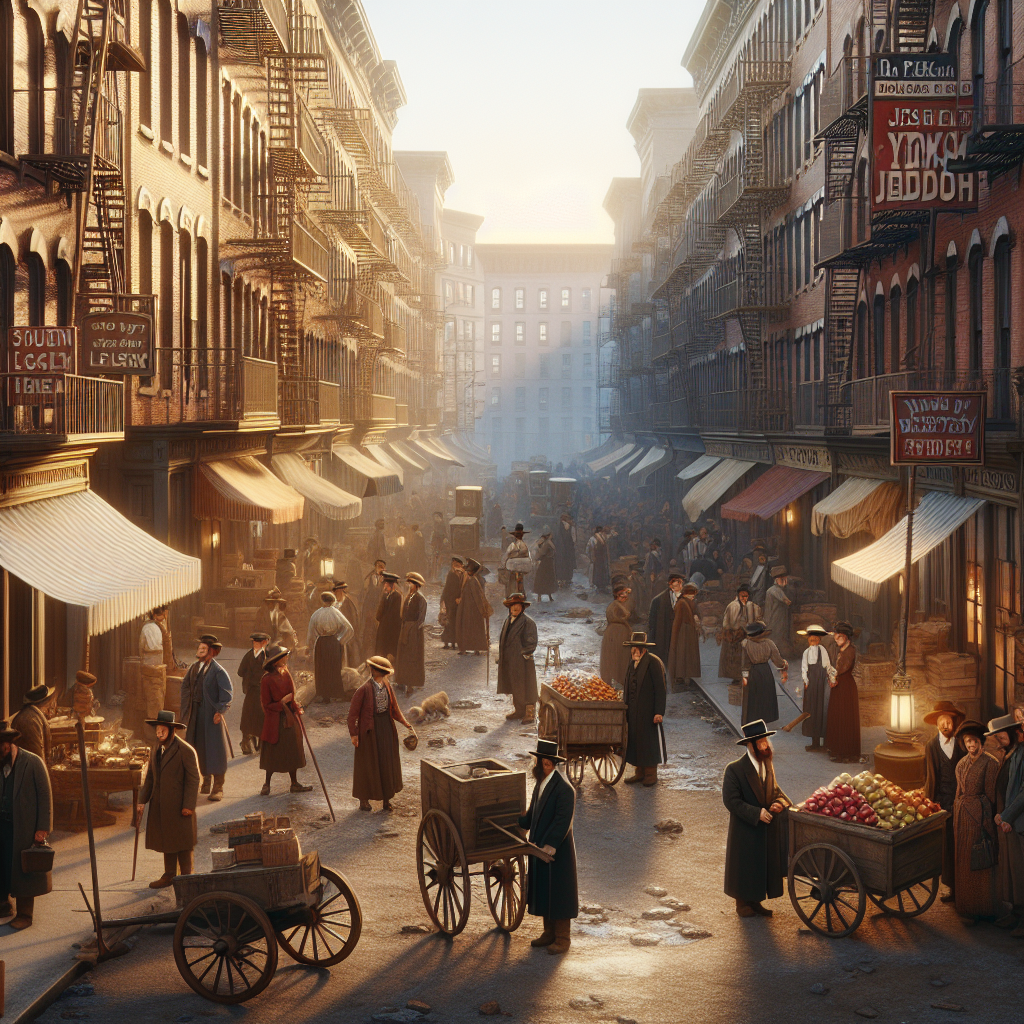
Two great immigration waves transformed the scale and character of American Jewry. German Jews arriving between the 1840s and 1880s built Reform Judaism's institutional foundations and entered American commercial and professional life with enough success to generate the antisemitic resentments that would follow prosperity wherever Jews found it. Then came the Eastern European wave: more than two million Jews from Russia, Poland, and the Austro-Hungarian Empire arriving between 1880 and 1924, when the Immigration Act cut off the flow. They filled the tenements of the Lower East Side, built the Yiddish cultural world of urban America, and within two generations had produced scientists, jurists, writers, comedians, and politicians who reshaped American intellectual and cultural life.
American antisemitism was institutional and pervasive through the first half of the 20th century: university admission quotas, deed-restricted neighborhoods, country club exclusions, the Leo Frank lynching in Georgia in 1915, Henry Ford's antisemitic publications, Father Coughlin's radio broadcasts. The Holocaust — in which one-third of world Jewry perished — arrived in American consciousness slowly, and survivors who reached the U.S. after 1945 joined a Jewish community already suburbanizing, assimilating, and achieving at rates that raised, in comfort, the same existential question persecution had raised in crisis: what does Jewish continuity look like in a country genuinely hospitable to Jews?
The establishment of Israel in 1948 gave American Jews a political cause that united the community across religious and cultural divides, though the relationship between American Jewish opinion and Israeli policy grew more complicated with each passing decade. By the 21st century, American Jews represented less than 2 percent of the U.S. population but contributed disproportionately to law, medicine, scholarship, finance, and the arts — a concentration of achievement that fulfilled Washington's promise even as it attracted, in periods of anxiety, the conspiratorial resentments antisemitism has always generated. The October 7, 2023 Hamas attack and its aftermath produced the sharpest recorded spike in American antisemitic incidents since tracking began, testing the durability of the 1790 assurance once again.
| First Arrival | 1654 — 23 Sephardic Jews land in New Amsterdam (New York) |
| Oldest U.S. Synagogue | Touro Synagogue, Newport, Rhode Island — dedicated 1763 |
| Washington's Letter | Letter to Hebrew Congregation of Newport, 1790 — religious equality pledge |
| Great Immigration | 1880–1924 — 2+ million Eastern European Jews arrive through Ellis Island |
| Immigration Cut Off | Immigration Act of 1924 effectively closed Eastern European Jewish immigration |
| U.S. Jewish Population | ~6–7 million — largest Jewish diaspora community in the world |
| Israel Connection | American Jews central to political and financial support for Israel (1948–present) |
| Years | 1654 |
| Location | New York City, New York |