Financial Panics and Crashes
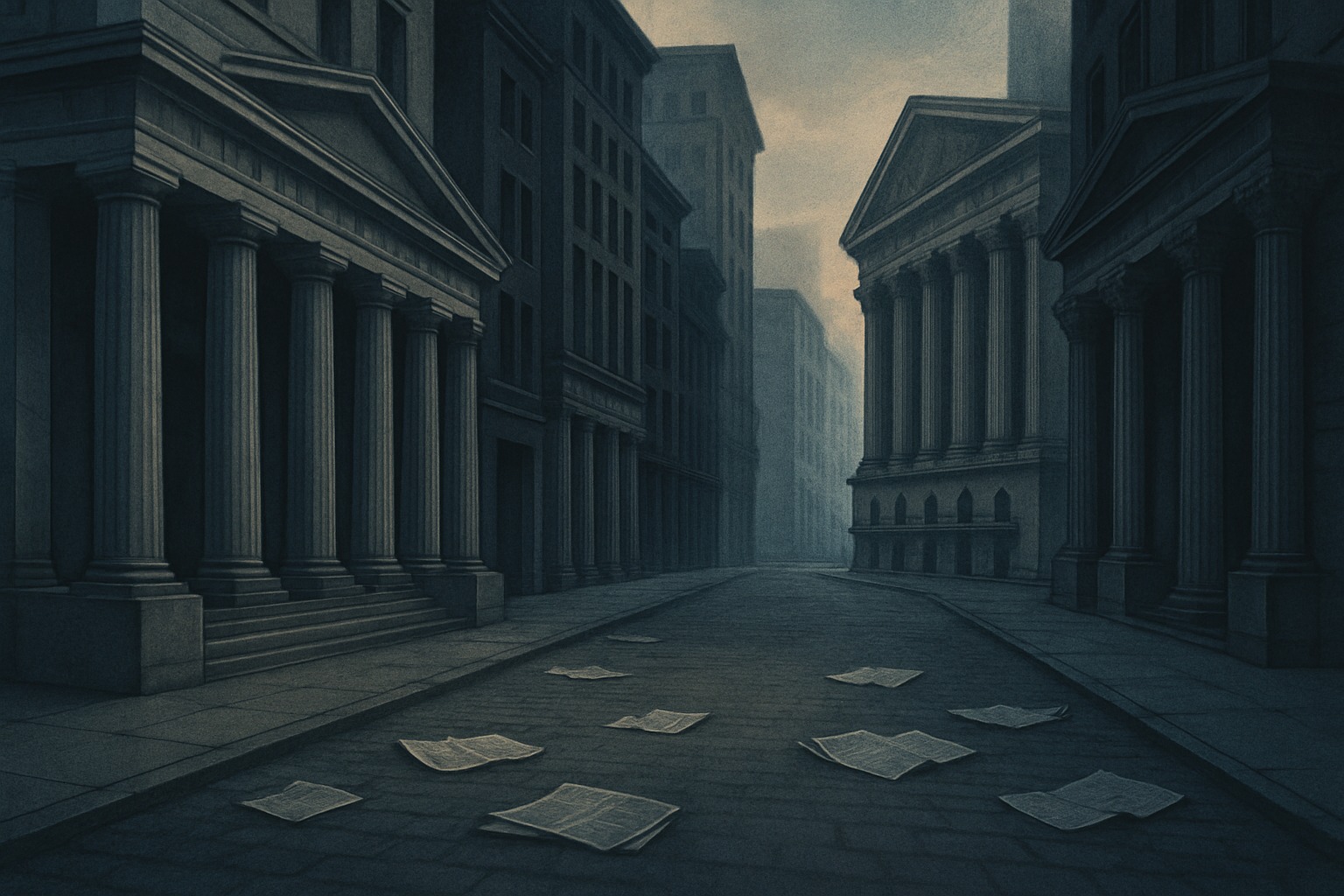
For as long as it has had a market economy, the United States has lurched between boom and bust. Roughly once a generation, speculation, easy credit, and overconfidence have built up into a bubble that suddenly bursts — wiping out savings, closing banks and businesses, and throwing millions out of work. Financial crises are not an aberration in American history; they are a recurring feature of it.
The nineteenth century was an age of "panics." Banking collapses in 1837, 1873, 1893, and 1907 each touched off sharp depressions, and with no central bank to steady the system, the economy careened from one crisis to the next, often relying on the intervention of private financiers to halt the slide.
The Panic of 1907 finally prompted the creation of the Federal Reserve in 1913 to manage the money supply and act as a lender of last resort. Yet the worst crisis still lay ahead: the 1929 stock market crash and the Great Depression that followed, the catastrophe that reshaped American government and economic policy for generations.
Crises kept coming — the savings-and-loan collapse, the dot-com bust, and the 2008 financial crisis that nearly brought down the global system. Each reshaped regulation and politics, and each renewed the oldest debate in American finance: how to enjoy the dynamism of free markets without the ruin that periodically follows.
| Pattern | Booms and busts roughly once a generation |
| Age of Panics | Banking collapses in 1837, 1873, 1893, 1907 |
| Fed | Federal Reserve created in 1913 after the 1907 panic |
| Worst | The 1929 crash and the Great Depression |
| Modern | The 2008 financial crisis and Great Recession |
| Date | From the panics of the 1800s to 2008 |