Eli Whitney
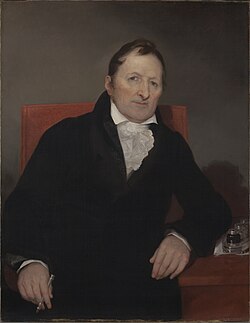
Eli Whitney invented the cotton gin in roughly ten days in 1793 while staying on a Georgia plantation, having never seen raw cotton before arriving in the South that year. The device — which mechanically separated cotton fiber from seed at a rate 50 times faster than a person working by hand — was immediately and ruthlessly pirated. Whitney spent years in litigation trying to enforce his patent and made almost nothing from the invention that transformed a continent. It also set that continent on a course toward war.
He had believed the cotton gin would reduce demand for enslaved labor by making processing efficient enough that fewer workers would be needed. The opposite happened. The gin made cotton so profitable that the demand for enslaved field workers exploded across the expanding South. Between 1790 and 1860 the enslaved population of the United States grew from roughly 700,000 to nearly four million. Whitney's ten days of work in coastal Georgia had purchased that trajectory.
He rebuilt his fortune on a second idea that proved more durably consequential: standardized, interchangeable parts. In 1798 he contracted to produce 10,000 muskets for the U.S. government using machine-made components that could be assembled and repaired without skilled gunsmiths. He demonstrated the concept for President Adams and President-elect Jefferson by assembling musket locks from randomly mixed parts on a table. The principle became the foundation of American mass manufacturing — and remains, by most measures, his more significant legacy.
| Born | December 8, 1765 — Westborough, Massachusetts |
| Died | January 8, 1825 — New Haven, Connecticut |
| Education | Yale College, 1792 |
| Key Invention | Cotton gin (1793); interchangeable parts system (1798) |
| Patent | Cotton gin — March 14, 1794 |
| Occupation | Inventor, manufacturer |
| Years | 1765–1825 |
| Location | New Haven, Connecticut |