Bay of Pigs
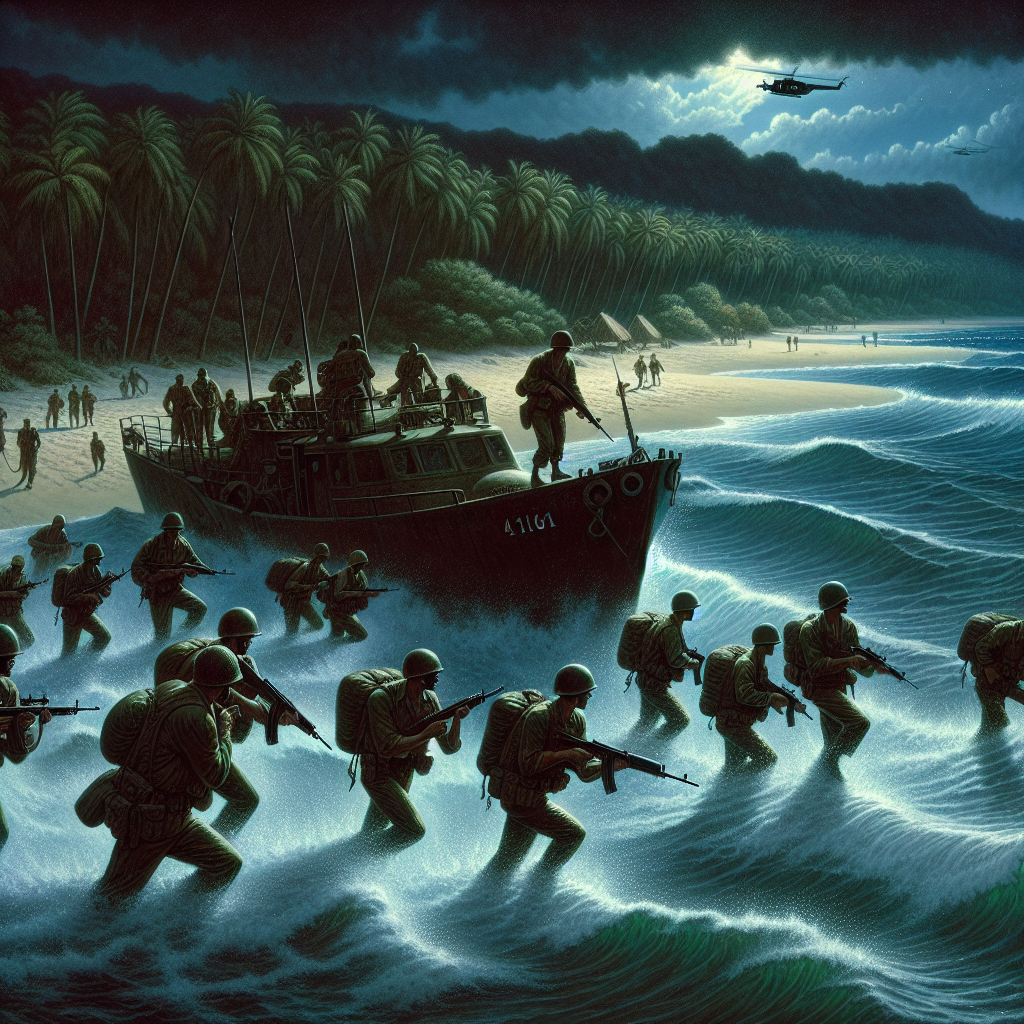
On April 17, 1961, approximately 1,400 CIA-trained Cuban exiles landed on Cuba's southern coast at a bay called Bahía de Cochinos and were captured or killed within 72 hours. The invasion had been conceived under the Eisenhower administration, inherited by John F. Kennedy, and modified in ways that stripped away the air cover that might have made it viable. When the operation began to collapse, Kennedy refused to authorize U.S. military intervention — unwilling to be seen openly invading Cuba. The exiles surrendered. Castro's government eventually ransomed 1,189 survivors for $53 million in food and medicine.
The failure was complete and the fallout immediate. Kennedy accepted public responsibility — "victory has a hundred fathers, and defeat is an orphan," he said — while privately furious at the CIA and Joint Chiefs who had assured him the plan was sound and that a popular uprising would follow the beach landing. Neither happened. The Bay of Pigs poisoned U.S.–Cuba relations for a generation, cemented Castro's standing at home as a revolutionary who had repelled a superpower, and contributed directly to the Cuban Missile Crisis 18 months later, as Cuba and the Soviet Union drew closer in the aftermath.
The operation had been built on a stack of flawed assumptions: that the invasion would trigger a popular uprising, that CIA-trained exiles could hold a beachhead long enough for political conditions to shift, and that U.S. involvement could be plausibly denied. None of these held. The episode introduced a pattern that would recur in Cold War covert operations — a secret program that grows too large to be secret, dependent on untested assumptions, and ultimately requiring the visible military force that the political situation will not allow.

| Date | April 17–19, 1961 |
| Location | Bay of Pigs (Bahía de Cochinos), Cuba |
| Invasion Force | Approx. 1,400 CIA-trained Cuban exiles (Brigade 2506) |
| Planned Under | Eisenhower administration; executed under Kennedy |
| Outcome | Complete failure — exiles captured within 72 hours |
| Ransom | 1,189 survivors returned to U.S. for $53 million in food and medicine |
| Consequence | Strengthened Castro; contributed to Cuban Missile Crisis (October 1962) |
| Date | April 17–19, 1961 |
| Location | Bay of Pigs, Cuba |