The Space Shuttle
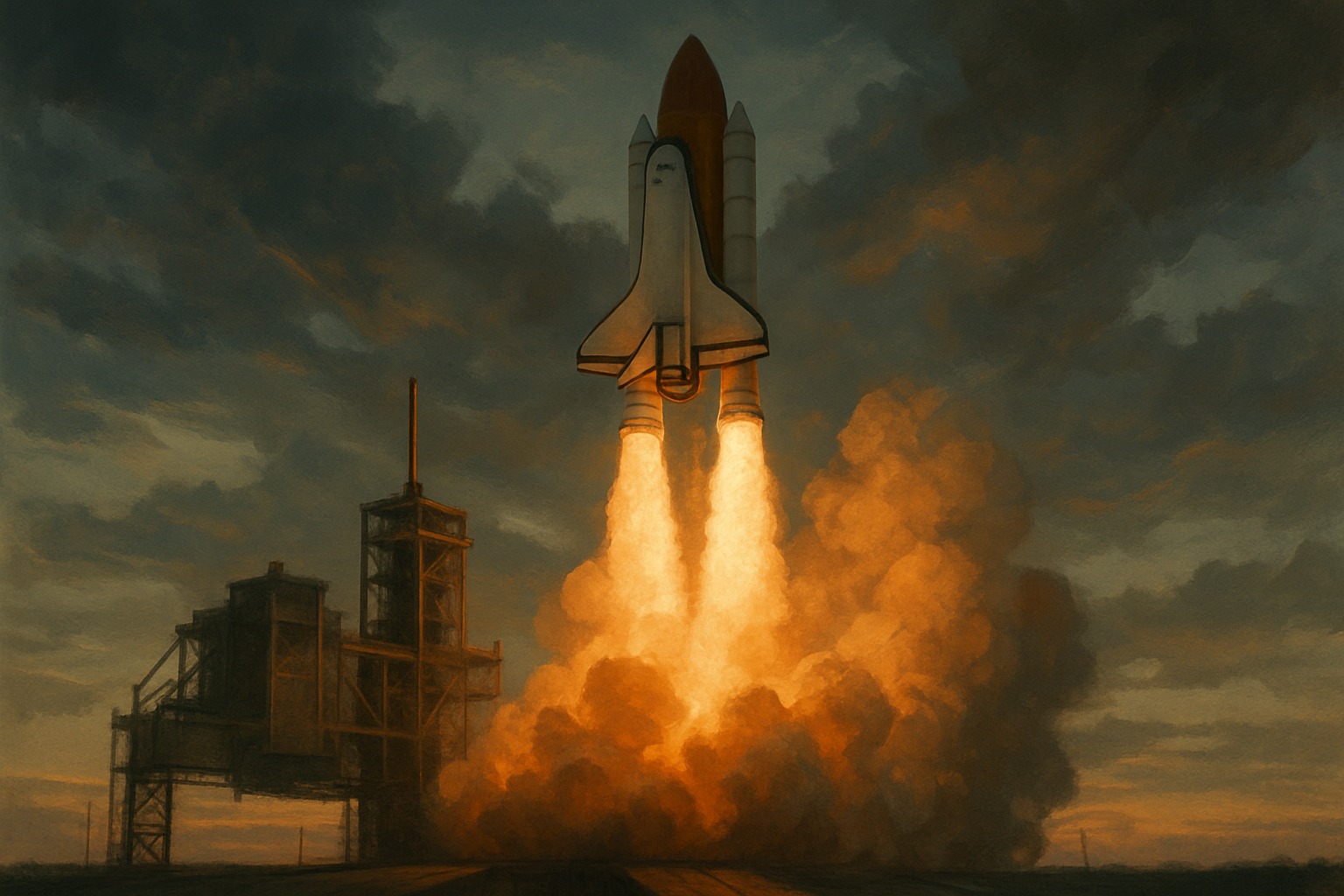
The Space Shuttle was NASA's reusable spacecraft, flying from 1981 to 2011 — the workhorse of the American space program in the decades after Apollo. Unlike the throwaway capsules that came before, the shuttle launched like a rocket, operated in orbit, and landed like an airplane, to fly again.
Over 135 missions, the shuttle made spaceflight almost routine. It carried satellites and laboratory modules, launched and repaired the Hubble Space Telescope, and ferried the crews and components that built the International Space Station. It also flew a more diverse corps of astronauts than ever before.
The promise of cheap, routine access to space was never fully realized — the shuttle proved far more expensive and dangerous than hoped. Two of the five orbiters were lost with their crews: Challenger in 1986 and Columbia in 2003, fourteen astronauts in all, tragedies that reshaped the program.
The shuttle was retired in 2011, ending an era and leaving the United States dependent for years on others to reach orbit. But for thirty years it was the face of American spaceflight, and it built the orbital infrastructure that endures today.