Sputnik
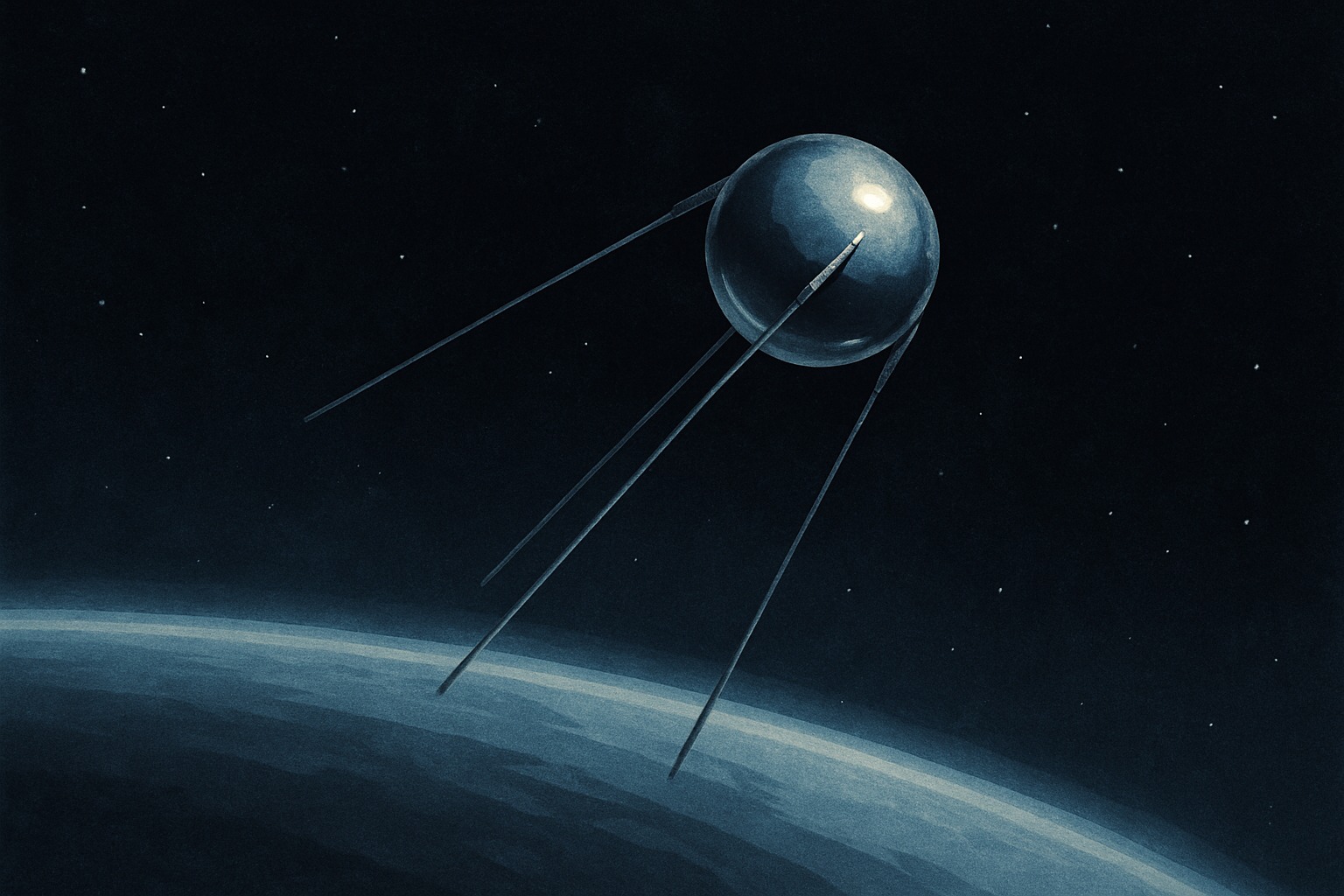
On October 4, 1957, the Soviet Union launched Sputnik 1, the first artificial satellite to orbit the Earth. A polished metal sphere about the size of a beach ball, beeping as it circled overhead, it was a modest object that triggered an enormous reaction in the United States.
The shock was profound. If the Soviets could put a satellite in orbit, they could deliver a nuclear warhead anywhere on Earth — and they had beaten the United States to a milestone many Americans had assumed was theirs. The "Sputnik crisis" shook American confidence in its technological supremacy.
The response reshaped the country. Within a year the United States created NASA and a research agency that would help invent the internet, and Congress poured money into science and mathematics education to close the perceived gap. Sputnik turned space into the central arena of Cold War competition.
Though a Soviet achievement, Sputnik is a turning point in American history — the starting gun for the Space Race that would, twelve years later, put Americans on the moon. Few foreign launches have done more to redirect American priorities.
| Launched | October 4, 1957, by the USSR |
| First | First artificial satellite to orbit Earth |
| Shock | Showed Soviet rocket — and missile — capability |
| U.S. Response | Creation of NASA and a science-education push |
| Significance | The starting gun for the Space Race |
| Date | Launched October 4, 1957 |