U.S.–Soviet Relations
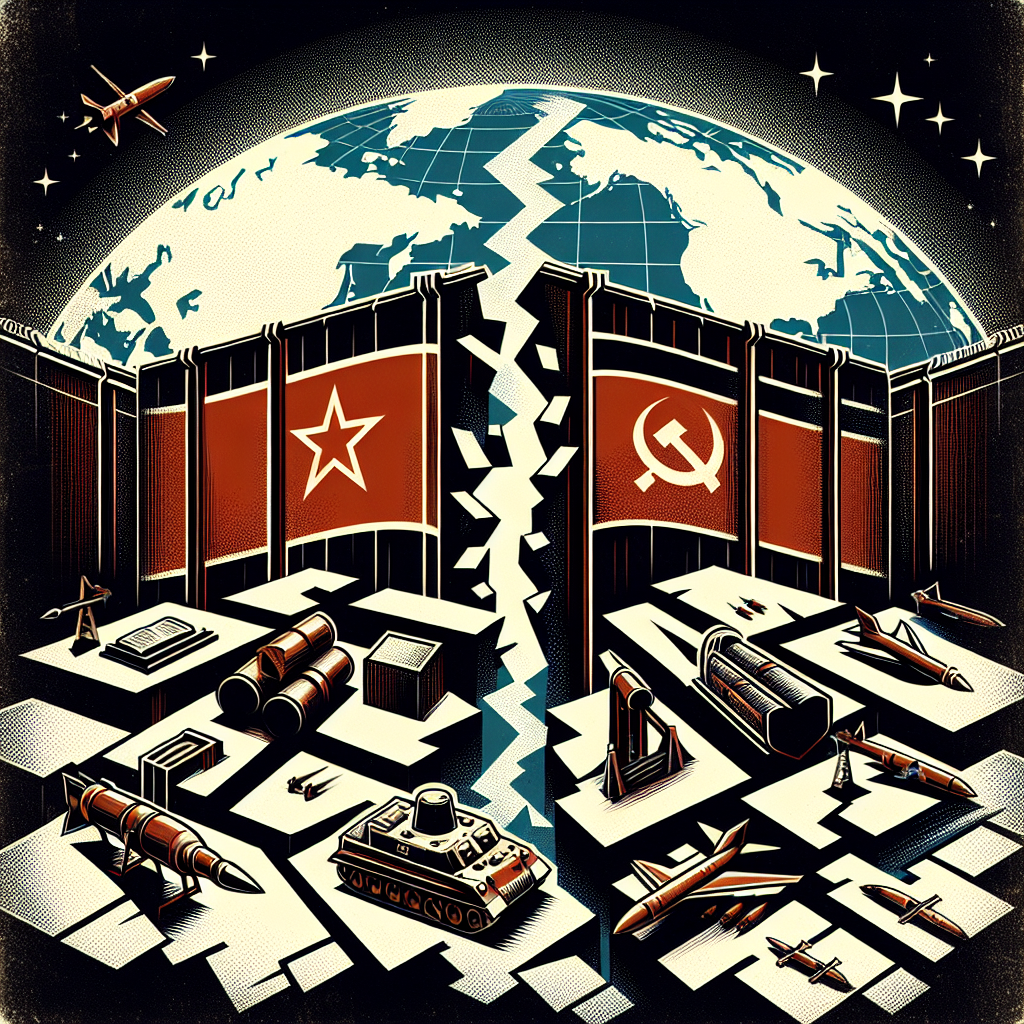
The United States and the Soviet Union were allies for four years and adversaries for 46. They cooperated to defeat Nazi Germany and then immediately began arming against each other, dividing Europe into fortified camps and competing for influence across every continent on earth. No bilateral relationship shaped more of 20th-century American life: the national security state, the nuclear arsenal, the space race, the interstate highway system built partly to evacuate cities under nuclear attack — all were structured, in fundamental ways, by the competition with Moscow.
The U.S. refused to recognize the Soviet government for 16 years after the 1917 Bolshevik Revolution — sending troops to fight alongside anti-Bolshevik forces in the Russian Civil War before withdrawing, then maintaining diplomatic silence until FDR extended recognition in 1933. Germany's invasion of the Soviet Union in June 1941 transformed Stalin from ideological enemy into indispensable ally almost overnight. American Lend-Lease delivered $11 billion in supplies to the Soviet war effort; cooperation at Tehran, Yalta, and Potsdam produced the post-war international architecture. The architecture began cracking almost immediately after Germany's surrender.
The decades that followed produced the defining vocabulary of the modern world: containment, deterrence, mutually assured destruction, proxy war. The Berlin Blockade, the Korean War, the Cuban Missile Crisis, Vietnam, Soviet Afghanistan — each a theater in a global contest that neither side wanted to escalate into direct confrontation and neither was willing to abandon. Nixon's détente in the 1970s produced SALT I and the Helsinki Accords. Reagan's return to confrontational pressure in the 1980s — he called the Soviet Union an "evil empire" — coincided with Mikhail Gorbachev's reforms and the internal collapse of a system that had been eroding for years.
The Soviet Union dissolved on December 25, 1991, when Gorbachev resigned and 15 republics became independent states. The United States had outlasted its adversary — though whether it won the Cold War or the Soviet Union simply lost it is a distinction historians have debated ever since. What followed was a moment of unrepeated American geopolitical dominance and a Russia that remembered the humiliation of collapse. NATO's expansion eastward, which Moscow viewed as exploitation of its weakness, and Russia's gradual reassertion under Vladimir Putin established the grievances that produced the 2022 invasion of Ukraine — reopening, in Europe, the questions the Cold War's end had seemed to settle.
| U.S. Recognition of USSR | 1933 — FDR extended diplomatic recognition (16 years after revolution) |
| WWII Alliance | 1941–1945 — Lend-Lease delivered $11 billion in U.S. supplies to USSR |
| Cold War Start | 1947 — Truman Doctrine, Marshall Plan; Berlin Blockade 1948 |
| Closest to War | Cuban Missile Crisis, October 1962 |
| Détente | Nixon-Brezhnev SALT I (1972); Helsinki Accords (1975) |
| Reagan's Phrase | "Evil Empire" speech, March 8, 1983 |
| Soviet Dissolution | December 25, 1991 — Gorbachev resigns; 15 republics become independent |
| Years | 1917–1991 |
| Location | Washington, D.C. / Moscow, Russia |