Television
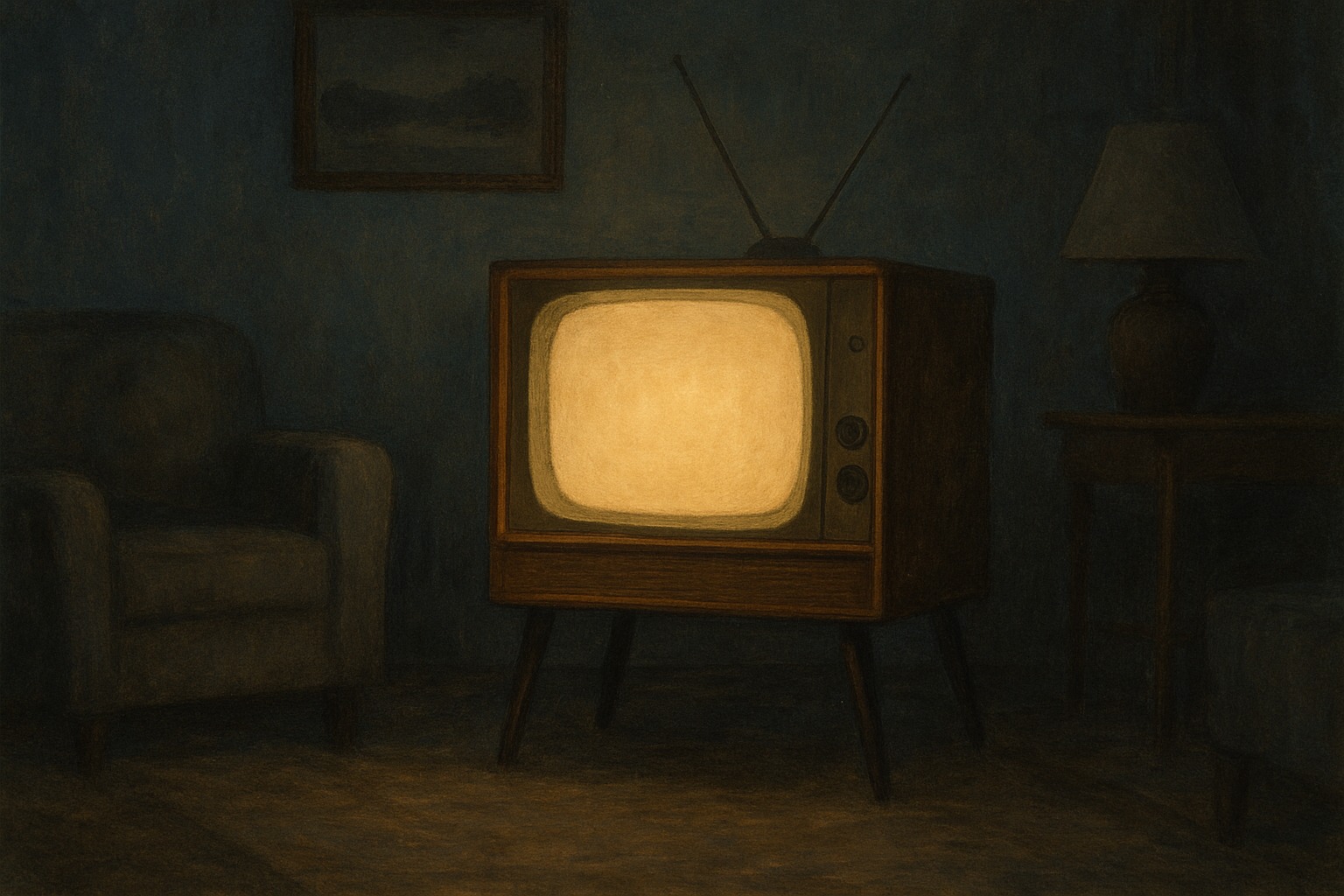
In the 1950s, television swept across America with astonishing speed, and within a decade the glowing screen sat at the center of nearly every living room. It combined radio's reach with moving pictures, and it quickly became the most powerful medium the country had ever known.
Television created a new kind of shared national moment. Tens of millions watched the same broadcasts at once — quiz shows and sitcoms, the assassination of a president and his funeral, the first steps on the moon. For decades, three networks shaped what most Americans saw and discussed.
It reshaped politics most of all. The 1960 Kennedy-Nixon debates, the first televised, suggested that how a candidate looked could matter as much as what he said; nightly footage from Vietnam brought a distant war into living rooms and turned opinion against it. Television made image central to American public life.
The arrival of cable, and later streaming, shattered the era of three networks into endless channels and on-demand video. But for half a century television was the dominant shared experience of American culture — the medium through which the nation watched itself.
| Mass Adoption | Swept American homes in the 1950s |
| Networks | Three networks long shaped what the nation saw |
| 1960 | First televised presidential debates (Kennedy-Nixon) |
| Vietnam | Nightly war footage turned opinion against the war |
| Later | Cable and streaming shattered the network era |
| Date | Mass adoption from the 1950s |