Radio
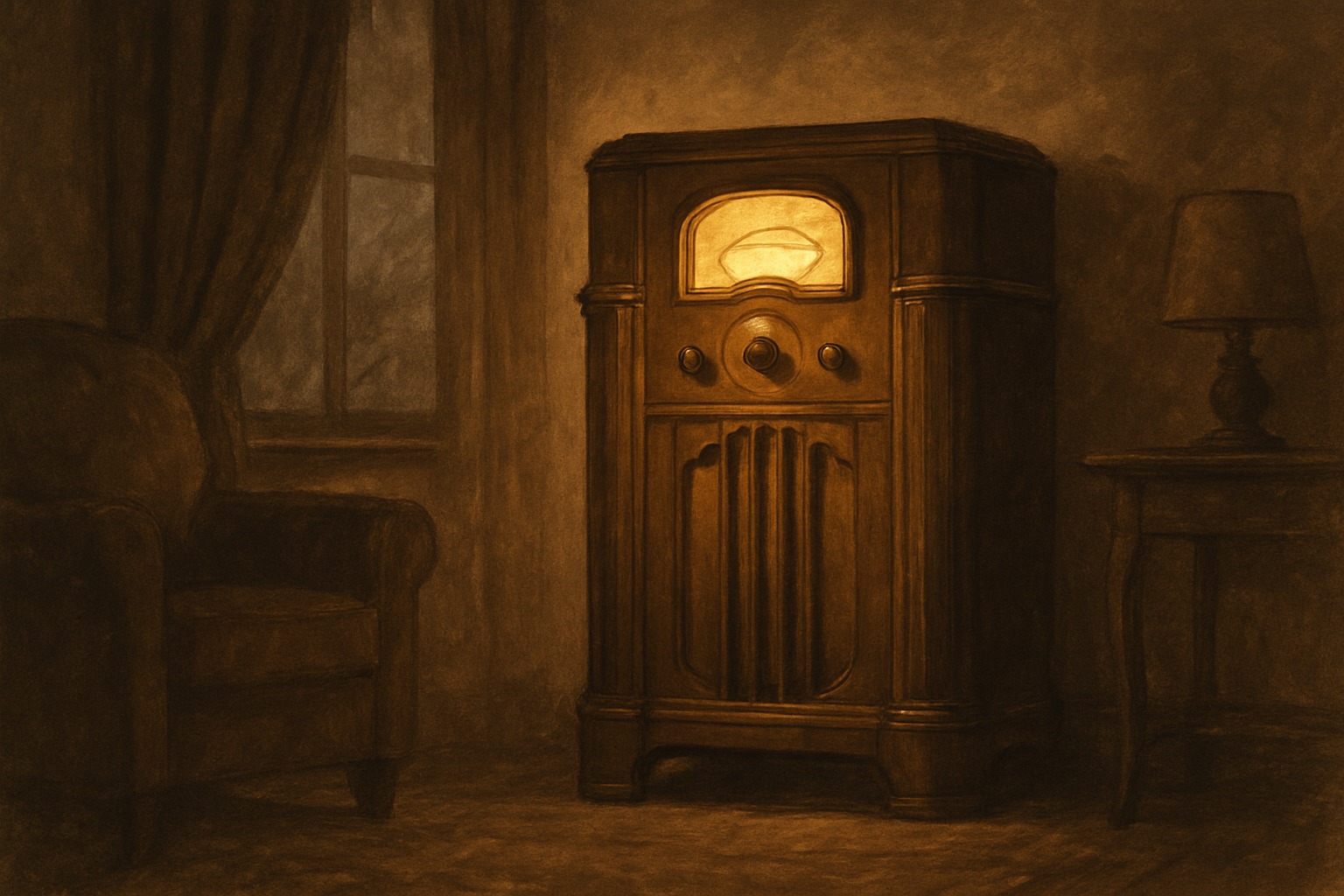
In the 1920s, radio transformed American life by bringing live sound — news, music, drama, sports, and the human voice — directly into the home for the first time. Commercial broadcasting exploded across the decade, and within a few years tens of millions of Americans were gathered around the radio set each evening.
Radio created the first truly national audience. Families in distant states heard the same programs, the same advertisements, and the same voices on the same night, knitting a vast country into a shared cultural experience in a way nothing had before.
It also transformed politics. Franklin Roosevelt's "fireside chats" let a president speak intimately and directly to the entire nation, bypassing the newspapers, and demonstrated radio's power to reassure — or to manipulate. The 1938 War of the Worlds broadcast, which some listeners mistook for real news, showed the medium's grip on the public imagination.
Though later eclipsed by television as the dominant broadcast medium, radio never disappeared, evolving through music formats, talk radio, and podcasts. It was the technology that first proved a single voice could reach an entire nation at once.
| Boom | Commercial broadcasting exploded in the 1920s |
| First | National live audience for news, music, and drama |
| Politics | FDR's fireside chats reached the nation directly |
| 1938 | War of the Worlds broadcast alarmed listeners |
| Legacy | Evolved into music formats, talk radio, and podcasts |
| Date | Broadcasting boom from the 1920s |